
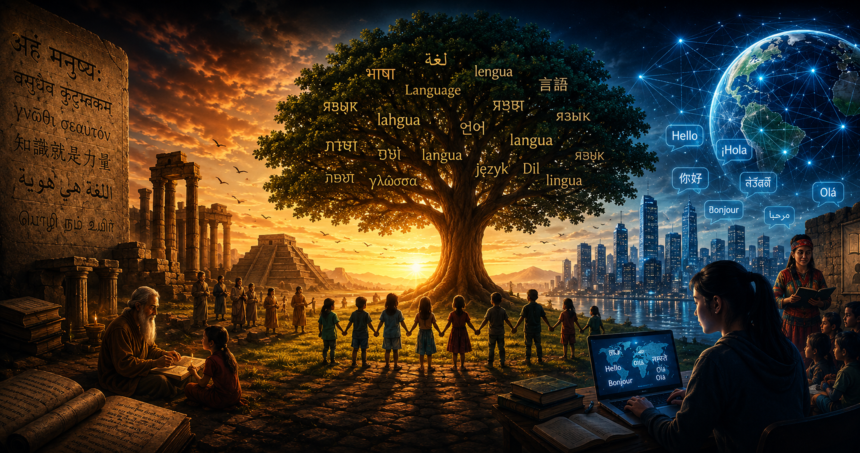
Language remains one of humanity’s most powerful tools, shaping communication, culture, education, and social development across the world. Linguists and international organizations continue to stress that language is far more than a means of conversation; it is a repository of history, knowledge, identity, and collective memory. As globalization accelerates and digital communication transforms societies, experts are increasingly concerned about the preservation of linguistic diversity and the growing number of endangered languages.
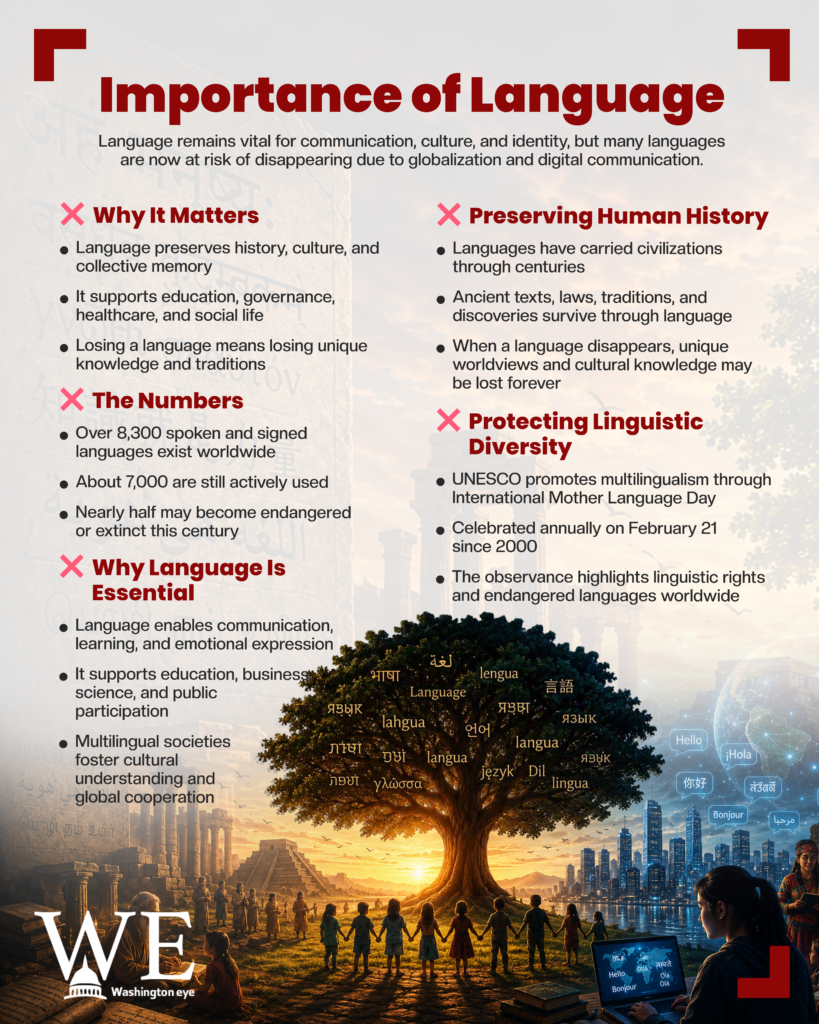
According to UNESCO and the United Nations, there are more than 8,300 spoken and signed languages worldwide, although only around 7,000 remain in active use. Yet many of these languages face an uncertain future. UNESCO estimates that approximately 1,500 languages are at immediate risk of extinction, while language experts warn that nearly half of the world’s languages could become seriously endangered or disappear by the end of this century if current trends continue.
Language plays a central role in everyday communication. It enables individuals to exchange ideas, share emotions, conduct business, access education, and participate in public life. From government institutions and healthcare systems to scientific research and diplomacy, language serves as the backbone of human interaction. Experts note that societies with strong multilingual capabilities often benefit from greater cultural understanding, international cooperation, and economic opportunities.

Historically, languages have carried civilizations through centuries. Ancient languages preserved philosophical thought, religious traditions, scientific discoveries, and cultural practices that continue to influence modern societies. Many of the world’s oldest literary works, legal systems, and historical records survive only because languages transmitted them across generations. When a language disappears, linguists argue, humanity loses not only words but also unique worldviews, indigenous knowledge, oral traditions, and cultural heritage.

UNESCO has long championed linguistic diversity through initiatives such as International Mother Language Day, observed annually on February 21. Established in 1999 and celebrated worldwide since 2000, the observance promotes multilingualism and the preservation of mother tongues. The day originated from the historic Bengali Language Movement, which highlighted the importance of linguistic rights and cultural identity. Today, governments, educational institutions, and cultural organizations across the globe use the occasion to raise awareness about endangered languages and language-based inclusion.
Education remains one of the most important areas where language influences human development. UNESCO research shows that children learn more effectively when taught in their mother tongue, particularly during their early years of schooling. Studies indicate that education in a familiar language improves comprehension, academic performance, and social inclusion. Despite this, UNESCO estimates that around 40 percent of the world’s population still lacks access to education in a language they speak or fully understand, creating barriers to learning and opportunity.
However, the discussion surrounding language is not without criticism and debate. Some scholars argue that globalization and the dominance of major languages such as English, Mandarin, Spanish, and Arabic facilitate international communication, trade, and technological advancement. Others counter that this trend can marginalize smaller languages and cultures, accelerating language loss. Critics also point out that digital platforms often favor a limited number of global languages, reducing online visibility for minority linguistic communities. UNESCO has repeatedly warned that only a small fraction of the world’s languages are adequately represented in digital spaces.

The challenge is particularly significant for indigenous and minority communities. Language preservation efforts now include digital archives, bilingual education programs, language documentation projects, and community-led revitalization campaigns. UNESCO’s International Decade of Indigenous Languages (2022–2032) seeks to strengthen these efforts by supporting linguistic diversity and cultural sustainability worldwide.
In an increasingly interconnected world, language continues to bridge cultures, foster understanding, and preserve human heritage. While technology has expanded opportunities for communication across borders, experts emphasize that protecting linguistic diversity remains essential. The future of thousands of languages may depend on policies, education systems, and community efforts undertaken today. As UNESCO frequently notes, languages are not merely words, they are living expressions of identity, knowledge, and culture that connect humanity across generations.