
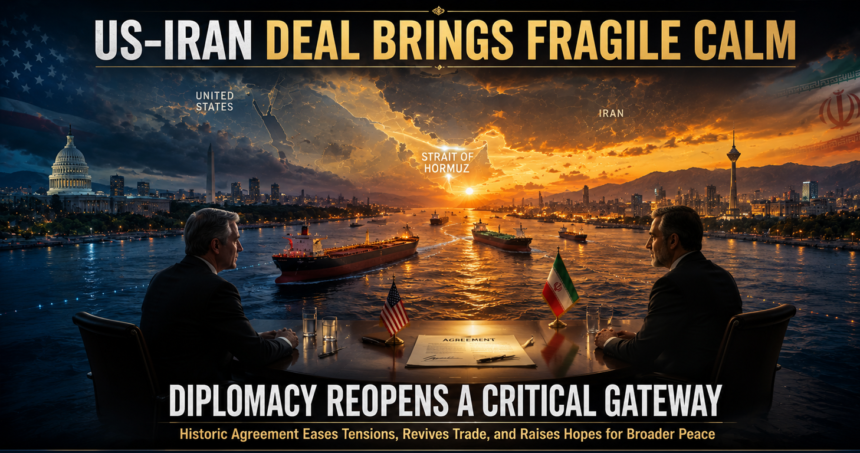
The United States and Iran have taken a significant step toward reducing tensions in the Middle East after reaching a preliminary agreement aimed at ending months of conflict, reopening the strategically vital Strait of Hormuz, and creating a pathway toward a broader peace and nuclear arrangement. The deal, finalized in mid-June and followed by talks in Switzerland this week, is being viewed as one of the most consequential diplomatic developments in the region in recent years. However, analysts caution that while the agreement has lowered immediate risks, its long-term success remains uncertain.
The origins of the agreement lie in the escalating confrontation that erupted earlier this year. Tensions between Washington and Tehran intensified following military strikes, regional instability, and disputes surrounding Iran’s nuclear program. The conflict had severe consequences for global energy markets after Iran restricted traffic through the Strait of Hormuz, the narrow waterway connecting the Persian Gulf to international markets. Around one-fifth of the world’s oil and a substantial portion of global liquefied natural gas shipments normally pass through the strait, making any disruption a major concern for governments and businesses worldwide.
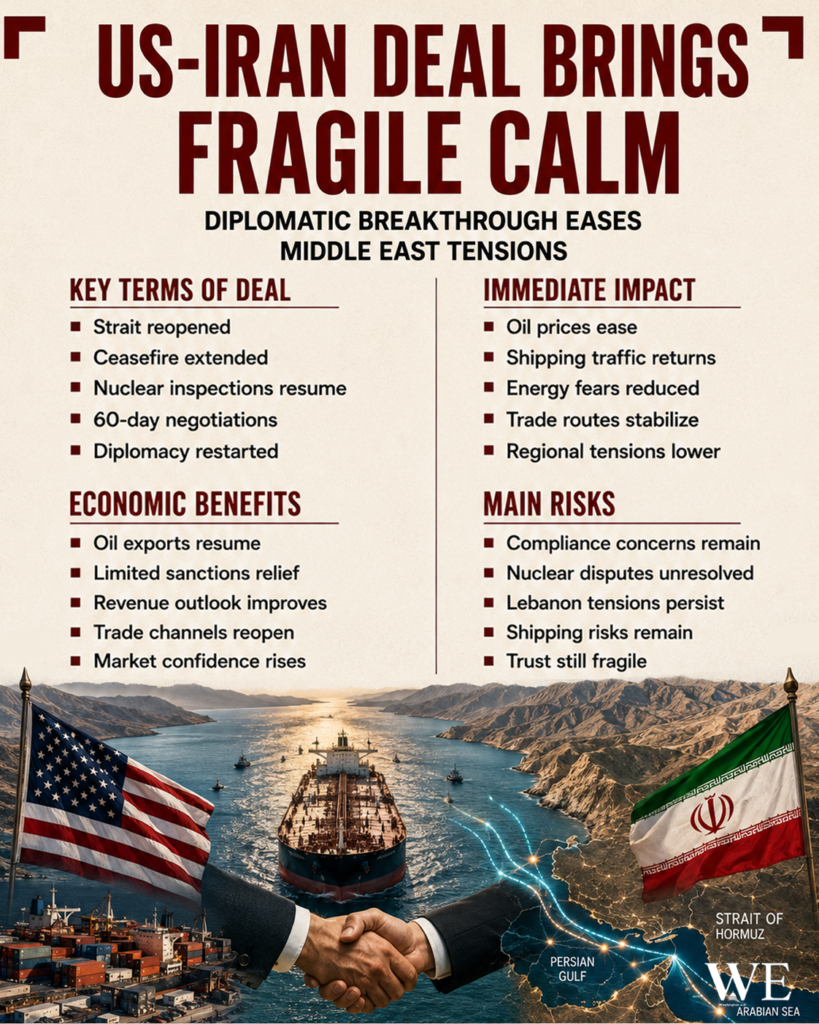
The latest agreement includes several key provisions. Iran has agreed to facilitate the reopening of the Strait of Hormuz, allow international nuclear inspectors to resume monitoring activities, and participate in negotiations toward a comprehensive settlement. In return, the United States has offered temporary sanctions relief, including authorization for Iranian oil exports and access to some financial channels. The arrangement also extends the existing ceasefire while diplomats work toward a final agreement expected to be negotiated over the next 60 days.
One of the most immediate impacts of the deal has been on global energy markets. Oil prices, which had surged amid fears of prolonged supply disruptions, declined after news of the agreement emerged. Shipping companies have cautiously resumed operations through the Strait of Hormuz, although traffic remains below normal levels because of lingering security concerns, insurance complications, and the need to clear maritime hazards left behind during the conflict. Experts say it may take weeks or even months for trade flows to fully normalize.

For the United States, the agreement offers an opportunity to reduce military commitments in a volatile region while preventing further economic shocks linked to energy markets. Washington has also emphasized the importance of renewed inspections by the International Atomic Energy Agency (IAEA), viewing transparency around Iran’s nuclear activities as essential for regional security. American officials argue that diplomacy provides a more sustainable solution than continued military confrontation.
Iran, meanwhile, stands to benefit economically. The easing of sanctions could restore billions of dollars in oil revenue and help revive an economy that has struggled under years of international restrictions. Tehran has presented the agreement domestically as a recognition of its strategic importance and a pathway toward economic recovery. The reopening of export channels is expected to improve government revenues and strengthen trade links with major energy-importing nations.
Despite the positive headlines, critics on both sides remain skeptical. Some American lawmakers argue that sanctions relief could provide Iran with resources without guaranteeing permanent changes to its policies. Others question whether Tehran will fully comply with inspection requirements or future commitments concerning its nuclear program. In Iran, hardliners have voiced concerns that engagement with Washington could compromise national sovereignty or fail to deliver promised economic benefits.

Regional concerns also persist. The agreement does not resolve all disputes involving Israel, Lebanon, and various armed groups operating across the Middle East. Negotiators have acknowledged that tensions in Lebanon remain a major obstacle and could undermine broader peace efforts if violence resumes. Several unresolved security issues are expected to dominate upcoming negotiations.
Another major concern centers on the Strait of Hormuz itself. Although the waterway has reopened, analysts warn that Iran retains the capability to disrupt shipping again if diplomacy collapses. Energy traders and maritime insurers remain cautious, highlighting the vulnerability of global supply chains to renewed instability. Experts note that the latest crisis demonstrated how quickly regional conflicts can affect inflation, fuel prices, and economic growth far beyond the Middle East.
For now, the US-Iran agreement represents a rare diplomatic breakthrough after months of confrontation. It has eased fears of a wider regional war, reduced pressure on energy markets, and created momentum for further negotiations. Whether it evolves into a lasting peace arrangement or merely a temporary pause in hostilities will depend on implementation, trust-building, and the ability of both sides to navigate the many unresolved issues that remain.