
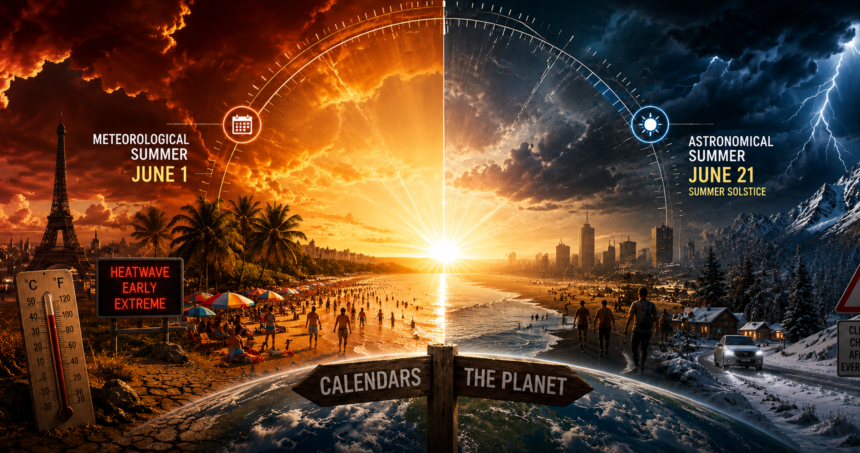
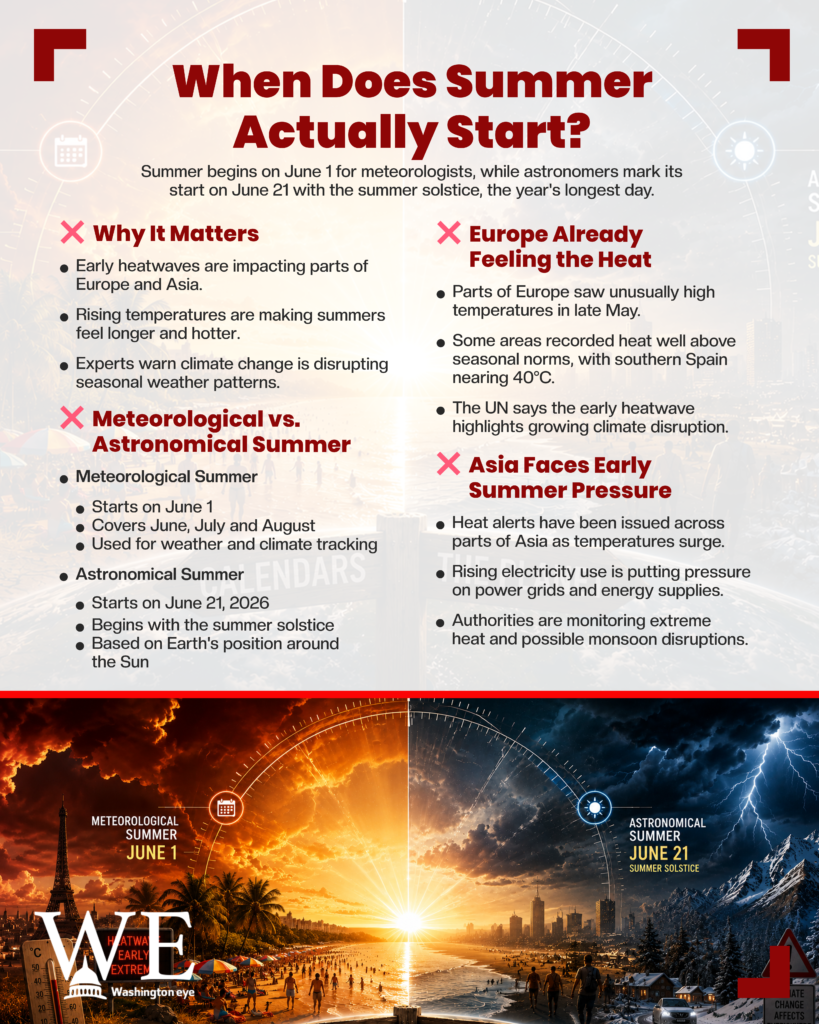
Summer may feel like it has already arrived in many parts of the world, but the answer to when the season officially begins depends on who you ask. For meteorologists across the Northern Hemisphere, summer started today, June 1, marking the beginning of meteorological summer, a three-month season running through August. Astronomers, however, recognize summer’s official arrival later this month, on June 21, with the summer solstice, the longest day of the year north of the equator. The difference may sound technical, but in 2026 it is unfolding against an increasingly urgent global backdrop: early heatwaves, unusual cold snaps and growing concern over climate change.
Meteorological summer follows the calendar months of June, July and August, making seasonal forecasting and climate data easier to track. Astronomical summer, by contrast, begins with Earth’s position relative to the sun. This year’s solstice will occur on June 21, when the Northern Hemisphere tilts closest toward the sun. While both definitions remain scientifically valid, rising temperatures around the globe are making the transition into summer feel earlier and more intense than in previous decades.
Across Europe, the season is already arriving with force. Several countries including Spain, France and parts of the United Kingdom experienced unusually high temperatures in late May, with some regions reporting readings well above seasonal averages. Climate authorities described the early heat as one of the most intense spring warm spells in recent years. Southern Spain is forecast to cross 40°C this week, while Mediterranean regions remain under persistent high-pressure systems that are trapping warm air. The United Nations has described recent European temperatures as another warning sign of accelerating climate disruption.
Asia is also feeling summer’s pressure earlier than expected. Heat alerts have already been issued in parts of India, Pakistan, China and Southeast Asia, with rising electricity demand pushing power grids under strain as households turn on air conditioners weeks before astronomical summer begins. Analysts say the early heat is also affecting global coal and gas markets as countries prepare for increased cooling demand. In South Asia, weather authorities are closely watching both temperature spikes and the possibility of monsoon disruptions later in the season.

Yet summer is not arriving evenly everywhere. In the Southern Hemisphere, June marks the start of winter, and countries such as Australia and New Zealand are experiencing colder temperatures, storms and even mountain snowfall. Japan, meanwhile, is facing a more unstable weather pattern, with storm systems developing as Europe swelters. This sharp contrast across continents highlights how interconnected and unpredictable seasonal patterns have become.
Scientists say climate change is increasingly shifting how summer is experienced. Rising global temperatures are not only making heatwaves more frequent, they are also causing them to arrive earlier and last longer. The World Meteorological Organization recently warned there is a strong chance Earth will break new temperature records before 2030, with average warming continuing above historical levels. Researchers say the result is a blurred seasonal calendar: spring temperatures increasingly feel like summer, and traditional weather expectations are becoming harder to predict.
Public reaction online has reflected that confusion. In many cities, people welcomed longer daylight and warmer evenings, while others expressed concern over how quickly temperatures are rising. Social media posts from Europe and Asia this week ranged from photos of crowded beaches and packed parks to warnings about dehydration and calls for stronger climate action. For farmers and outdoor workers especially, early heat is increasingly becoming both a practical and economic concern.

Forecasts suggest June will continue this uneven trend. Warm and dry conditions are expected across much of southern Europe and parts of Asia, while northern regions may see more variable weather. Climate experts say summer in 2026 is beginning with a clear message: while calendars can define a season, the planet is increasingly setting its own timetable.