
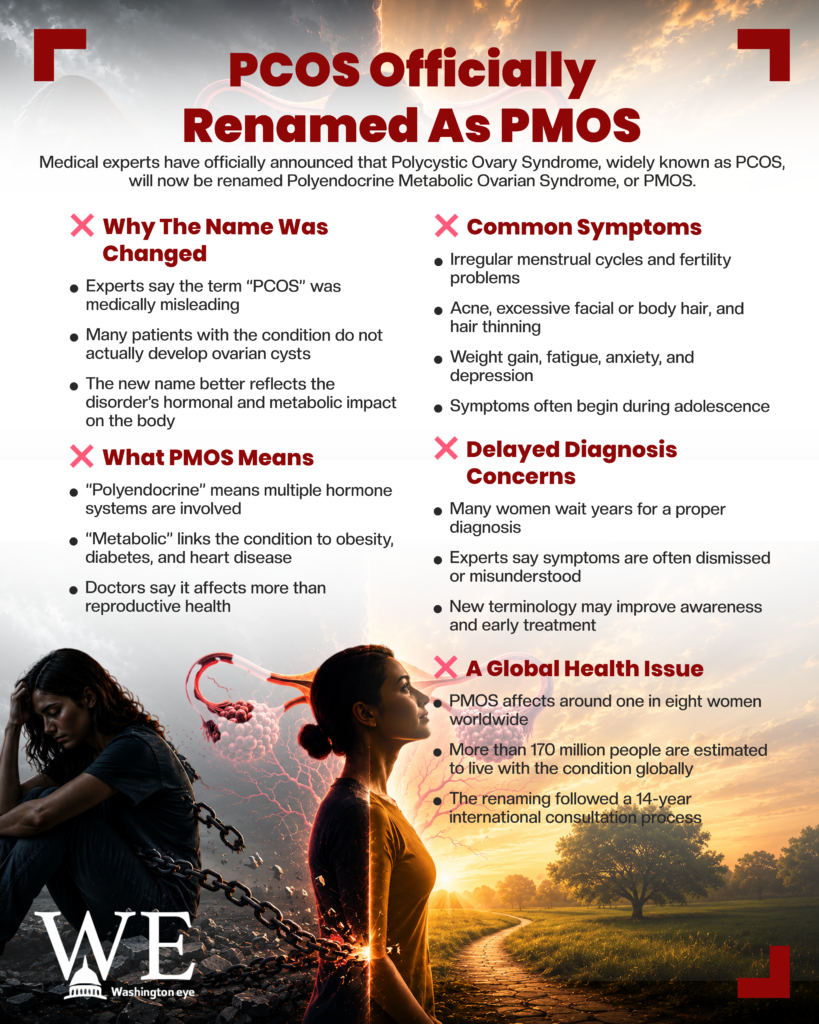
A major shift in women’s health terminology has sparked global discussion after medical experts officially announced that Polycystic Ovary Syndrome (PCOS) will now be known as Polyendocrine Metabolic Ovarian Syndrome (PMOS). The renaming was unveiled this week during the European Congress of Endocrinology in Prague and published in medical journal The Lancet, marking the end of a 14-year international consultation involving researchers, doctors, patient groups, and healthcare organizations.
PCOS has long been considered one of the world’s most common hormonal disorders affecting women of reproductive age. According to global estimates, the condition affects around one in eight women worldwide, more than 170 million people. However, experts increasingly argued that the old name was medically misleading and failed to represent the disorder’s broader impact on the body.
Under the new terminology, PMOS, short for Polyendocrine Metabolic Ovarian Syndrome, places emphasis on the condition’s endocrine and metabolic nature rather than focusing solely on the ovaries. Specialists say the old term “polycystic ovary syndrome” created confusion because many patients do not actually develop ovarian cysts, while others with cyst-like follicles may not have the disorder at all.
Researchers explained that PMOS more accurately reflects how the condition affects multiple systems in the body, including hormones, metabolism, fertility, mental health, skin, and cardiovascular health. The inclusion of the word “metabolic” highlights strong links between the disorder and insulin resistance, obesity, type 2 diabetes, and increased heart disease risk. Meanwhile, “polyendocrine” recognizes that several hormone systems are involved, not just reproductive hormones.
Medical experts involved in the renaming initiative said the change followed years of complaints from patients who felt the previous terminology minimized the seriousness of the condition. Studies and surveys conducted during the global consultation reportedly included more than 22,000 participants from around the world, including clinicians and women living with the disorder.
The condition often begins during adolescence and can present with a wide range of symptoms including irregular menstrual cycles, infertility, excessive facial or body hair, acne, scalp hair thinning, fatigue, depression, anxiety, and weight gain. In many cases, diagnosis takes years because symptoms vary greatly among patients and are sometimes dismissed or misunderstood.
Doctors say delayed diagnosis has been a major global concern. Many women report visiting multiple healthcare providers before receiving accurate treatment. Experts believe the new name could improve awareness among both patients and physicians, encouraging earlier testing and more comprehensive care.

Health organizations stressed that the renaming does not immediately change diagnostic guidelines or treatment plans. Current diagnostic methods, including the Rotterdam criteria, are expected to remain in place during a transition period that may continue until 2028. However, healthcare systems, medical textbooks, awareness campaigns, and clinical guidelines are expected to gradually adopt the new terminology worldwide.
There is currently no permanent cure for PMOS, but doctors say symptoms can often be managed through lifestyle changes and medical treatment. Recommended approaches include balanced nutrition, regular exercise, weight management, improved sleep, and medications such as Metformin, hormonal contraceptives, anti-androgen therapies, and fertility treatments depending on patient needs.
Experts also noted the psychological impact of the condition. Many patients experience anxiety, body-image issues, depression, and emotional stress due to symptoms like infertility, acne, or unwanted hair growth. Advocates hope the updated terminology will reduce stigma and encourage more open conversations about women’s hormonal health.
Globally, reactions to the name change have been mixed but largely supportive. Some patient groups welcomed the shift as overdue recognition that the condition is not merely a gynecological issue. Others said public awareness campaigns would now be needed to help people understand the new term PMOS and avoid confusion during the transition phase.
Researchers believe the renaming may also influence future scientific studies and healthcare policy. By framing the disorder as a complex metabolic and endocrine condition rather than simply an ovarian problem, experts hope governments and medical institutions will invest more resources into women’s hormonal health research, prevention strategies, and long-term care systems.