
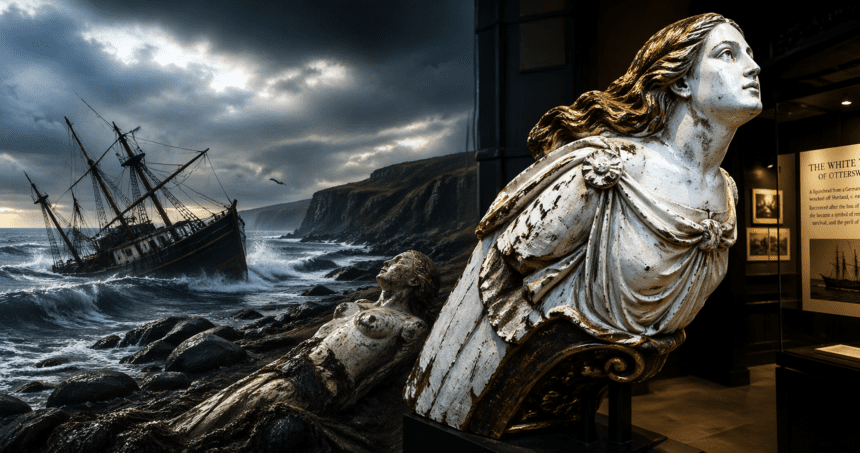
A historic maritime relic that survived more than a century beneath harsh coastal conditions has been restored and returned to public view, offering a rare glimpse into early 20th-century seafaring heritage. The wooden figurehead, believed to be over 100 years old, was part of a German sailing ship that sank off the coast of Shetland more than a century ago. After surviving the devastating shipwreck, which claimed several lives, the artifact has now undergone careful conservation and restoration, bringing renewed attention to its historical and cultural significance.
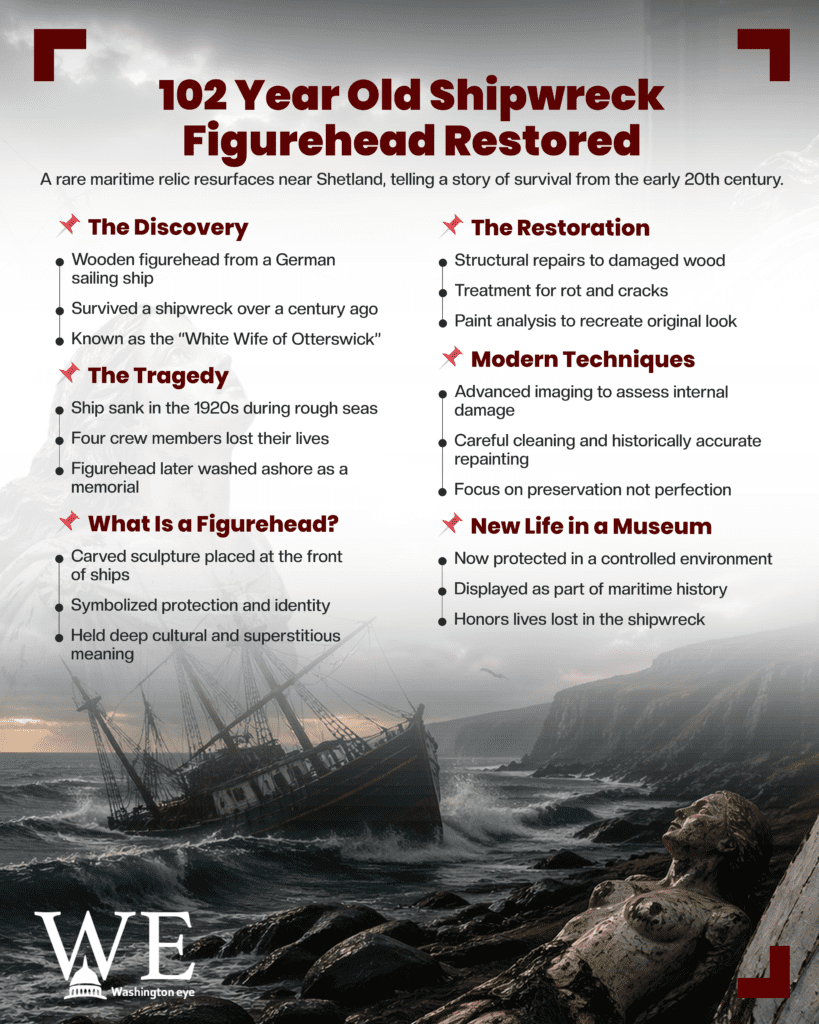
The figurehead, often referred to as the “White Wife of Otterswick,” dates back approximately 102 years to the early 1920s, when it adorned the bow of the ill-fated vessel. Ship figureheads were traditionally carved wooden sculptures mounted at the front of ships, symbolizing protection, identity, and sometimes superstition among sailors. In this case, the figurehead also evolved into a memorial for those who perished when the ship went down in the treacherous waters near Shetland.
The shipwreck itself occurred during a period when maritime trade was still heavily dependent on sail-powered vessels navigating dangerous northern routes. Reports indicate that the vessel sank during rough sea conditions, leading to the loss of four crew members. Despite the tragedy, the figurehead remarkably survived, eventually washing ashore and becoming a local landmark and symbol of remembrance for the community. Over decades, exposure to wind, saltwater, and fluctuating temperatures caused significant deterioration to the structure.

The restoration project, completed in 2026, was initiated to preserve the artifact before further decay could render it beyond repair. Conservation experts undertook a meticulous process, beginning with structural stabilization. This included repairing cracks in the wood, treating rot, and reinforcing weakened areas without compromising the original craftsmanship. Specialists also conducted paint analysis to determine the figurehead’s original colors and finishes, allowing them to recreate its historical appearance as accurately as possible.

Modern conservation techniques played a crucial role in the restoration. The figurehead underwent cleaning to remove layers of grime accumulated over a century, followed by careful repainting using historically appropriate materials. In some cases, conservators used advanced imaging and scanning technologies to understand internal damage before beginning physical restoration, methods increasingly common in preserving maritime artifacts. The aim was not to make the figurehead look new, but to stabilize it while retaining visible traces of its age and journey through time.
Following the restoration, the figurehead has been placed in a museum setting, where it is now protected from environmental damage and accessible to the public. The display contextualizes the artifact within the broader history of maritime traditions, shipwrecks, and coastal communities in Scotland. It also serves as a tribute to the sailors who lost their lives in the original incident, transforming the object from a decorative ship element into a powerful historical memorial.
Historians emphasize that such restorations are vital in preserving maritime heritage, particularly as many wooden artifacts from the age of sail have been lost to time. Figureheads, in particular, hold symbolic value beyond their artistic design. They were believed by sailors to embody the spirit of the ship, offering protection during voyages and representing the vessel’s identity. Their survival is rare, making this restored piece especially significant.

The project has also reignited public interest in maritime archaeology and conservation, highlighting how even small artifacts can carry profound historical narratives. For local communities in Shetland, the figurehead remains a poignant reminder of the region’s deep connection to the sea, both its opportunities and its dangers.
As museums increasingly focus on interactive storytelling, the restored figurehead is expected to attract visitors and researchers alike, offering insight into early 20th-century shipbuilding, navigation, and maritime culture. Ultimately, the restoration ensures that this silent witness to tragedy and survival continues to tell its story for generations to come.