
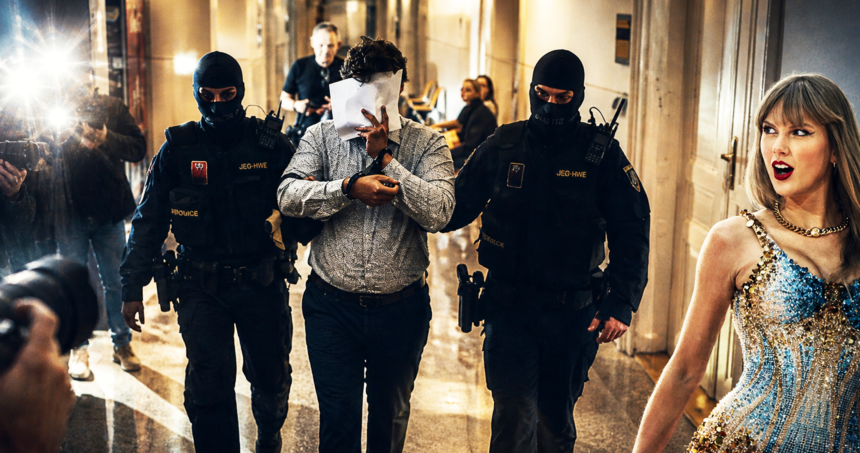
An Austrian court has heard a chilling admission in a high-profile terrorism case, as a 21-year-old man pleaded guilty to plotting an attack targeting global pop icon Taylor Swift during her 2024 Eras Tour concerts in Vienna. The case, which resurfaced in global headlines in April 2026 as the trial began in Wiener Neustadt, highlights the scale of the threat and the role of international intelligence in preventing what authorities described as a potential mass-casualty event.
The accused, identified in court as Beran A due to Austria’s strict privacy laws, admitted to key charges including planning a terrorist attack and involvement with an extremist network. Prosecutors say the plot centered on Swift’s scheduled concerts at Vienna’s Ernst Happel Stadium in August 2024, where tens of thousands of fans were expected to gather over three nights.
According to investigators, the suspect had pledged allegiance to the so-called Islamic State (ISIS) and had been radicalized online. He reportedly sought to carry out an attack designed to cause “as many casualties as possible,” targeting large crowds gathered outside the concert venue. The methods under consideration included homemade explosives, knives, and potentially vehicle-based assaults, reflecting tactics seen in previous extremist attacks.

Authorities revealed that the suspect had actively researched bomb-making techniques and attempted to procure weapons illegally. In one particularly disturbing detail, reports suggested he explored concealing an explosive device inside everyday objects to bypass security measures. The plot was part of a broader pattern of extremist ambition, with prosecutors alleging links to other planned attacks in the Middle East, though those were never carried out.

The plan was foiled just days before the concerts, following intelligence provided by international partners, including U.S. agencies. Acting on the tip-off, Austrian authorities conducted raids and arrested the suspect on August 7, 2024, just one day before the first scheduled performance. The seriousness of the threat prompted officials to cancel all three Vienna shows, a decision that disappointed thousands of fans but was deemed necessary to ensure public safety.
The cancellation sent shockwaves across Swift’s global fan base. Many fans had traveled internationally to attend the concerts, part of her record-breaking Eras Tour. Despite the disappointment, fans gathered across Vienna in spontaneous displays of solidarity, singing songs and exchanging the singer’s signature friendship bracelets.
Swift herself later addressed the incident publicly, describing the cancellations as “devastating” while expressing gratitude to authorities for preventing a tragedy. She acknowledged the emotional impact on fans but emphasized that safety had to come first. In court, the defendant reportedly expressed regret, with his legal team stating that he recognized the severity of his actions. However, prosecutors have underscored the calculated nature of the plot, arguing that the accused had taken concrete steps toward execution. He now faces multiple terrorism-related charges, including membership in a terrorist organization, and could receive a prison sentence of up to 20 years if convicted.

The case has also raised broader concerns about online radicalization and the vulnerability of major public events. Security experts note that large concerts, sporting events, and festivals remain attractive targets due to their dense crowds and global visibility. The Vienna plot, in particular, has prompted renewed scrutiny of event security protocols across Europe.
Meanwhile, the trial is expected to continue through May 2026, with additional hearings examining the extent of the accused’s connections and whether others played a role in facilitating the plan. Authorities have already identified accomplices in related cases, including individuals accused of providing logistical or ideological support.
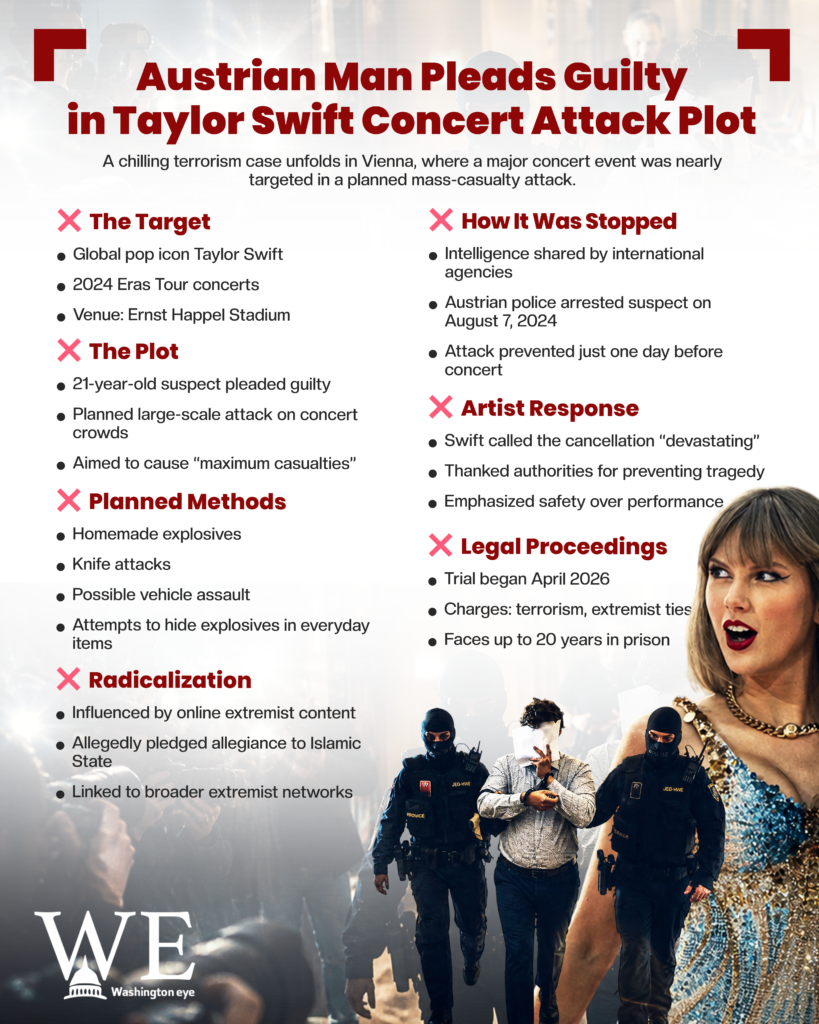
As proceedings unfold, the case stands as a stark reminder of both the persistent threat posed by extremist networks and the importance of international cooperation in counterterrorism efforts. While the attack was ultimately prevented, officials warn that vigilance remains essential, particularly in an era where radicalization can occur rapidly through digital channels.