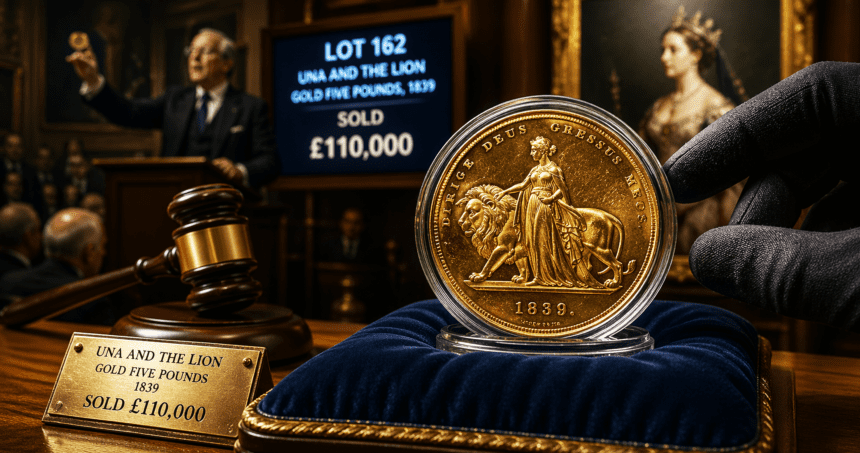
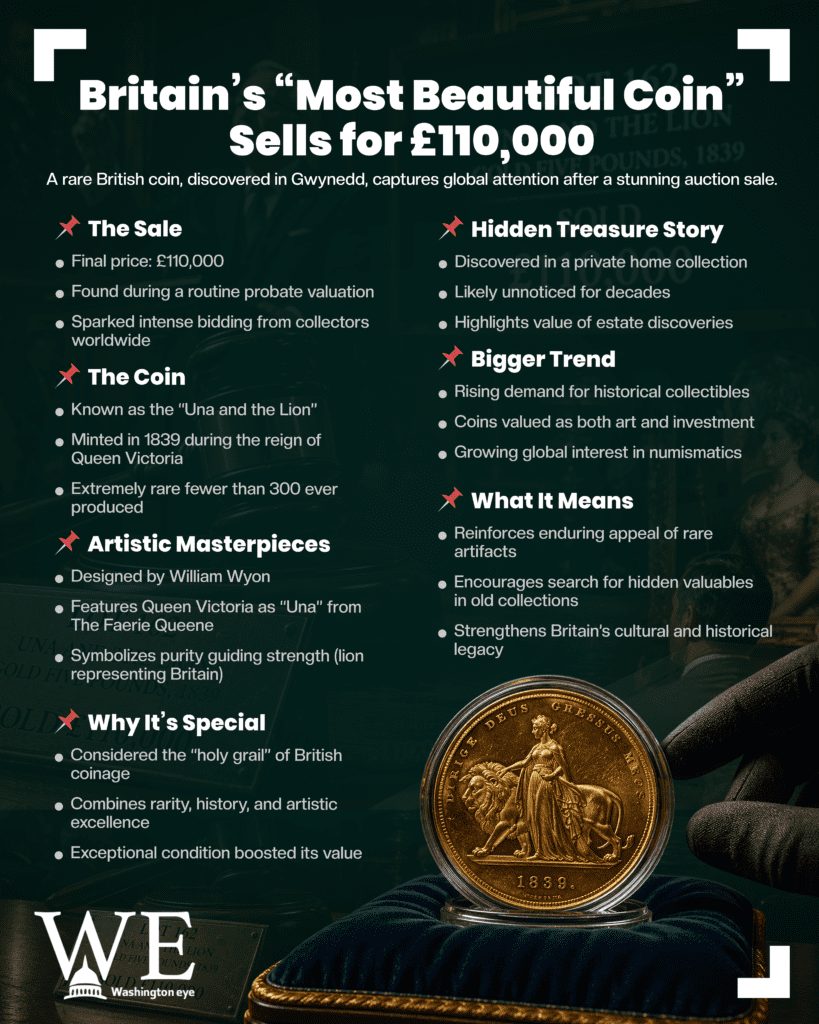
A rare 19th-century British coin widely described as the most beautiful ever minted in the country has been sold for an extraordinary £110,000 at auction, drawing global attention from collectors and historians alike. The coin, known as the Una and the Lion, was discovered during a probate valuation at a private home near Bangor in Gwynedd, Wales, before being placed under the hammer earlier this month. Its remarkable condition, historical importance, and artistic craftsmanship combined to drive competitive bidding, ultimately pushing the final price far beyond expectations.
The coin dates back to 1839 and was minted to commemorate the early years of Queen Victoria’s reign, which began in 1837. It is a £5 gold coin that was never intended for general circulation but rather produced in very limited numbers, fewer than 300 pieces, for collectors and ceremonial sets. Crafted from gold and weighing just under an ounce, the coin stands out not only for its rarity but also for its symbolic design, which has fascinated numismatists for nearly two centuries.
Designed by the renowned engraver William Wyon, who served as chief engraver at the Royal Mint in the 19th century, the coin features a striking and unconventional artistic interpretation of the monarch. Instead of a traditional royal portrait, Queen Victoria is depicted as “Una,” a character from Edmund Spenser’s 16th-century epic poem The Faerie Queene. In the design, she is shown guiding a lion, a powerful symbol of Britain, representing purity, virtue, and strength. This allegorical portrayal was considered bold at the time and remains one of the reasons the coin is celebrated as a masterpiece of numismatic art.
Experts and collectors often refer to the “Una and the Lion” coin as the “holy grail” of British coinage. Its reputation stems from a unique combination of extreme rarity, exceptional design quality, and deep cultural symbolism. According to auction specialists, the example sold for £110,000 was in particularly fine condition, which significantly increased its value in the eyes of bidders. While previous examples of the coin have fetched even higher sums in the past, the latest sale underscores the enduring demand for historic coins that bridge art and history.
The coin’s journey to auction adds another layer of intrigue. It was uncovered during a routine probate valuation, an assessment of a deceased person’s estate, suggesting it may have been quietly held in private hands for decades without wider recognition. Once identified, it quickly attracted attention from collectors worldwide, culminating in a highly competitive auction environment. Although the identity of the buyer has not been publicly disclosed, such purchases are typically made by private collectors or investment groups specializing in rare historical artifacts.
The sale reflects a broader trend in the global collectibles market, where historically significant objects are increasingly valued not just for their material worth but for their narrative and artistic appeal. Coins like the “Una and the Lion” are seen as miniature works of art, portable pieces of history that encapsulate political symbolism, craftsmanship, and cultural identity in a single object. For Britain, the coin represents both the beginning of Queen Victoria’s influential reign and the height of artistic innovation in coin design during the 19th century.
In recent years, rare coins have continued to capture public imagination, often prompting people to check old collections or inherited belongings for hidden treasures. Auction houses report that discoveries made during estate clearances or property evaluations are a common source of valuable finds, highlighting how history can resurface in unexpected ways.

Ultimately, the £110,000 sale of Britain’s “most beautiful coin” is not just a financial milestone but a reminder of the enduring power of art, history, and rarity. As collectors compete for such exceptional pieces, the legacy of coins like the “Una and the Lion” continues to grow, reinforcing their status as icons of British heritage and global numismatic excellence.