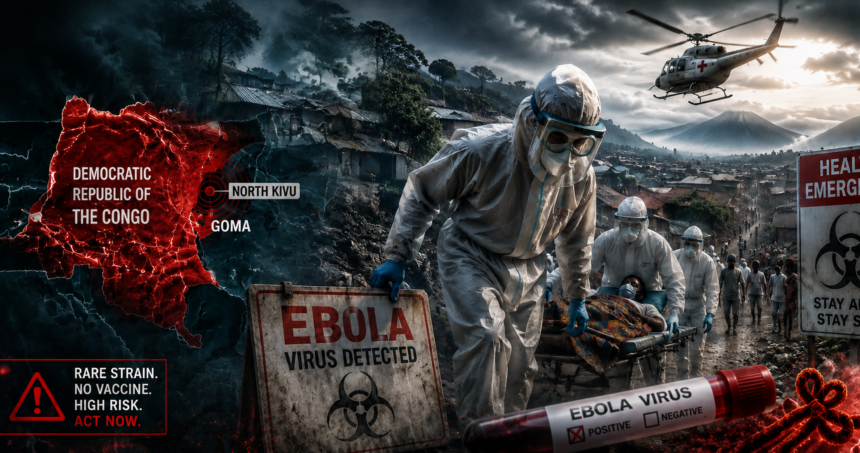
A fast-growing Ebola outbreak in Democratic Republic of the Congo has been declared a Public Health Emergency of International Concern by the World Health Organization, raising fears about the spread of a rare and difficult-to-control strain of the deadly virus.
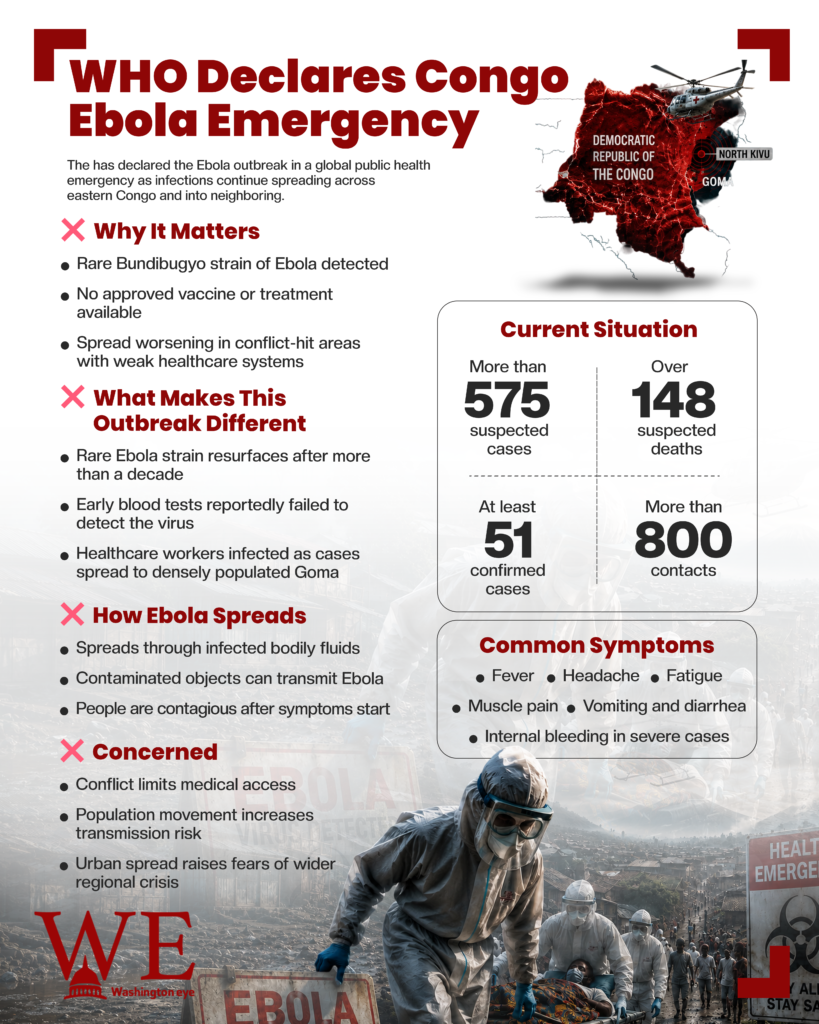
Health officials say the outbreak is especially worrying because it involves the rare Bundibugyo strain of Ebola — a version of the virus for which there is currently no approved vaccine or specific treatment. The outbreak is also unfolding in conflict-affected regions where insecurity, displacement and weak healthcare systems are complicating efforts to contain the disease.
The outbreak has already led to hundreds of suspected infections and more than 140 reported deaths. Confirmed cases have appeared in North Kivu province, including the densely populated city of Goma, increasing concerns about wider regional transmission. Neighboring Uganda has also confirmed cases linked to the outbreak.
According to the WHO, the true scale of the crisis may be far greater than current figures suggest because many infections are likely going undetected due to poor surveillance and limited laboratory testing. Initial blood tests reportedly failed to identify the virus because they were designed to detect more common Ebola strains.
Ebola is a severe viral disease that spreads through direct contact with infected bodily fluids, including blood, saliva and vomit. Symptoms usually appear suddenly within two to 21 days after exposure and often begin with fever, headache, muscle pain and fatigue before progressing to vomiting, diarrhea and, in severe cases, organ failure and internal bleeding.

The WHO says several factors make this outbreak particularly dangerous, including delayed detection, the deaths of healthcare workers and heavy population movement in affected areas. Medical charity groups have warned that the virus may have been spreading for weeks before authorities identified the outbreak.
Governments around the world are responding by increasing airport screenings, restricting travel from affected regions and sending emergency aid and medical teams to Central Africa. Health officials continue tracing hundreds of contacts in an effort to stop further transmission.
While Ebola outbreaks were once largely confined to isolated rural communities, rapid urbanization and population growth are increasing the risk of larger outbreaks reaching major cities. Experts warn that swift international cooperation will be critical to preventing the crisis from escalating further.