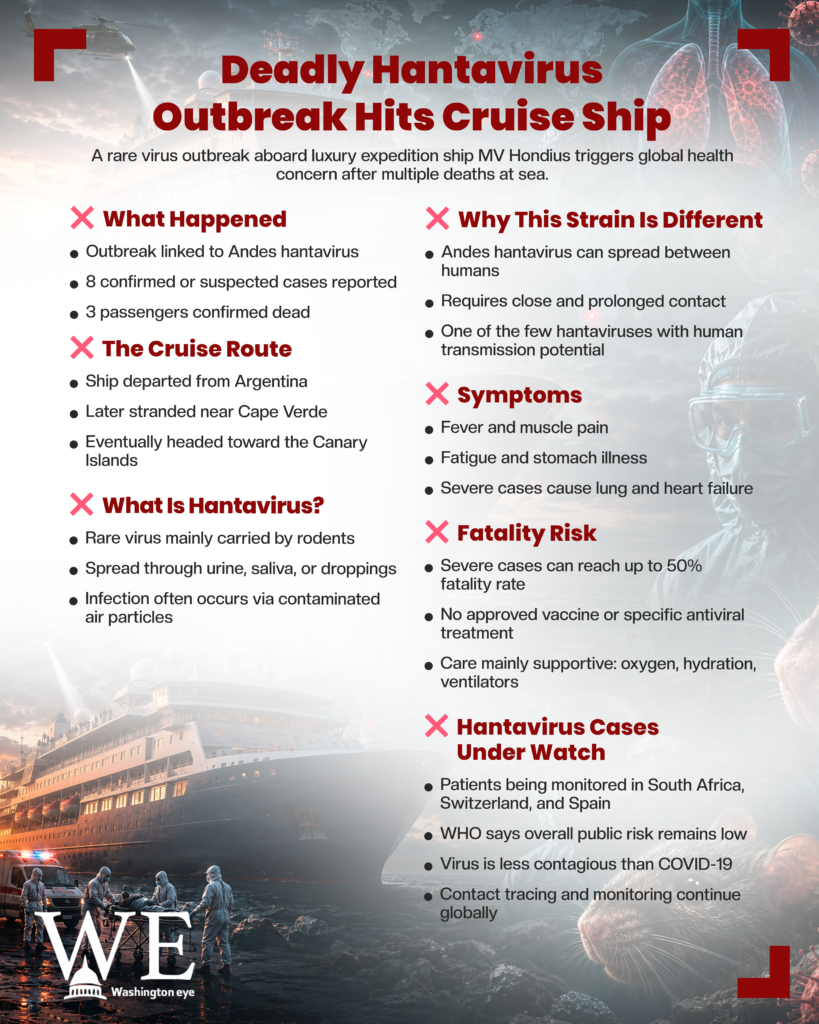
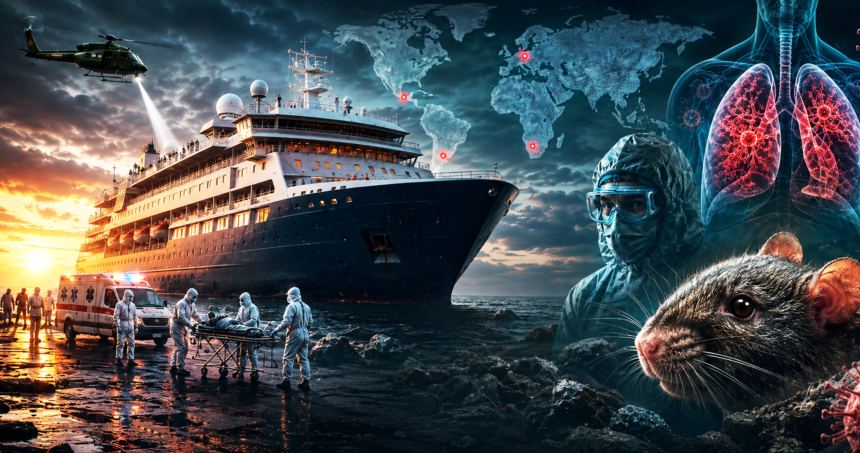
A rare outbreak of hantavirus aboard a luxury cruise ship has drawn global attention after three passengers died and several others fell ill. The cases were linked to the MV Hondius, an expedition vessel that had departed from Argentina earlier this month. Health authorities confirmed that the virus involved is the Andes hantavirus is primarily found in parts of South America and one of the few known hantaviruses capable of limited human-to-human transmission.
According to the World Health Organization (WHO), eight confirmed or suspected cases have been connected to the ship so far. Several infected passengers required emergency evacuation, while others remain under medical supervision in South Africa and Switzerland. Nearly 150 passengers stayed on board while the vessel remained temporarily stranded near Cape Verde before heading toward Spain’s Canary Islands.
Despite concerns triggered by memories of the COVID-19 pandemic, public health experts insist the situation is fundamentally different. WHO Director-General Tedros Adhanom Ghebreyesus emphasized that the overall public health risk remains low and that hantavirus is far less transmissible than COVID-19.
Hantaviruses are rodent-borne viruses typically spread through contact with infected rats or mice, especially through their urine, saliva, or droppings. Infection often occurs when contaminated particles become airborne in enclosed spaces. The Andes strain is unusual because it can spread between humans through close and prolonged contact, such as sharing cabins or sleeping quarters.
Symptoms usually appear within two to three weeks after exposure and may initially resemble flu-like illness, including fever, muscle pain, fatigue, and stomach problems. In severe cases, the disease can rapidly progress into hantavirus cardiopulmonary syndrome, causing fluid buildup in the lungs and serious heart complications. The WHO estimates fatality rates for this form of hantavirus can reach up to 50 percent.
There is currently no specific antiviral treatment or approved vaccine for hantavirus infection. Medical care mainly focuses on supportive treatment, including oxygen therapy, hydration, and ventilator support for critically ill patients. Health officials say early detection and isolation remain essential in limiting transmission during outbreaks.
Experts investigating the cruise ship outbreak are now tracing passenger contacts to determine how the virus spread onboard. While the incident is considered highly unusual, scientists stress that it does not signal the beginning of another global pandemic. Instead, the outbreak serves as a reminder of the continuing threat posed by zoonotic diseases and the importance of rapid public health response systems worldwide.