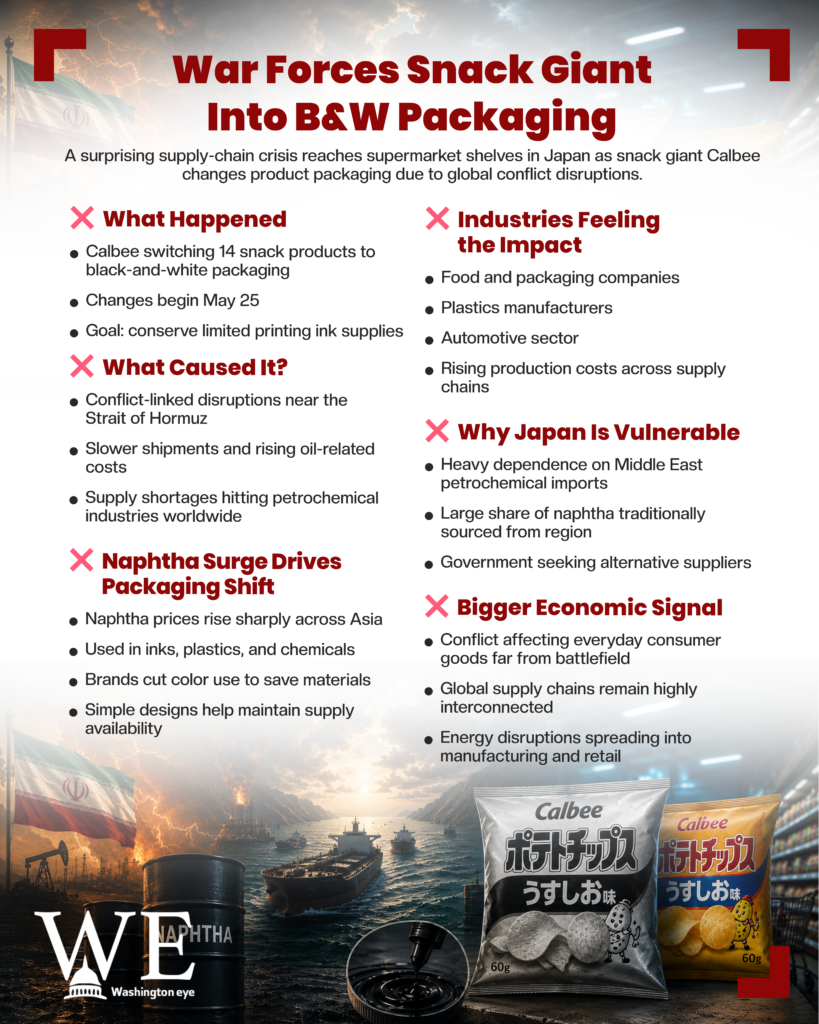
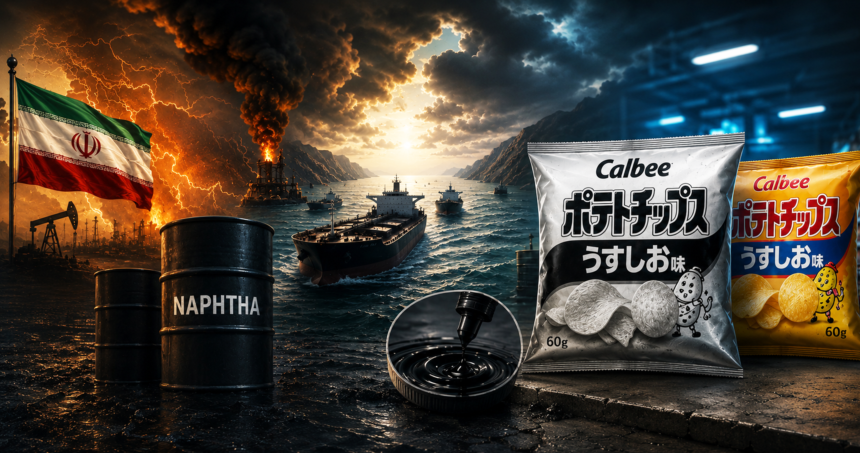
Japanese snack manufacturer Calbee has announced a temporary switch to black-and-white packaging for several of its popular products after supply shortages linked to the Iran conflict disrupted the availability of materials used in colored printing ink.
The company said the packaging changes will affect 14 products, including potato chips and prawn crackers, beginning May 25. The move is aimed at conserving ink supplies while ensuring products remain available on store shelves across Japan.
According to Calbee, instability in the supply chain for raw materials has intensified due to ongoing tensions in the Middle East. One major issue is the disruption of shipments through the Strait of Hormuz, a critical global trade route that handles large volumes of oil and petrochemical exports. Iran’s military actions in the region have slowed transportation and triggered rising prices for oil-related products worldwide.
Among the hardest-hit materials is naphtha, a petroleum byproduct widely used in the production of plastics and printing inks. Asian naphtha prices have surged sharply since the conflict escalated, placing pressure on manufacturers that rely heavily on imported raw materials.
Japan remains especially vulnerable because a significant portion of its petrochemical imports traditionally comes from the Middle East. Japanese officials have acknowledged the growing strain and said efforts are underway to diversify suppliers and stabilize industrial supply chains.
The effects are already spreading beyond the snack industry. Food producers, packaging companies, and even automobile manufacturers have reported increased production costs tied to shortages of petrochemical-based materials. Some firms have raised prices, while others have suspended selected product lines.
Founded in 1949, Calbee employs more than 5,000 people globally and is one of Japan’s best-known snack brands. While the company has not said how long the packaging changes will continue, it described the decision as a flexible response to rapidly changing geopolitical conditions.
The unusual shift to monochrome packaging highlights how international conflicts can quickly affect everyday consumer goods far from the battlefield, reaching supermarket shelves and household products around the world.