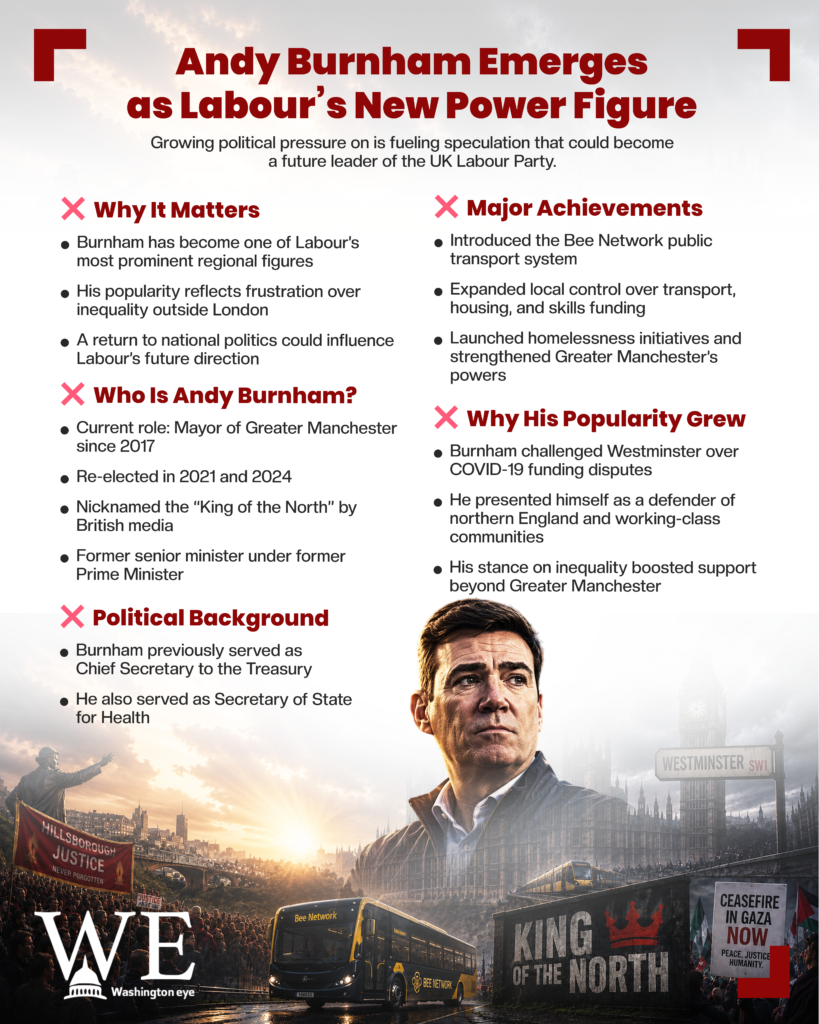
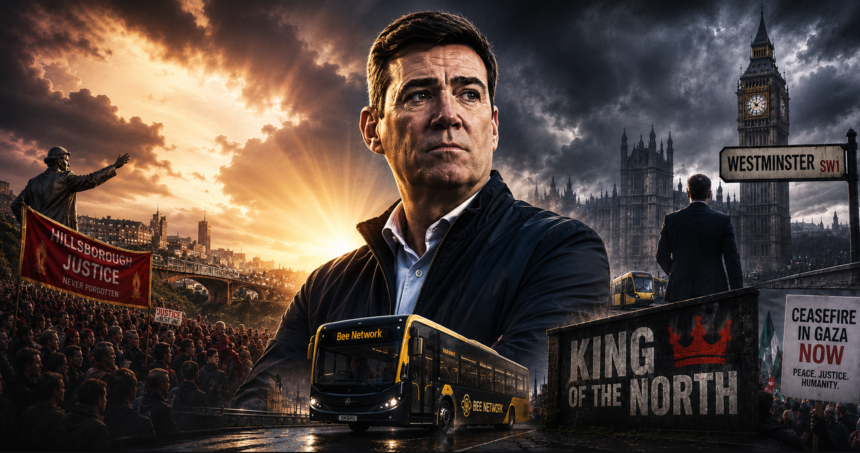
As pressure intensifies on Keir Starmer, attention is increasingly turning toward Andy Burnham as a possible future leader of the Labour Party.
Burnham’s growing national profile is rooted not only in his popularity across northern England but also in his long political career inside government. Before becoming Mayor of Greater Manchester in 2017, he served in senior cabinet roles under former Prime Minister Gordon Brown, including Chief Secretary to the Treasury and Health Secretary during the turbulent years following the 2008 financial crisis.
Although Burnham was once viewed as part of Labour’s political establishment, his image changed dramatically after his outspoken support for justice campaigns linked to the Hillsborough disaster and regional inequality. He later admitted feeling conflicted about being part of governments that failed communities demanding accountability and investment.
As mayor, Burnham successfully transformed that frustration into a platform focused on devolution and regional empowerment. His administration expanded local authority over transport, housing and skills funding, while introducing the Bee Network — a major public transport reform aimed at bringing bus services back under public control.
Burnham’s popularity grew further during the COVID-19 pandemic after he openly challenged Westminster over funding restrictions imposed on Greater Manchester. His resistance earned praise from many northern voters and strengthened his reputation as a defender of regional interests, leading British media to label him the “King of the North.”
His political differences with Labour leadership have also extended into foreign policy. In 2023, Burnham joined Sadiq Khan and Anas Sarwar in calling for a ceasefire in Gaza at a time when much of Labour’s national leadership was offering strong support to Israel.
Burnham has repeatedly criticized Israeli settlement expansion and the policies of Israeli Prime Minister Benjamin Netanyahu, positioning himself closer to Labour’s progressive wing on international issues.
With Labour facing internal unrest and falling public confidence, Burnham’s potential return to Westminster could reshape both the party’s leadership battle and the broader direction of British politics.