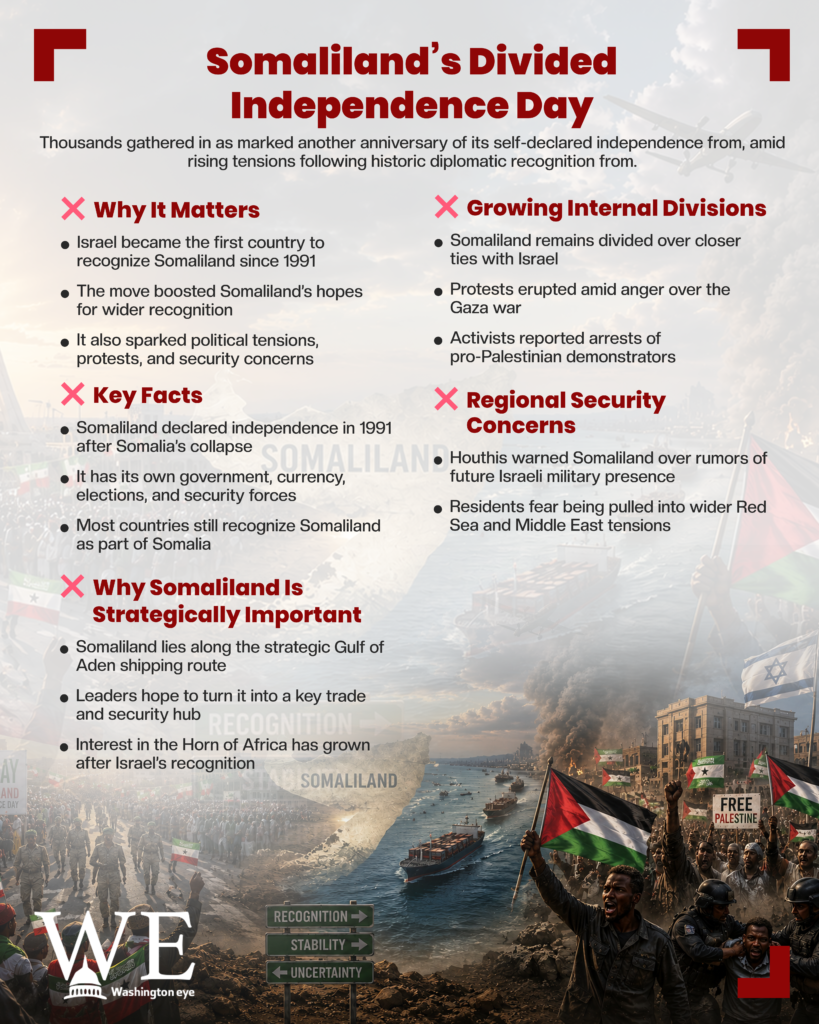
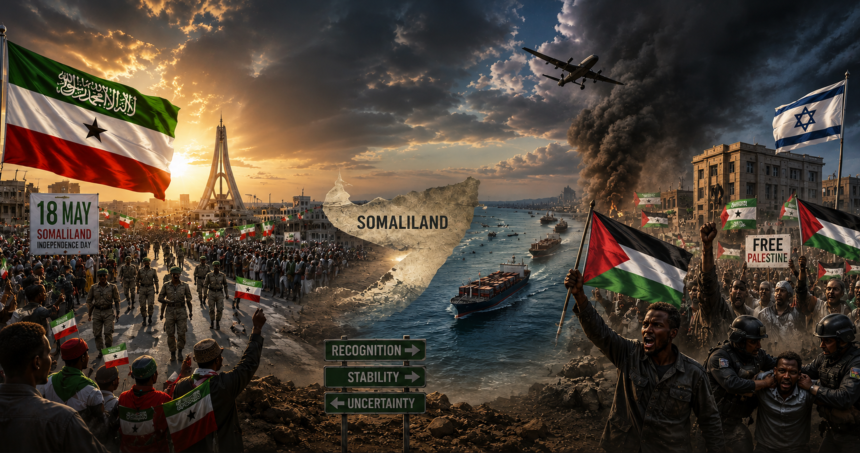
Thousands of people filled the streets of Hargeisa this week as Somaliland celebrated another anniversary of its self-declared independence from Somalia. Military parades, cultural performances and national flag displays reflected growing confidence in the breakaway region following historic recognition from Israel last year.
Somaliland declared independence in 1991 after the collapse of Somalia’s central government, but for decades it remained unrecognized internationally despite maintaining its own government, currency and security forces. Israel’s decision to formally recognize Somaliland marked a major diplomatic breakthrough and renewed hopes among leaders in Hargeisa that other countries may eventually follow.
President Abdirahman Mohamed Abdullahi used the celebrations to highlight Somaliland’s stability, democratic institutions and strategic location along the Gulf of Aden, one of the world’s busiest maritime trade routes. Officials believe the region could become an important commercial and military hub connecting Africa and the Middle East.
However, the recognition has also exposed deep political and social divisions. Somaliland’s overwhelmingly Muslim population remains split over closer ties with Israel, especially amid continuing anger across the region over the war in Gaza. While some businesses and homes in Hargeisa have displayed Israeli flags in support of the partnership, protests have also erupted in several areas.
Activists say authorities detained demonstrators carrying Palestinian flags and criticizing the new diplomatic relationship. Critics fear the alliance could damage Somaliland’s reputation in the wider Muslim world and complicate its campaign for broader international acceptance.
Security concerns are also growing. Yemen’s Iran-backed Houthi movement has reportedly threatened Somaliland over speculation that Israel could establish a military presence there. Many residents fear the territory could become entangled in wider regional conflicts stretching across the Red Sea.
At the same time, Somaliland continues to face internal territorial disputes. Tensions remain high in eastern regions claimed by the newly formed North East State of Somalia, where deadly clashes between Somaliland forces and local groups displaced thousands of civilians in recent years.
Despite the celebrations in Hargeisa, Somaliland’s future remains uncertain — balancing diplomatic gains, regional tensions and the ongoing challenge of securing wider international recognition.