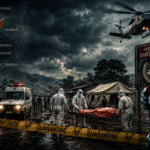
Deaths in Immigration and Customs Enforcement detention are rising sharply, but the trend is not a tragic accident of higher numbers alone. CNN reports that more detainees died in ICE custody in 2025 than in any year in at least two decades and that 2026 is on track to surpass even that grim record. Nearly 50 detainees have died since President Donald Trump returned to office in 2025 and began pushing for mass deportations, according to CNN. These figures reflect an enforcement strategy that has expanded detention far faster than the system has built capacity for safe custody and adequate care.
Understaffing as A Structural Risk
CNN’s investigation links many of the recent deaths to severe understaffing in detention facilities, particularly among medical personnel. As ICE detains record numbers of people, medical staff have struggled to keep up with basic screenings, chronic disease management and emergency responses, creating dangerous delays in treatment. A separate investigation by NBC News notes that ICE recorded 33 detainee deaths in 2025, the highest number in more than 20 years, even as the agency has reduced the level of detail it shares publicly about fatalities, limiting transparency around what went wrong.
Independent research suggests that understaffing magnifies existing weaknesses in clinical care. A 2024 report by the American Civil Liberties Union, Physicians for Human Rights and American Oversight concluded that more than 90 percent of deaths in ICE custody could have been prevented with better medical care, citing misdiagnoses, inappropriate prescriptions and delayed responses to emergencies. When facilities lack sufficient doctors, nurses and mental health professionals, errors that might be rare in a well resourced system become recurring and sometimes fatal.
DHS Policy Choices and their Downstream Effects
The Department of Homeland Security’s policies have directly shaped this risk environment. CNN reports that after President Trump’s return to office, DHS prioritized large-scale interior enforcement and detention while relying heavily on existing facilities and private contractors, despite long standing concerns about conditions and oversight. As arrests increased, ICE rapidly expanded the detained population without proportionate increases in qualified staff or robust safeguards, effectively stretching an already fragile infrastructure.
Policy decisions around standards and accountability also matter. Advocates and investigative reporting have documented how DHS has allowed facilities to continue operating despite repeated violations of detention standards, including failures in medical care. When deaths occur, internal reviews are often opaque and rarely lead to meaningful sanctions, signaling to facility operators that the practical consequences of poor care are limited. The shift identified by NBC News toward shorter, less detailed public reports on deaths further weakens external pressure for improvement.
Deterrence, Enforcement, and Human Costs
The death toll is unfolding in the context of an explicit political push for deterrence through tougher enforcement. CNN and other outlets have documented how the administration’s emphasis on mass deportations has coincided with record or near record levels of detention. NPR has described 2025 as one of the deadliest years in ICE custody in decades, noting at least 20 deaths by late October, even as ICE was ramping up hiring and detention capacity.
Supporters of more aggressive detention argue that a larger detainee population will inevitably lead to more deaths in absolute terms, pointing to overall mortality rates that remain low relative to the total number of people held. However, the steady stream of investigations finding preventable failures, combined with evidence that many deceased detainees had flagged health concerns that went unaddressed, challenges the view that these outcomes are an unavoidable byproduct of enforcement. The debate is increasingly about whether the current policy mix respects basic standards of care and due process rather than about enforcement alone.
Policy Implications and Paths Forward
The pattern emerging from CNN’s findings and corroborating reports points to a set of concrete policy implications. First, detention capacity cannot be responsibly expanded without matching investments in qualified medical staff and enforceable clinical standards across all facilities, public and private. Second, DHS oversight mechanisms need sharper tools, including transparent investigations, public reporting with meaningful detail and credible consequences for chronic violations.

Third, policymakers face a broader strategic choice about how heavily immigration control should rely on custodial detention at all. NPR and other outlets have documented communities resisting the expansion of ICE’s footprint, reflecting growing unease with a model that produces recurring, preventable deaths. Alternatives to detention that combine supervision with access to legal and social services may not eliminate all risk, but they avoid concentrating so much life and death responsibility in facilities that have repeatedly shown they cannot manage it safely at current scale.
Ultimately, the rising death toll in ICE detention is a test of whether enforcement policy can be aligned with basic standards of human safety and dignity. The answer will depend less on rhetoric around border control and more on whether DHS and lawmakers are willing to recalibrate staffing, oversight and the use of detention itself in light of the evidence now coming to light.