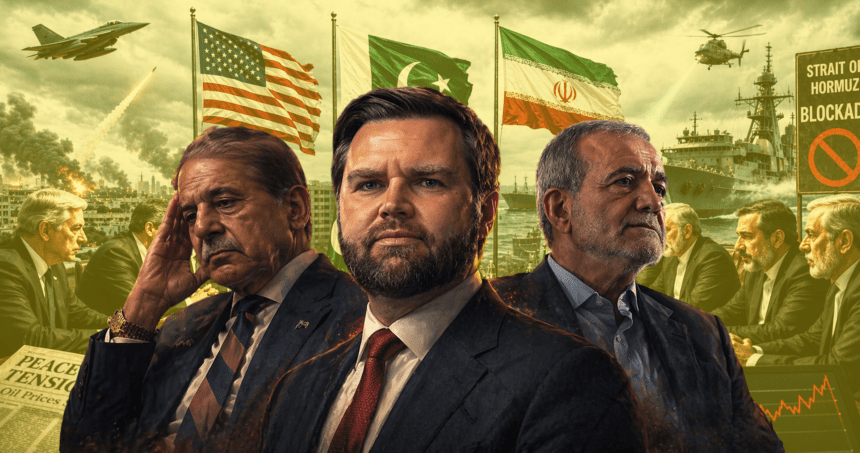
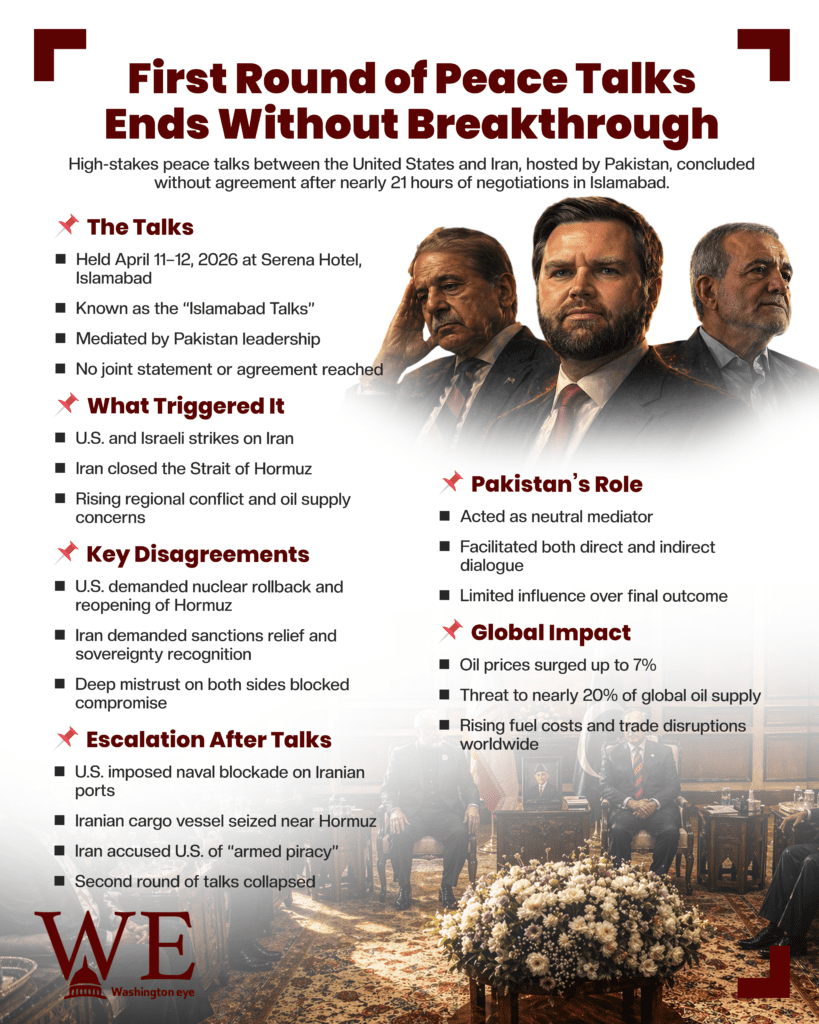
A high-stakes round of peace talks between the Pakistan-hosted delegations of the United States and Iran has ended without a breakthrough, exposing deep divisions over military actions, nuclear demands, and control of strategic waterways. The negotiations, widely referred to as the Islamabad Talks, were held on April 11–12, 2026, at the Serena Hotel in Islamabad and lasted nearly 21 hours, but concluded with both sides leaving without an agreement.
The talks were convened amid an escalating regional conflict triggered earlier in 2026, involving U.S. and Israeli strikes on Iran and Tehran’s subsequent closure of the Strait of Hormuz, a critical global oil route. Pakistan stepped in as a mediator, proposing a ceasefire and offering its capital as neutral ground for dialogue. Prime Minister Shehbaz Sharif and senior military leadership played key roles in facilitating indirect and direct communication between the two sides.
Despite initial optimism, the negotiations faltered over fundamental disagreements. The United States reportedly demanded that Iran scale back its nuclear program, reopen the Strait of Hormuz, and accept monitoring conditions. Iran, however, rejected what it described as “unrealistic” and shifting demands, insisting on sanctions relief, recognition of its sovereignty, and adherence to a 10-point proposal addressing broader regional security concerns.
Tensions escalated further in the days following the talks. On April 13, the United States imposed a naval blockade on Iranian ports, citing the failure of negotiations and the need to pressure Tehran into compliance. Iran condemned the blockade as a violation of the ceasefire and international law, warning of retaliation.
The situation deteriorated sharply when U.S. forces seized an Iranian cargo vessel near the Strait of Hormuz, an action that Tehran labeled “armed piracy.” This incident effectively derailed plans for a second round of negotiations in Islamabad. Iranian officials announced they would not participate in further talks under current conditions, accusing Washington of undermining diplomacy through military escalation.
Pakistan, meanwhile, continued its diplomatic efforts despite the setback. Security preparations in Islamabad had been intensified ahead of the expected second round, highlighting the country’s commitment to mediation. However, Iran’s refusal to attend rendered the summit ineffective before it even began.
The failed talks have had immediate global repercussions. Oil prices surged by up to 7% amid fears of prolonged instability, as nearly one-fifth of the world’s oil supply passes through the Strait of Hormuz. The economic impact has been felt worldwide, with rising fuel costs and disruptions in global trade.

The collapse of the peace talks underscores the complexity of modern geopolitical conflicts, where diplomacy is often undermined by concurrent military actions. Analysts argue that the U.S. strategy of combining negotiation with coercive measures, such as blockades and naval seizures, has eroded trust and made meaningful dialogue difficult. On the other hand, Iran’s firm stance and refusal to compromise on key issues reflect both domestic political pressures and a broader strategy to resist Western influence.
Pakistan’s role as mediator has been widely praised, yet its ability to influence outcomes remains limited due to the entrenched positions of the primary actors. While Islamabad successfully brought both sides to the negotiating table, it lacks the leverage to enforce concessions.
The failure also highlights a broader shift in international diplomacy, where regional powers like Pakistan are increasingly stepping into mediation roles traditionally dominated by global institutions. However, without sustained commitment from conflicting parties, such efforts risk becoming symbolic rather than substantive.
Looking ahead, the prospects for renewed dialogue remain uncertain. The United Nations has expressed cautious optimism that talks may resume, but escalating rhetoric and military actions suggest that any future negotiations will face significant hurdles.