
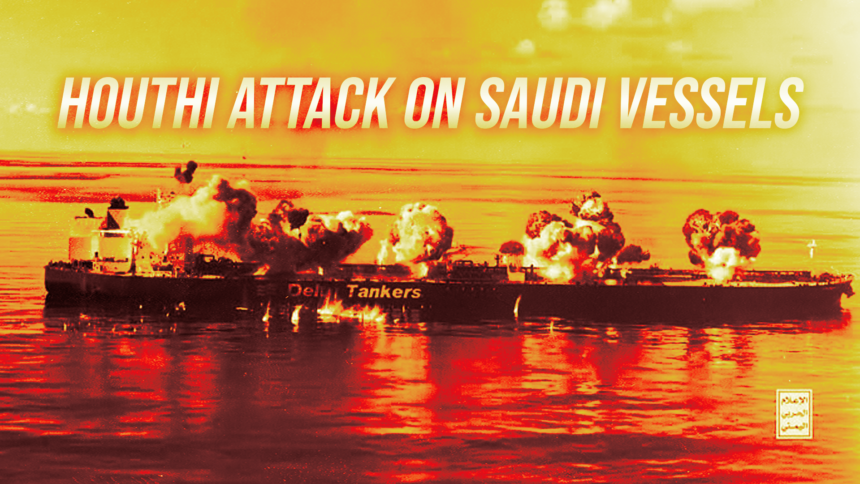
Yemen’s Houthi movement has claimed responsibility for attacking a Saudi-owned oil tanker near the kingdom’s main Red Sea petroleum-exporting port, marking the latest escalation in a renewed campaign against Saudi shipping and energy infrastructure.
The attack occurred on August 24, 2026, approximately 63 nautical miles, or 117 kilometres, west of the Saudi port city of Yanbu. Houthi military spokesperson Yahya Saree said the tanker Amzan was targeted with a ballistic missile as part of the group’s declared blockade of Saudi-linked shipping.
Bahri, Saudi Arabia’s national shipping company and the vessel’s owner, confirmed that Amzan had been involved in a maritime incident. The company said all crew members were safe, no injuries had been reported and it was coordinating with the relevant authorities.

The United Kingdom Maritime Trade Operations agency independently reported that a tanker had been struck by an unidentified projectile. It said the crew were accounted for and there was no reported environmental impact. Saudi authorities did not immediately identify the weapon or officially attribute the incident to the Houthis.

The Houthis claimed that their missile struck the vessel directly and caused a fire. That part of the statement had not been independently verified, and Bahri did not report a fire or significant damage in its initial announcement. The difference illustrates the difficulty of confirming battlefield claims in the Red Sea.
The incident was an attack on a Saudi vessel near the kingdom rather than a confirmed strike on Saudi territory. However, it forms part of a wider Houthi campaign that has included claimed drone and missile attacks against airports, oil facilities and other targets inside Saudi Arabia.
Yanbu’s strategic importance makes the latest attack particularly concerning. The city is Saudi Arabia’s principal oil-exporting centre on the Red Sea, where millions of barrels can be loaded onto tankers every day. It is connected to oilfields in the country’s east by the East–West Pipeline.

The pipeline and Yanbu allow Saudi oil to reach international markets without travelling through the Strait of Hormuz. This alternative has become more important because of the Iranian blockade and disruption affecting Hormuz during the wider regional conflict. Threats to both routes could place additional pressure on oil supplies, shipping costs and global energy prices.
The latest Reuters report said shipping from Yanbu had already faced disruption since the Houthis declared a blockade against Saudi-linked vessels in July. The movement says the blockade is a response to what it describes as a continuing Saudi siege of Houthi-controlled areas of Yemen. Riyadh denies imposing such a siege.
Tensions between Saudi Arabia and the Houthis returned to open conflict on July 13, when the movement fired missiles towards southern Saudi Arabia after accusing the kingdom of attacking Sanaa International Airport. Saudi forces said they intercepted the missiles, which the Houthis claimed were aimed at Abha airport.
Those launches were the first Houthi attacks formally claimed against Saudi Arabia since an informal truce began in 2022. That understanding had significantly reduced cross-border missile attacks after years in which Saudi cities, airports and oil facilities were repeatedly targeted. Reuters reported that the July launches ended nearly four years of relative calm.
Since then, the Houthis have increased attacks on Saudi assets. Conflict-monitoring organisation ACLED recorded 16 attacks against Saudi Arabian targets between July 13 and August 14, including seven oil facilities and six tankers. Some Houthi claims could not be independently confirmed.
On August 9, the group said it had attacked Saudi Aramco’s Jazan refinery with a drone. Saudi Arabia’s Energy Ministry confirmed that a fire occurred at the refinery and was extinguished without injuries, but it did not publicly identify the cause. The refinery can process approximately 400,000 barrels of crude oil per day.
The Houthis later claimed drone attacks against a sensitive target at Najran airport and an Aramco facility in Najran on August 20. Saudi Arabia did not immediately confirm those two strikes. Earlier shelling in Najran reportedly injured 11 civilians, including a four-year-old child.
The escalation revives a conflict that began after the Houthis seized Yemen’s capital, Sanaa, in 2014. A Saudi-led military coalition intervened in 2015 to support Yemen’s internationally recognised government. Years of fighting killed civilians, damaged infrastructure and contributed to one of the world’s worst humanitarian crises.
The Iran-aligned Houthis have since developed a substantial arsenal of ballistic missiles, cruise missiles and long-range drones. Their campaign against Red Sea shipping has demonstrated their ability to disrupt maritime trade even without controlling the sea physically.
The group’s renewed focus on Saudi energy exports may be intended to pressure Riyadh into easing restrictions on Houthi-controlled Yemen and discourage further Saudi military action. It may also support Iran by threatening an alternative oil-export route while the Strait of Hormuz remains disrupted.
For Saudi Arabia, the challenge is to protect oil infrastructure and Red Sea shipping without returning to a large-scale war in Yemen. Renewed military intervention could produce further civilian casualties and undermine years of negotiations, while a limited response might encourage additional Houthi attacks.
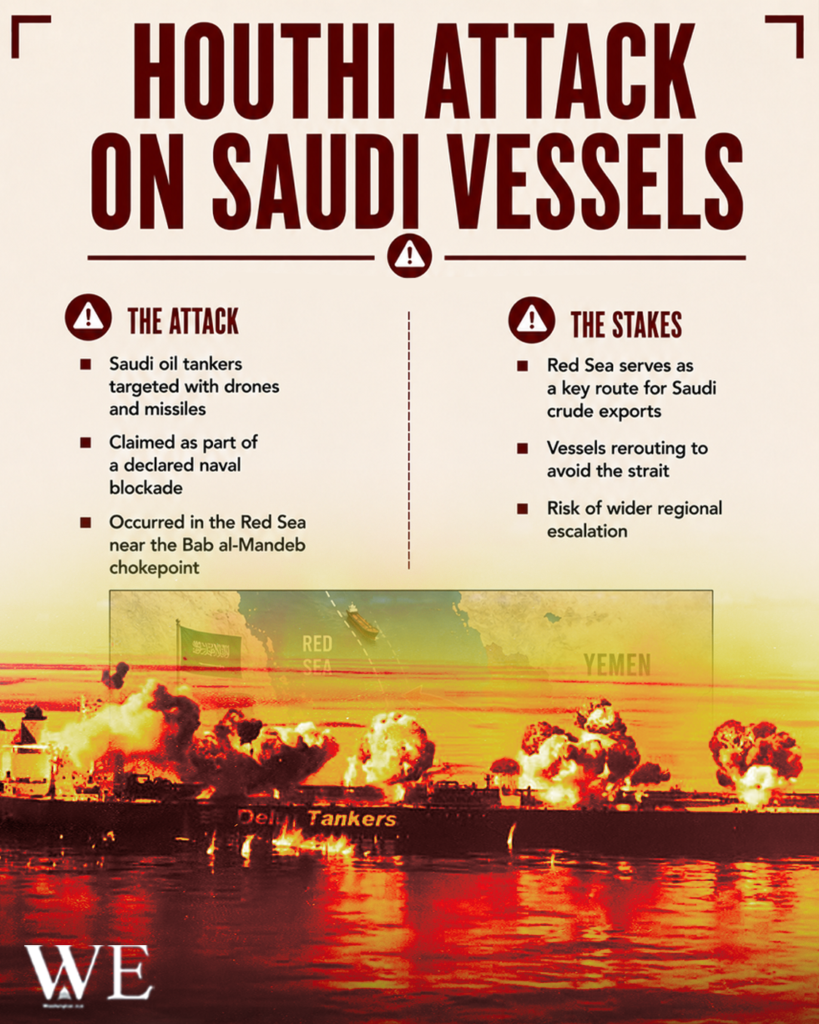
The Amzan incident caused no reported casualties or pollution, but its strategic effect is considerably wider. A successful strike near Yanbu demonstrates that vessels using Saudi Arabia’s alternative oil corridor remain vulnerable, increasing the danger that the Yemen conflict could once again affect global shipping, energy security and the wider Middle East.