
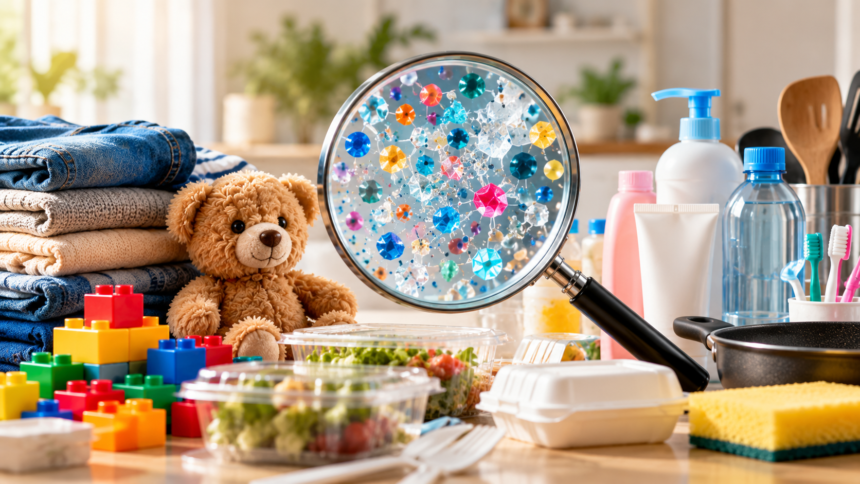
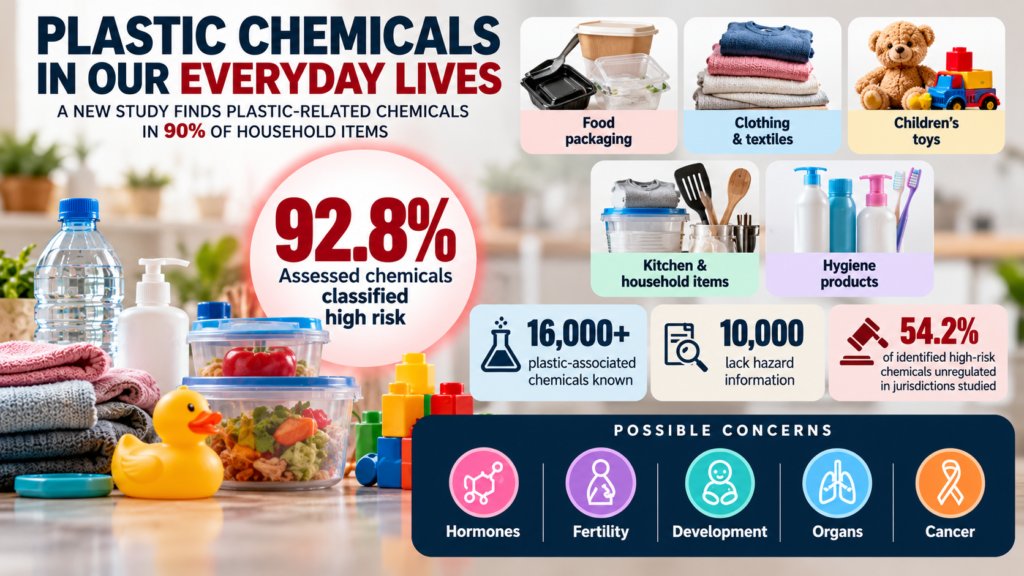
Chemicals associated with plastics in everyday products, from food packaging and children’s toys to clothing, kitchenware and personal-care items, may pose a much wider health concern than previously recognised, according to a new investigation that found 92.8% of the chemicals it assessed were classified as high risk to human health.
The findings come from a report titled Poison Plastics: How Chemicals in Everyday Plastics Are Harming Your Health, released on September 30 by the London-based Environmental Justice Foundation (EJF). Researchers analysed existing data on plastic-associated chemicals, examining both their potential toxicity and the likelihood of human exposure.
The report examined chemicals associated with five broad categories of products people encounter routinely: food-contact materials, textiles and clothing, children’s toys, household goods, and hygiene and medical products. Household products examined included items such as kitchenware, tableware, bottles, gardening equipment, office supplies and other common plastic goods.

What Did Researchers Find?
More than 16,000 chemicals are known to be associated with plastics and their manufacture, according to existing scientific databases. Thousands are intentionally added to give plastics particular characteristics, such as flexibility, durability, colour or resistance to heat and ultraviolet light. Others can be present as processing chemicals, impurities or breakdown products.

EJF’s analysis found that 92.8% of the chemicals assessed with sufficient information were considered high risk to human health. Potential hazards associated with some plastic chemicals include endocrine disruption, reproductive and developmental toxicity, organ damage, genetic changes and cancer.
But one of the report’s most significant findings concerns what scientists do not know. Around 10,000 of the approximately 16,000 known plastic-associated chemicals lack hazard information, while nearly 80% of the 3,552 chemicals considered in parts of EJF’s analysis lacked enough toxicity or exposure information for researchers to determine their overall health risk. This means the headline figure should be interpreted carefully: it does not establish that 92.8% of all plastic chemicals are dangerous, because many chemicals cannot yet be adequately assessed.
How Can Plastic Chemicals Enter the Body?

Exposure can occur through several routes. Chemicals may migrate from plastic food packaging or containers into food, while chemicals released from furniture, clothing and other consumer goods can accumulate in indoor air and dust. Personal-care products provide another possible source of exposure. Heat, wear and degradation can increase the release of some substances from plastics. Scientists have paid particular attention to chemicals including phthalates and bisphenols, some of which can interfere with hormonal systems.
Recent research suggests that reducing contact with plastics may lower exposure relatively quickly. A 2026 randomized trial published in Nature Medicine found that participants following interventions designed to minimise plastic exposure experienced substantial reductions in urinary levels of several plastic-associated chemicals within just seven days.
BPA levels fell by about 60% in the relevant intervention comparison, while two measured phthalate metabolites fell by approximately 38% and 54%. Researchers in that study identified highly processed, plastic-packaged and canned foods as important modifiable sources of exposure.
Regulation, Industry Response and the Critical View
The EJF report argues that existing regulation has failed to keep pace with the enormous number of chemicals used in plastics. It found that 54.2% of the high-risk chemicals it identified were regulated neither internationally nor in any of four jurisdictions examined, the European Union, Japan, South Korea and California. EJF is calling for stronger chemical restrictions, greater transparency from manufacturers and reductions in unnecessary plastic production.
The findings arrive as governments continue efforts toward an international agreement addressing plastic pollution, increasing pressure for negotiations to focus not only on discarded plastic waste but also on the chemicals used throughout plastics’ life cycle.
However, the conclusions have also faced criticism from the plastics and chemical industry. The American Chemistry Council told CNN that the EJF analysis should be interpreted with caution, arguing that its methodology did not incorporate all available regulatory databases and questioning whether the report adequately represented existing chemical-safety assessments.
Importantly, hazard does not automatically equal actual harm. Health risk depends on factors including the chemical involved, dose, route and duration of exposure, and individual vulnerability. Associations between particular plastic-associated chemicals and disease also do not establish that every plastic product causes those diseases.
Still, the combination of widespread exposure, evidence surrounding known endocrine-disrupting chemicals and major gaps in toxicity data is driving calls for more research and stronger regulation. The new report therefore raises a broader question: not simply whether plastic surrounds modern life, but whether enough is known about the thousands of chemicals that come with it.