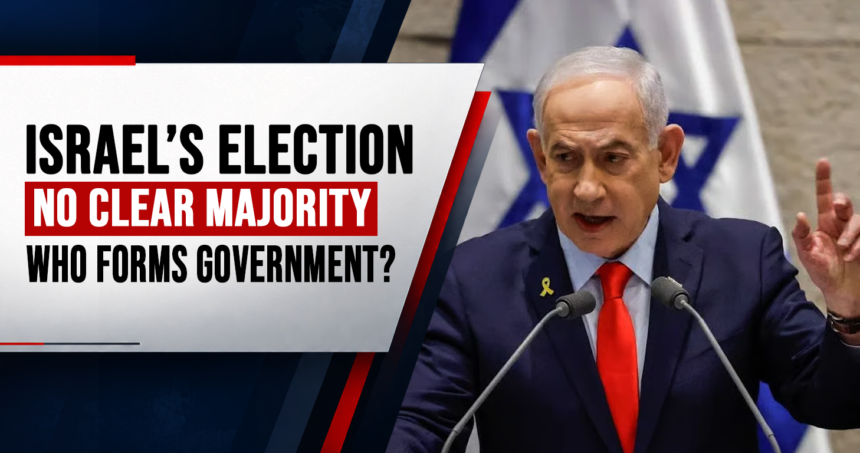
Israeli Prime Minister Benjamin Netanyahu’s political alliance has taken the lead in the country’s parliamentary elections but remains short of the majority required to form a government, according to the latest partial results released on Wednesday, raising the prospect of prolonged coalition negotiations.
With 76.8 percent of ballot boxes counted, Netanyahu’s right-wing and religious bloc was projected to secure 54 seats in Israel’s 120-member Knesset, while the opposition alliance led by former military chief Gadi Eisenkot was expected to win 47 seats. Arab-led political parties were projected to obtain 19 seats, according to figures reported by The Times of Israel, citing the Central Elections Committee.
The figures mark a shift from earlier exit polls, which suggested that Netanyahu’s governing alliance and Eisenkot’s opposition bloc were tied at approximately 51 seats each. Despite the lead, Netanyahu remains seven seats short of the 61-seat parliamentary majority required to establish a conventional majority government.
The election, held on October 27, was Israel’s first national vote since the October 7, 2023, Hamas-led attacks and the subsequent war in Gaza. The contest has been widely regarded as a significant test of Netanyahu’s leadership amid continuing security concerns, political divisions and criticism over his government’s handling of regional conflicts.
According to the Associated Press, Netanyahu’s Likud party emerged as the leading individual party during the initial count, receiving approximately 20.6 percent of votes counted at an earlier stage, compared with 16.8 percent for Eisenkot’s centrist Yashar party. However, Israel’s proportional representation system means that winning the largest share of votes does not automatically guarantee the right to govern. Political parties must negotiate agreements with other parliamentary groups to secure sufficient support.
One of the election’s most significant developments has been the strong performance of Arab-led parties, which are projected to secure 19 seats, compared with 10 seats following the 2022 election. Their increased representation could become decisive in determining whether an alternative government can be formed, although political disagreements between Arab parties and the main opposition groups may complicate negotiations.
The election also witnessed unusually high voter participation, with turnout reaching approximately 77.7 percent, the highest recorded since 1999. The increased participation reflects the significance of an election shaped by national security concerns, the consequences of the Gaza war, military conscription disputes and dissatisfaction among sections of the electorate.

During the campaign, Netanyahu emphasised his government’s military operations and presented himself as an experienced leader capable of addressing security threats, particularly those involving Iran and armed groups operating in the region. Eisenkot, who previously served as chief of staff of the Israeli military, campaigned on promises of political change, national unity and restoring public confidence in government institutions.
The issue of military service exemptions for ultra-Orthodox Jewish men also emerged as a major point of disagreement, with opposition parties advocating changes to existing arrangements. Meanwhile, Netanyahu’s ongoing corruption trial remained a source of political controversy. The prime minister has consistently denied wrongdoing. Following the election, Netanyahu expressed confidence that his Likud party would remain the largest political force and called for the establishment of a right-wing government.
Eisenkot, meanwhile, argued that the election demonstrated public demand for a different political direction, although his alliance also faces difficulties in assembling a parliamentary majority. International attention has focused on the possible implications of the election for Israel’s policies towards Gaza, the occupied West Bank, Iran and neighbouring countries. The eventual composition of the government could influence regional diplomatic relations and Israel’s approach to ongoing security challenges.
Under Israel’s political system, President Isaac Herzog will consult elected parliamentary parties after the results are finalised before selecting a candidate to attempt to form a government. The designated candidate initially receives 28 days to negotiate a coalition, with a possible 14-day extension. If negotiations fail, alternative candidates may be given opportunities to establish a government.
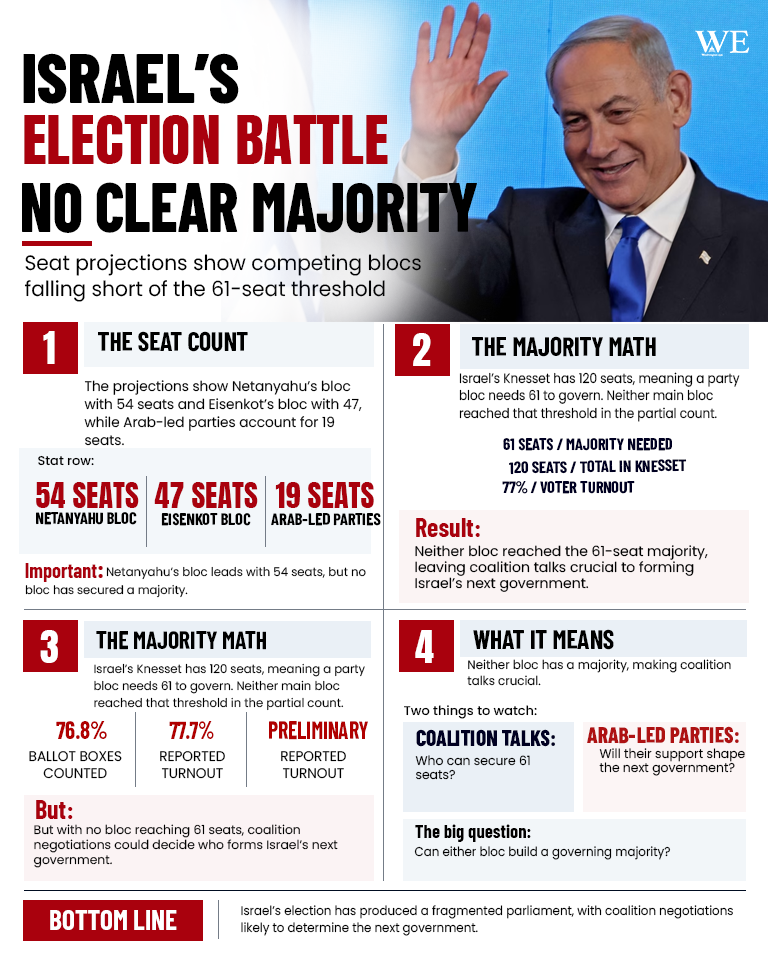
Official election results are expected to be published on November 4, although additional counting, including ballots cast by military personnel and other eligible absentee voters, could change the projected seat distribution. Until a new administration is formed, Netanyahu will remain caretaker prime minister. With neither major alliance securing a clear majority, the election has left Israel facing an uncertain political transition in which smaller parties and coalition negotiations may prove as important as the final vote count.