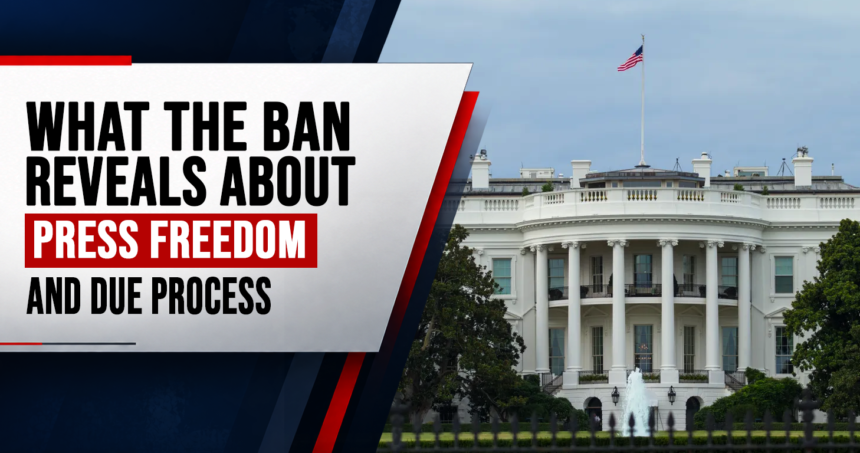
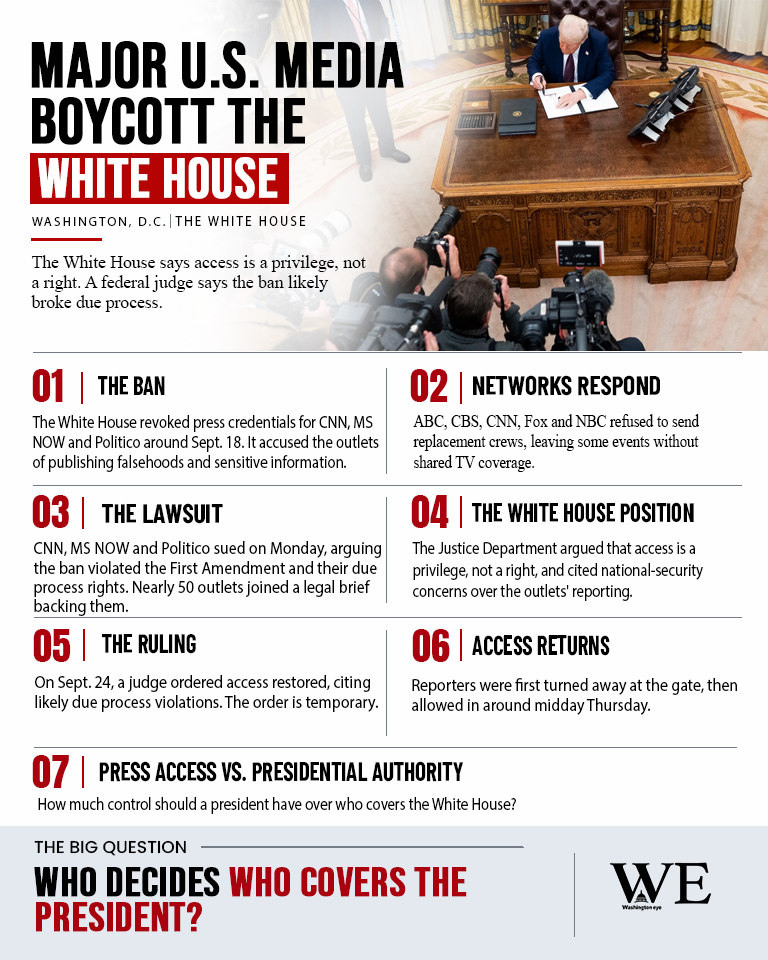
Some of America’s largest news organizations temporarily stopped providing video and photographic coverage of President Donald Trump in an unusual show of media solidarity after the White House barred journalists from CNN, MS NOW and Politico, escalating a confrontation over presidential power, press access and the First Amendment.
The dispute began after Trump announced on September 18 that the three organizations would no longer be allowed onto White House grounds. Reporters from the outlets were subsequently turned away and had their credentials confiscated or disabled.
Trump accused the organizations of publishing false or deliberately negative reporting and said their access presented national-security concerns. The affected organizations rejected those claims, arguing that the administration was retaliating against them because of journalism it disliked.

CNN, MS NOW and Politico responded by filing a federal lawsuit on September 21, alleging violations of both the First Amendment’s protections for press freedom and the Fifth Amendment right to due process. But the controversy quickly expanded beyond the three organizations.
ABC, CBS, NBC and Fox Join Unusual Protest
Major television networks ABC, CBS, NBC and Fox News, together with CNN, normally participate in a rotating White House television pool. The system allows one network at a time to record presidential events and distribute the footage to other news organizations. When CNN was prevented from performing its scheduled pool responsibilities, the other networks declined to replace it.
The television pool consequently suspended coverage of events designated for pooled presidential video. The networks said the public had a vital interest in receiving accurate and independent information about the government and argued that an administration should not restrict a news organization because it objects to its reporting.
The response was particularly notable because the participating organizations span very different editorial and political audiences. Fox News, often considered friendlier to Trump than CNN or MS NOW, nevertheless joined the collective action. Print organizations also participated.
The Washington Post, The New York Times and Associated Press temporarily declined to publish or distribute photographs produced through the White House photography pool as part of the broader protest. The result was an extraordinary situation in which some presidential events went ahead without the independent television coverage Americans have routinely received for decades.
White House Responds With ‘Trump TV’
The administration attempted to fill the resulting visual gap through its own communications operation. The White House promoted a government-controlled online stream branded “Trump TV,” promising viewers direct access to administration announcements and events without traditional media intermediaries.
The White House portrayed the service as a way for Americans to receive information directly from the administration. Critics, however, argued that government-produced footage cannot substitute for independent journalism because officials themselves determine what is recorded, selected and presented.
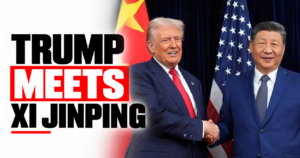
The limitations became particularly apparent during a White House event unveiling a new helipad. Without the professional audio equipment normally supplied by the television pool, Trump’s comments were reportedly difficult to hear over helicopter noise. The boycott also coincided with major diplomatic events, including Trump’s engagements surrounding the United Nations General Assembly and Chinese President Xi Jinping’s visit to Washington.
Court Orders Journalists Back Into White House
The confrontation quickly moved into federal court. On September 24, U.S. District Judge Timothy Kelly issued a temporary restraining order requiring the White House to restore access to CNN, MS NOW and Politico for 14 days. Kelly, who was appointed to the federal bench by Trump in 2017, concluded that the organizations had demonstrated a likelihood of succeeding on at least their claim that the administration violated their Fifth Amendment procedural due-process rights.
The judge was also unconvinced by the government’s national-security justification for removing the credentials. There was initially further controversy when reporters said they remained unable to enter despite the court order. Their credentials were ultimately restored later that day, and the journalists returned to the White House. The ruling was temporary rather than a final resolution of the broader constitutional dispute. The litigation over press access and the outlets’ First Amendment arguments could therefore continue.
Why Does the White House Press Pool Matter?
The controversy highlighted a system that normally attracts little public attention. Presidential events frequently take place in spaces too small to accommodate every journalist covering the White House. News organizations therefore operate a press pool, in which a smaller rotating group attends an event and shares reports, photographs, audio and video with the wider press corps.
The arrangement allows independent journalists to document presidential activities even when hundreds of reporters cannot physically attend. Television cameras have provided pooled presidential coverage for decades, making collective withdrawal an exceptionally unusual response.
The dispute therefore involved more than whether individual CNN, Politico or MS NOW journalists could enter a building. News organizations argued that allowing a president to exclude outlets because of unfavorable reporting could establish a precedent enabling administrations to determine which journalists receive meaningful access. The White House, by contrast, maintained that access to the presidential complex is a privilege subject to security and professional standards and rejected accusations that it was attacking press freedom.
Critical View: Solidarity or Media Overreach?
The boycott raises difficult questions on both sides of the relationship between government and journalism. Supporters of the media action argued that solidarity was necessary because replacing CNN in the pool could have allowed the administration to exclude individual organizations without disrupting coverage. From that perspective, collective action protected the principle that governments should not select journalists according to whether their reporting is favorable.
Critics could question whether withholding pooled video temporarily deprived the public of independent coverage precisely when scrutiny of the government was most important. The episode also illustrates why the distinction between access and favorable coverage matters. The First Amendment protects press freedom, but it does not require journalists to report positively on a president. At the same time, journalists do not possess unlimited access to every government location, and legitimate security restrictions can apply.
The legal question is therefore not simply whether the White House can regulate access, but whether it can revoke established press credentials without adequate procedures or use access decisions to retaliate against constitutionally protected reporting. Even after the journalists returned, the conflict did not disappear. The White House subsequently excluded CNN from an Air Force One press assignment, demonstrating that battles over presidential access could continue in different forms.
For the American media, the episode represented a rare moment of collective action among fierce competitors. For the White House, it became another front in Trump’s longstanding confrontation with major news organizations. And for the public, the dispute raises a larger democratic question: who gets to independently document the presidency when the government and the journalists covering it fundamentally disagree?