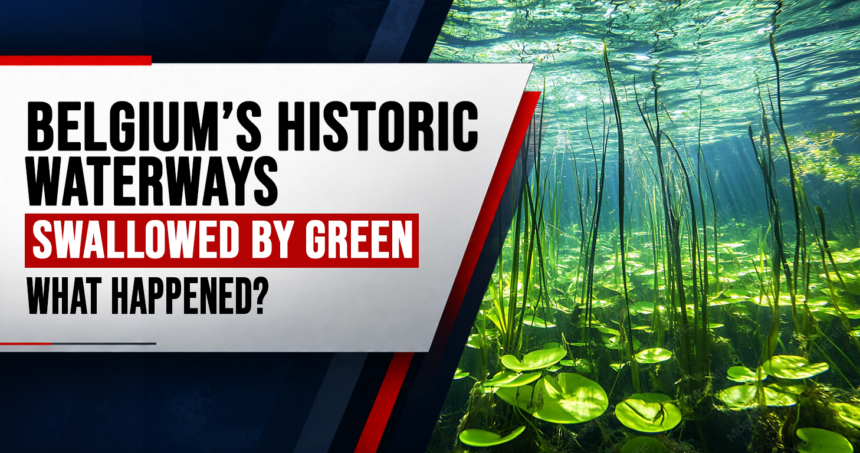
The historic canals of Ghent, one of Belgium’s most picturesque medieval cities, have turned an extraordinary shade of bright green following an unusually hot and dry summer, attracting attention from tourists and residents while raising concerns about the effects of changing weather patterns on European waterways. The transformation, caused by the rapid spread of a tiny aquatic plant known as duckweed, has covered sections of the city’s famous waterways with a thick green carpet, disrupting boat operations and prompting environmental monitoring.
The unusual phenomenon first emerged in late August and became increasingly visible throughout September, eventually reaching Ghent’s historic city centre. By early October, large stretches of the River Lys and surrounding canals appeared almost completely green, creating a striking contrast with the city’s centuries-old buildings, stone bridges and waterfront architecture. Photographs and videos of the transformation circulated widely, drawing international attention to the Belgian city.
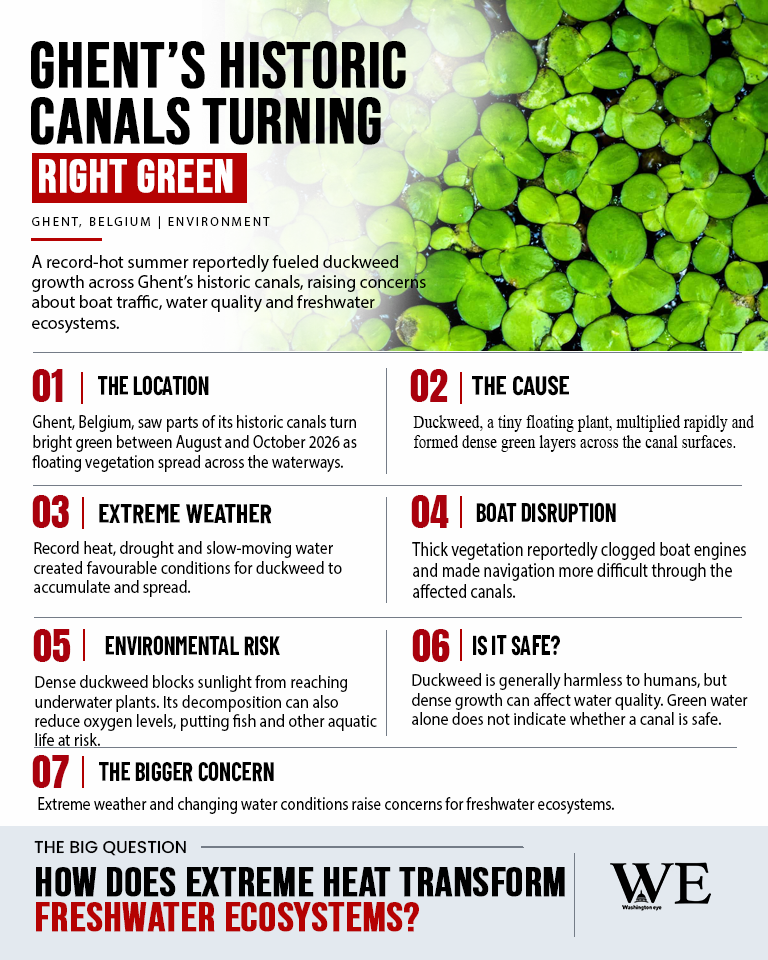
According to the Flemish waterways management agency, De Vlaamse Waterweg, the rapid expansion of duckweed resulted from a combination of prolonged drought, high temperatures and slow-moving water. These conditions created an ideal environment for the small floating plants to multiply rapidly, forming dense layers across the water’s surface. The agency described the scale of the growth as unprecedented, highlighting the unusual environmental conditions experienced during the summer of 2026.

Duckweed, scientifically associated with the Lemnaceae group of aquatic plants, is commonly found in freshwater environments such as ponds, lakes and slow-moving rivers. Unlike algae, duckweed consists of tiny floating plants that can reproduce rapidly under favourable conditions. Although the plant occurs naturally in European waterways, its excessive growth can dramatically alter the appearance and ecological balance of aquatic environments.

The striking green covering has attracted considerable attention from visitors exploring Ghent’s historic waterfront. Tourists and students have been seen gathering along the canal banks, photographing the unusual scenery and watching sightseeing boats navigate through the floating vegetation. However, what initially appeared to be an unusual natural spectacle has also created practical difficulties for the city’s tourism industry.
According to Euronews, sightseeing boats have continued operating despite the dense vegetation, but at least one vessel experienced engine overheating after duckweed clogged its water intake system. Such incidents demonstrate how excessive aquatic plant growth can interfere with navigation and potentially increase maintenance requirements for boat operators.
Geert Weymeis, spokesperson for the Flemish waterways management authority, attributed the extraordinary growth to the combination of drought, elevated temperatures and reduced water movement. The prolonged absence of rainfall limited the natural flushing of waterways, allowing the floating vegetation to accumulate in areas where currents were particularly weak.

Environmental concerns have also emerged regarding the potential consequences for aquatic ecosystems. Although duckweed itself is generally harmless to humans, extensive surface coverage can prevent sunlight from penetrating the water, affecting submerged plants and altering oxygen levels. When large quantities of aquatic vegetation decompose, the process can consume dissolved oxygen, potentially creating difficult conditions for fish and other aquatic organisms.
Nevertheless, Belgian environmental authorities have sought to reassure residents that the situation does not necessarily indicate toxic water contamination. In an official statement issued on September 1, De Vlaamse Waterweg confirmed that monitoring conducted with the Flemish Environment Agency had found sufficient oxygen in the affected waterways at that time. Authorities also announced further investigations to identify the duckweed species involved and assess their development.
The phenomenon has renewed discussions about climate change and its potential influence on European freshwater ecosystems. While individual weather events cannot automatically be attributed to climate change, scientists have consistently warned that rising temperatures and changing rainfall patterns can affect water availability, aquatic vegetation and ecosystem stability. Extended periods of heat and drought may create conditions that favour unusually rapid plant growth in stagnant or slow-moving waters.
Ghent, located in Belgium’s Flanders region, is renowned for its medieval architecture, cultural heritage and extensive network of canals. Its waterways, particularly those surrounding the historic Graslei and Korenlei waterfronts, are central to the city’s identity and tourism economy. The unexpected transformation has therefore become both a visual curiosity and a reminder of the environmental pressures facing historic European cities.
Authorities continue to observe the affected waterways, although predicting how long the duckweed will remain is difficult. Changes in rainfall, temperature and water currents may eventually disperse the floating vegetation or reduce its growth naturally. As Ghent’s famous canals remain associated with the extraordinary green transformation, the incident illustrates how prolonged heat and drought can visibly reshape urban environments. Beyond the unusual photographs, the phenomenon has highlighted the importance of protecting freshwater ecosystems and preparing historic cities for increasingly unpredictable weather conditions.