
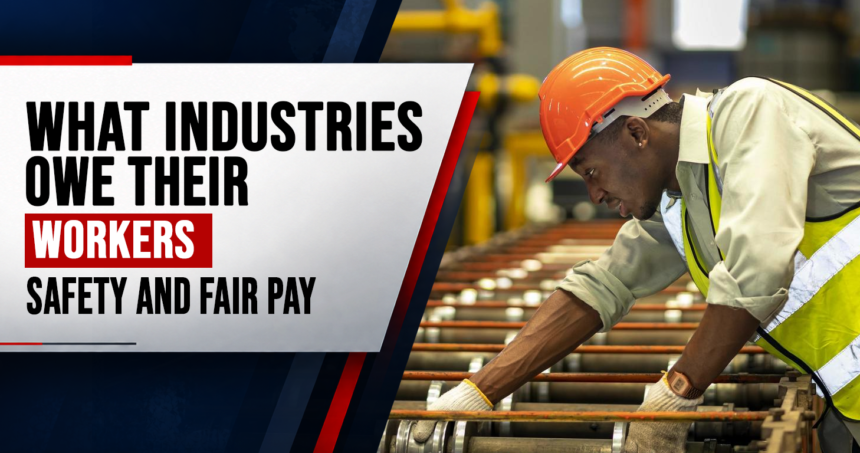
Behind the world’s expanding industries, advanced technologies, towering infrastructure and multibillion-dollar corporations stands a workforce whose contributions often remain overlooked. From factory employees and construction labourers to miners, agricultural workers and logistics personnel, millions of people form the foundation of global economic development while facing persistent challenges involving low wages, unsafe working conditions, job insecurity and limited social protection.
As governments and corporations increasingly prioritise industrial expansion, automation and economic competitiveness, labour organisations are drawing attention to the workers responsible for sustaining global production. The debate extends beyond wages and employment to questions of human dignity, corporate accountability, workplace safety and the unequal distribution of economic benefits.
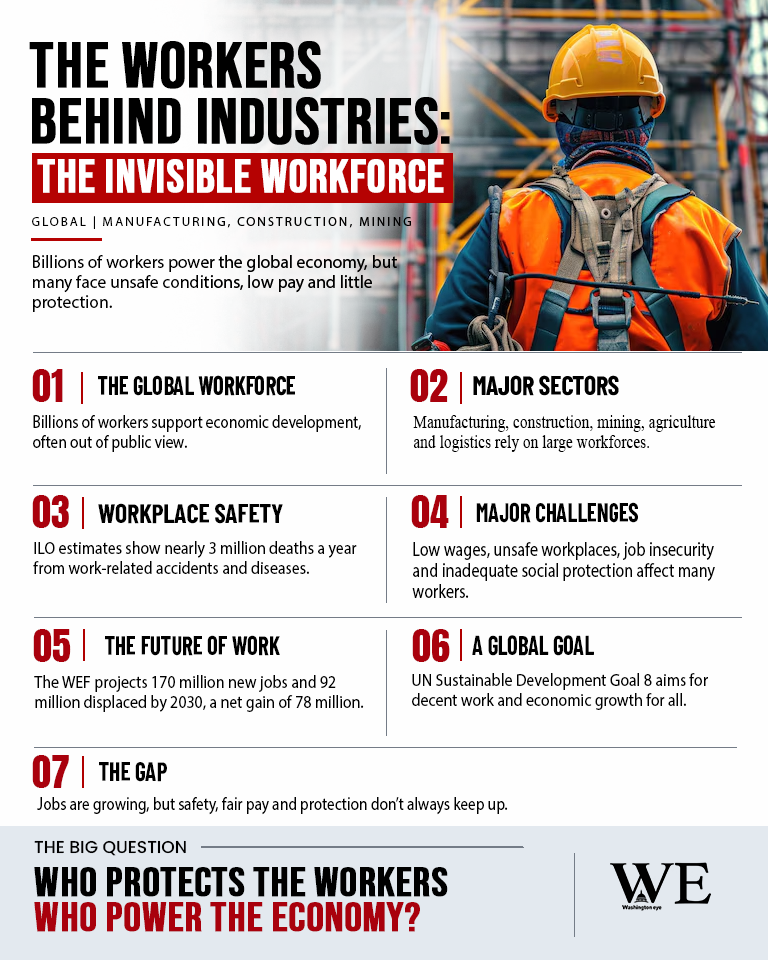
According to the International Labour Organization (ILO), approximately 3.5 billion people were employed worldwide in 2024. However, economic participation does not necessarily guarantee financial security, particularly for workers in developing countries and labour-intensive industries.
The Workforce Behind Global Industrial Development
Industrial development has historically depended on human labour. From the factories of the Industrial Revolution to today’s interconnected global supply chains, workers have played an essential role in manufacturing goods, constructing infrastructure and maintaining the systems that support modern economies.
In countries such as China, India, Bangladesh, Vietnam and Pakistan, manufacturing industries employ large workforces producing textiles, electronics, automobiles and consumer products for international markets. Bangladesh’s ready-made garment sector, for example, employs millions of workers, predominantly women, and remains a major contributor to the country’s export earnings. Similarly, Pakistan’s textile industry supports employment across spinning, weaving, garment manufacturing and associated services.
Meanwhile, workers in mining, transportation and construction provide the raw materials, logistical networks and physical infrastructure required for industrial production. Despite these contributions, workers frequently receive a comparatively small share of the economic value generated through global supply chains. Wage differences between countries, limited collective bargaining opportunities and pressure to maintain low production costs can further deepen inequalities. The contrast is particularly visible in industries where products are sold internationally at substantial retail prices while production workers earn relatively modest wages.
Unsafe Conditions, Low Wages and Workers’ Rights

Workplace safety remains one of the most serious challenges confronting industrial workers. The ILO estimates that nearly three million workers die annually from work-related accidents and diseases worldwide, while hundreds of millions experience non-fatal occupational injuries. Workers in construction, agriculture, manufacturing and mining face risks involving dangerous machinery, chemical exposure, excessive heat, hazardous materials and inadequate protective equipment.
The 2013 Rana Plaza building collapse in Bangladesh, which killed more than 1,100 people, remains one of the deadliest industrial disasters in modern history. The tragedy exposed weaknesses in factory safety inspections, building regulations and corporate oversight, prompting international efforts to improve working conditions.
Although workplace safety initiatives have expanded since then, enforcement remains inconsistent across countries and industries. Another major concern involves informal employment, where workers often lack written contracts, health insurance, paid leave, pensions and legal protection against unfair dismissal.
Women, migrant workers and young employees can face additional vulnerabilities, including discrimination, harassment, wage disparities and restricted access to labour protections. Labour advocates argue that sustainable industrial development requires stronger inspection systems, enforceable employment standards and meaningful participation by workers in decisions affecting their livelihoods.
Automation, Artificial Intelligence and the Future of Industrial Employment
Rapid technological transformation is creating both opportunities and uncertainty for industrial workers. Automation, robotics and artificial intelligence are increasingly being integrated into manufacturing, transportation, logistics and other industrial sectors. These technologies can improve productivity, reduce repetitive tasks and minimise human exposure to dangerous working environments.
However, technological advancements also raise concerns about job displacement, wage inequality and the growing demand for specialised technical skills. The World Economic Forum’s Future of Jobs Report 2025 projected that global labour-market transformation could create 170 million jobs while displacing approximately 92 million existing positions by 2030, resulting in a net increase of 78 million jobs. These figures represent forecasts rather than confirmed outcomes.
For industrial workers, the transition highlights the importance of vocational education, retraining programmes and accessible opportunities to develop digital and technical skills. Experts also emphasise that governments and businesses must ensure productivity gains are shared more broadly rather than concentrated among investors and highly skilled professionals. Without effective labour policies, technological progress could deepen existing economic divisions, particularly in countries where social protection systems remain underdeveloped.
Building Industries Without Leaving Workers Behind
International organisations have increasingly emphasised the concept of decent work, which combines productive employment with fair compensation, workplace security, social protection and respect for fundamental labour rights. The United Nations Sustainable Development Goal 8 calls for sustained, inclusive economic growth, productive employment and decent work for all.
Achieving these objectives requires cooperation among governments, employers, trade unions and international institutions. Policy measures include strengthening minimum-wage protections, improving occupational safety standards, supporting collective bargaining, expanding social insurance and ensuring responsible business practices throughout international supply chains.
Consumers also influence labour conditions through purchasing decisions and demands for greater transparency, although primary responsibility for enforcing workers’ rights rests with employers and governments. As industries continue expanding and technologies transform production, the fundamental question is whether economic progress will translate into better lives for those responsible for creating it.
Factories, infrastructure and corporations may symbolise industrial achievement, but their continued operation depends on the people working behind them. Recognising their contributions is not merely a matter of appreciation; it is essential to building a more equitable and sustainable global economy.