

A groundbreaking experimental pill is offering fresh hope in the fight against pancreatic cancer, one of the world’s deadliest forms of cancer, after clinical trial results showed it nearly doubled survival times in patients with advanced disease. The findings, unveiled at the annual meeting of the American Society of Clinical Oncology (ASCO) in Chicago and published in the New England Journal of Medicine, have been hailed by experts as one of the most significant advances in pancreatic cancer treatment in decades.
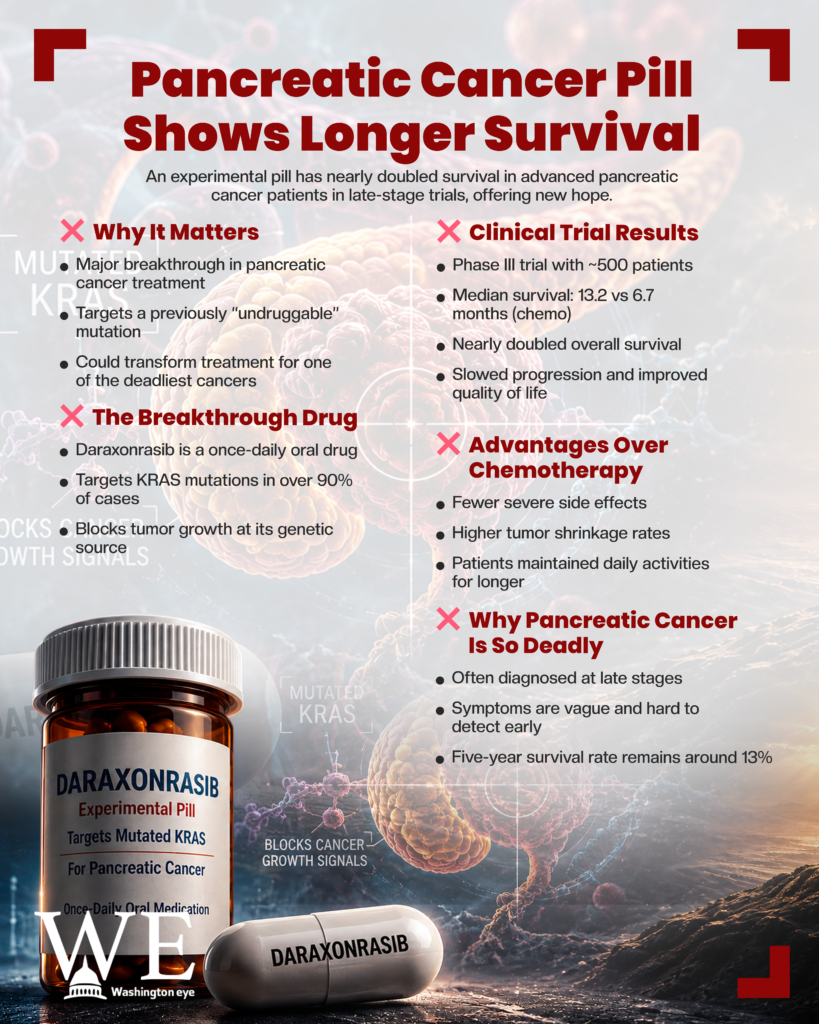
The drug, known as daraxonrasib, is a once-daily oral medication developed to target a genetic mutation responsible for driving the growth of most pancreatic tumors. Researchers say the treatment blocks mutated KRAS proteins, which are found in more than 90 percent of pancreatic cancer cases. For decades, KRAS was considered an “undruggable” target, frustrating scientists who struggled to find effective ways to stop the aggressive disease.
Pancreatic cancer remains among the most lethal cancers worldwide because it is often diagnosed late, after it has already spread to other organs. Symptoms are usually vague and difficult to detect in the early stages, resulting in limited treatment options for many patients. According to cancer experts, the disease has a five-year survival rate of only about 13 percent, making breakthroughs in treatment especially significant.

The latest Phase III international clinical trial involved approximately 500 patients with metastatic pancreatic cancer whose disease had progressed despite previous treatment. Participants were randomly assigned to receive either standard chemotherapy or daraxonrasib. The results surprised even seasoned oncologists. Patients receiving the experimental pill lived a median of 13.2 months compared with 6.7 months among those treated with conventional chemotherapy, effectively doubling overall survival. The drug also delayed disease progression and improved quality of life for many patients.

Researchers noted that the treatment not only extended survival but also caused fewer severe side effects than standard chemotherapy. Tumor shrinkage rates were significantly higher among patients taking the pill, raising hopes that targeted therapies could transform the outlook for a disease that has long resisted medical advances. Some participants experienced substantial reductions in tumor size, allowing them to maintain daily activities for longer periods.
The announcement generated considerable excitement within the medical community. Reports from the ASCO conference described oncologists applauding the results, with some experts calling the findings a “gamechanger” for pancreatic cancer treatment. Several researchers said they had never before witnessed such dramatic improvements in a large Phase III trial for this disease.
While the pill is not considered a cure, specialists stress that it represents a major step forward. Cancer experts caution that most patients eventually develop resistance to the treatment, meaning the disease can still progress over time. Nevertheless, the additional months of survival and improved quality of life are viewed as a substantial achievement for patients facing a cancer that historically offers limited hope.

The U.S. Food and Drug Administration (FDA) has already accelerated its review of daraxonrasib and authorized expanded access programs to make the treatment available to eligible patients while regulatory evaluations continue. Researchers are also investigating whether the drug could be used earlier in the course of the disease or combined with surgery, immunotherapy, and other targeted treatments to further improve outcomes.
Scientists believe the success of daraxonrasib may have implications beyond pancreatic cancer. Because KRAS mutations are also involved in several other cancers, including lung and colorectal cancers, the technology behind the drug could open new pathways for treating multiple tumor types. Researchers say the breakthrough demonstrates that previously untreatable cancer-driving mutations can, in fact, be successfully targeted.
As cancer rates continue to rise globally, the discovery offers a rare piece of encouraging news for patients, families and healthcare providers. Although much work remains before pancreatic cancer can be effectively controlled or cured, experts say the results mark the beginning of a potentially new era in treatment. For thousands diagnosed each year with one of medicine’s most challenging diseases, the experimental pill provides something often in short supply- HOPE.