Camels, animals famous for surviving intense desert heat and prolonged periods without water, are increasingly becoming sick and dying across parts of North Africa and the Horn of Africa as temperatures, drought and the loss of grazing land place their natural defences under unprecedented strain.
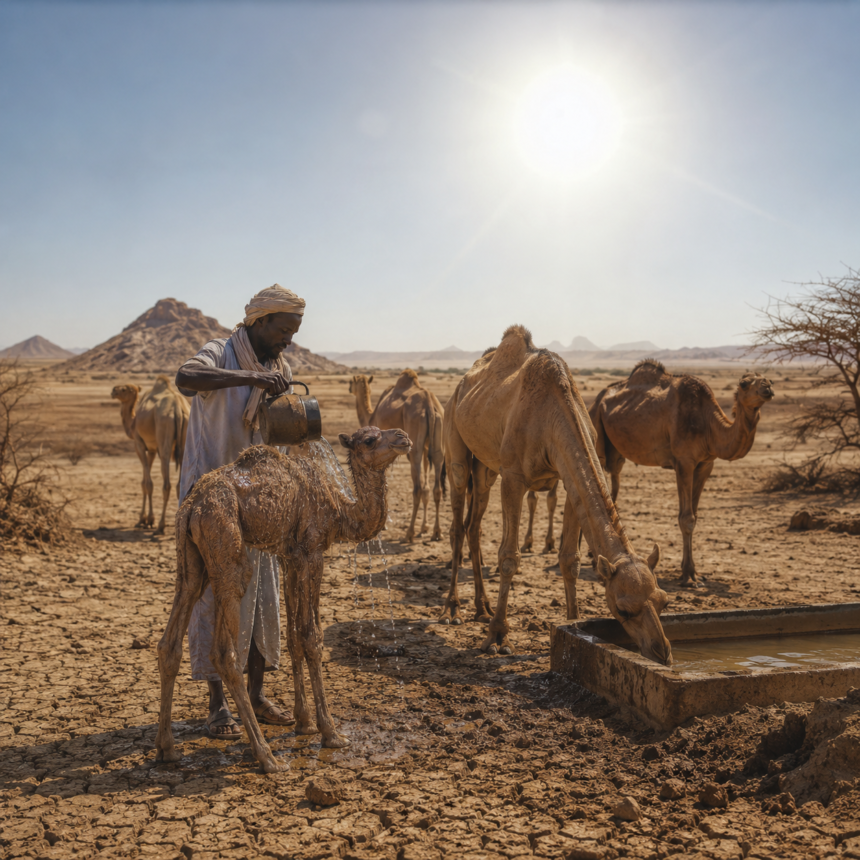
The crisis is particularly visible in Ethiopia’s Afar region, one of the hottest and driest inhabited places in the world. Camel herders have reported animals suffering burned skin, watery eyes, exhaustion and blisters caused by walking or resting on dangerously hot ground.
Ali Umer, a camel owner near the city of Semera, said he lost eight calves within one month. He described hot sand burning the animals’ skin and damaging their hair when they sat down. Conditions have become so severe, he said, that even winds which once brought temporary relief now carry intense heat.

There is no reliable continent-wide count of camel deaths, and the severity differs considerably between countries and regions. Scientists also caution that the animals are rarely dying from air temperature alone. Extreme heat interacts with dehydration, disappearing pasture, longer migrations, malnutrition and disease.

The animals most commonly found in Africa are one-humped dromedary camels. North Africa and the Horn of Africa are estimated to contain about 80 per cent of the world’s dromedary population, making the region central to global camel farming.
Camels possess an extraordinary collection of heat adaptations. Their long legs keep much of the body away from the hottest ground, while their thick coats provide insulation against solar radiation. They minimise water loss through highly efficient kidneys, limited sweating and the recovery of moisture from exhaled air.
A dehydrated camel can allow its body temperature to change by as much as six degrees Celsius during the day. It stores heat while temperatures are high and releases it when the air becomes cooler at night, reducing the need to sweat.

Camels can also survive losing up to approximately 30 per cent of their body weight through dehydration and may drink only once every eight to 10 days under very hot conditions. Their humps do not store water, as is commonly believed; they contain fat that provides energy when food is limited. These remarkable adaptations are described by the UN Food and Agriculture Organization.
However, these protections have limits. When nights remain hot, the animals cannot release all the heat accumulated during the day. Their body temperature may remain elevated as another period of extreme heat begins, increasing the danger of chronic heat stress.
Camel calves are especially vulnerable because their temperature regulation, immunity and water-conservation abilities are not as developed as those of adults. They are also dependent on their mothers’ milk, which can decline when females are dehydrated, underfed or exposed to prolonged heat.
Heat stress can suppress immunity, making animals more susceptible to respiratory infections, parasites and diarrhoeal diseases. In pregnant and breeding animals, it may reduce fertility, increase pregnancy loss and lower the survival of newborn calves.
Drought magnifies every one of these risks. As water points dry up, herders must move animals greater distances. At the same time, repeated dry seasons destroy the shrubs, grasses and trees on which camels feed. Animals therefore burn more energy searching for less nutritious food while already experiencing dehydration and thermal stress.
Research published in 2026 illustrates the scale of this combined threat. An analysis of 5,925 camel-owning households in Somalia found that approximately 46 per cent had reported at least one drought-related camel death during the preceding year covered by the 2020 household survey. The figure reached almost 73 per cent among surveyed households in the northern Sool region.
The researchers stressed that this did not mean 46 per cent of Somalia’s entire camel population had died. It measured the proportion of surveyed households reporting a drought-related loss. The study identified starvation, dehydration, disease, heat stress and exhausting migration as interconnected causes.
A separate study involving camel herders in southern Ethiopia’s Borana zone found that maximum and minimum temperatures had risen significantly between 1990 and 2023. Most respondents also reported shorter, later and increasingly unpredictable rainy seasons, together with reduced camel health, milk production and reproductive performance.
The camel crisis has serious human consequences. Pastoral families depend on the animals for milk, meat, transport, income and financial security. A camel can represent years of savings, and the loss of several animals may prevent a household from buying food, paying school costs or recovering after a drought.
Camels remain more resilient than cattle under many dryland conditions. Communities in Kenya and other parts of East Africa have increasingly replaced cattle with camels because the animals can continue producing milk during drought and survive on vegetation that cows cannot digest. They are often the last domestic livestock to die during a severe dry period.
Their increasing vulnerability therefore serves as a warning. If the region’s most heat-adapted livestock are struggling, cattle, goats, sheep and the people who depend on them face even greater risks.
Experts recommend expanding reliable water points, protecting migration routes, restoring grazing areas and providing supplementary feed during extreme drought. Mobile veterinary services, vaccination, shade structures, heat-warning systems and livestock insurance could also help families protect their herds.
Long-term survival will require more than emergency water deliveries. Governments and development organisations must support locally managed rangelands, reduce conflict over shrinking resources and include pastoral communities in climate-adaptation planning.
Camels have evolved to survive some of the harshest environments on Earth, but adaptation does not make them invulnerable. Their deaths show how rising heat, failed rains and ecological decline can overwhelm even the desert’s most resilient survivors—and place millions of African livelihoods at risk.