
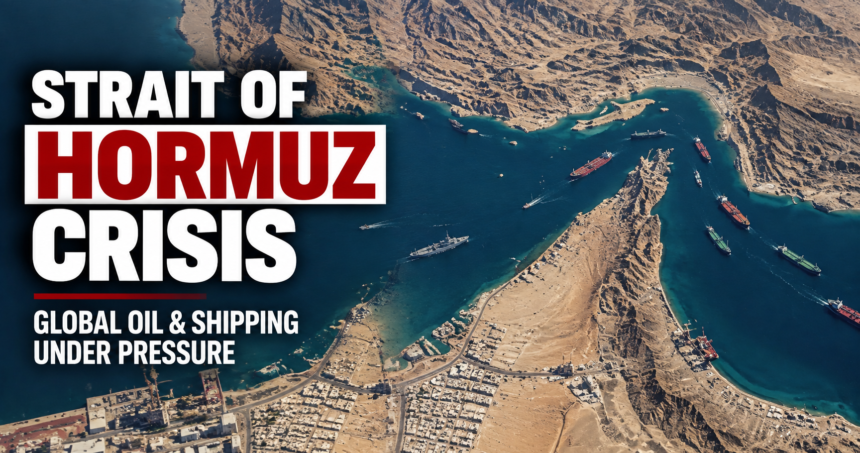
Tensions surrounding the Strait of Hormuz have intensified after U.S. President Donald Trump rejected an Iranian proposal that could have reopened the strategic waterway within seven days, prolonging uncertainty over one of the world’s most important energy routes and pushing global oil prices higher.
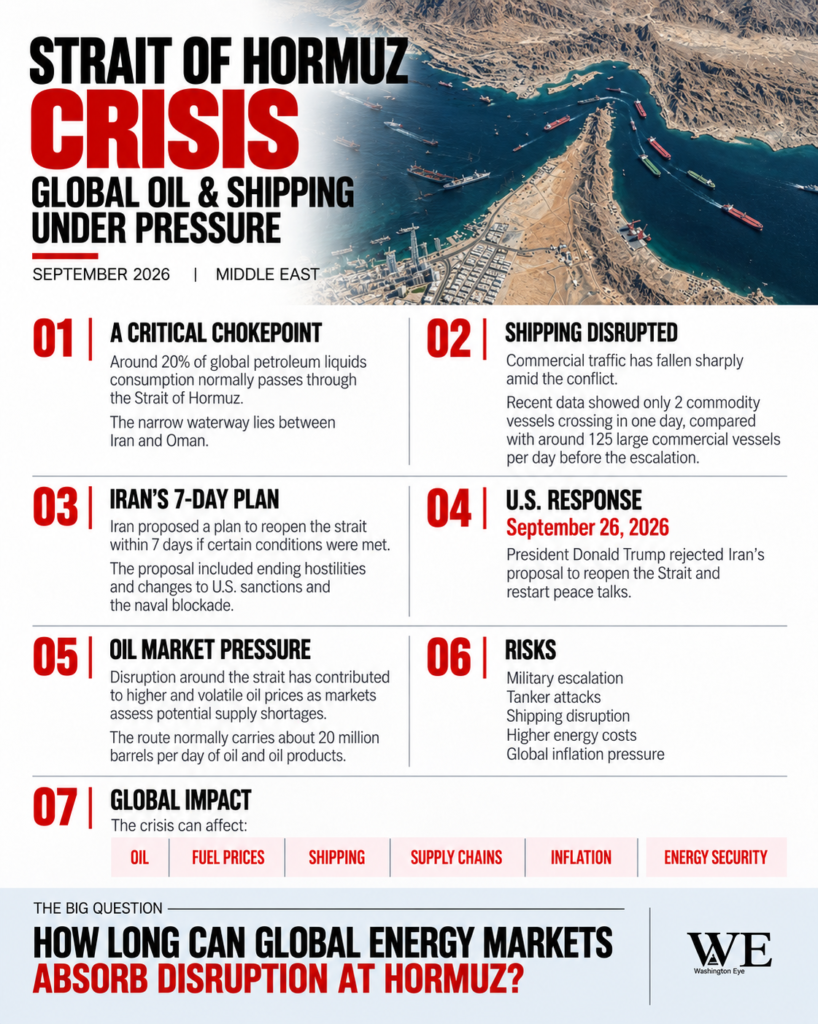
Iran presented the proposal amid diplomatic contacts aimed at finding a way out of the continuing U.S.-Iran conflict. Under Tehran’s plan, Iran would reopen the Strait of Hormuz and return to negotiations over its nuclear programme if Washington eased military pressure, ended its naval blockade on Iranian ports, released frozen Iranian funds and provided sanctions relief.
Trump said on September 26 that he had rejected the Iranian proposal, arguing that Washington wanted a better agreement. Iran, meanwhile, has maintained that diplomacy remains the only viable solution and has indicated that the Strait will not fully reopen until its conditions are addressed. Despite the setback, Trump said on September 28 that he expected talks with Iran to resume during the week.
Why the Strait of Hormuz Remains at the Centre of the Crisis
The Strait of Hormuz is a narrow maritime passage connecting the Persian Gulf with the Gulf of Oman and Arabian Sea. At its narrowest point, the strait is only around 33 kilometres wide, making it one of the world’s most strategically sensitive shipping corridors.
Before the current conflict, roughly one-fifth of global oil supplies passed through the waterway. Major energy producers including Saudi Arabia, Iraq, Kuwait, the United Arab Emirates and Qatar depend to varying degrees on the route to reach international markets. Qatar also relies heavily on Hormuz for exports of liquefied natural gas.
Commercial shipping through the strait has fallen dramatically since the conflict escalated earlier this year, amid military operations and attacks on vessels. Maritime traffic has not completely stopped, however, and limited numbers of vessels continue to make the journey.
Shipping data cited in recent reports showed 132 vessel transits between September 21 and 27, compared with 116 during the previous week. Before the war, roughly 130 crossings could occur in a single day, illustrating the scale of the disruption. There have also been signs of increased movement by vessels connected to Qatar’s LNG trade. Reuters reported on September 28 that more QatarEnergy-linked LNG vessels had recently transited the strait despite the continuing conflict.

The International Maritime Organization has warned about the impact on crews as well as international commerce, saying approximately 20,000 seafarers, port workers and offshore personnel have been affected by conditions in the region.
Oil Prices Rise as Diplomatic Hopes Fade
The immediate economic impact of the latest diplomatic setback was visible in global energy markets. Brent crude climbed more than 3% on September 28, approaching $108 a barrel during Asian trading after Trump rejected Iran’s proposal. The price movement reflected fears that prolonged restrictions in Hormuz could continue disrupting global energy supplies.
Oil markets had moved in the opposite direction only days earlier. Prices fell by around 2% on September 25 when reports emerged that Washington and Tehran were exploring a phased agreement that could eventually reopen Hormuz and reduce hostilities. The rapid reversal demonstrates how closely global energy markets are responding to diplomatic developments.
Gulf countries have meanwhile attempted to keep oil moving despite the disruption. Middle Eastern crude exports rebounded during September, with exports from key producers reaching around 12.8 million barrels per day, according to shipping data reported by Reuters.
The changes have created significant logistical challenges. Saudi Arabia, Iraq and other producers have increasingly relied on alternative arrangements, including ship-to-ship transfers outside the strait. Congestion around the Gulf of Oman has increased, while demand for large oil tankers has pushed freight costs sharply higher.
Diplomacy Continues but Major Differences Remain
Diplomatic efforts accelerated around the United Nations General Assembly in New York. U.S. and Iranian representatives explored a phased arrangement under which Tehran would reopen Hormuz while Washington would ease measures affecting Iranian exports and ports. Iranian Foreign Minister Abbas Araghchi described Tehran’s proposal as a concrete seven-day roadmap and said it was now up to Washington to decide whether to accept it. Trump’s rejection has left the two governments without an agreed path forward.
France has separately been working on a United Nations Security Council resolution supporting freedom of navigation through the Strait of Hormuz, highlighting international concern about the disruption to maritime trade. For Iran, control and security surrounding Hormuz provide significant strategic leverage. For the United States and its allies, unrestricted navigation through international waterways remains a major security and economic priority.
The consequences extend well beyond Washington and Tehran. Asian economies such as China, India, Japan and South Korea are major consumers of Gulf energy, while higher crude prices can eventually affect fuel, transportation, manufacturing and consumer prices worldwide. For now, the Strait of Hormuz remains severely disrupted rather than restored to normal commercial operations. Some vessels are making the passage, but traffic remains far below pre-war levels and the risk to shipping continues.
The next diplomatic moves will therefore be closely watched. A negotiated reopening could ease pressure on oil prices and shipping, while renewed military escalation could further restrict maritime traffic through a waterway that remains critical to the global economy.