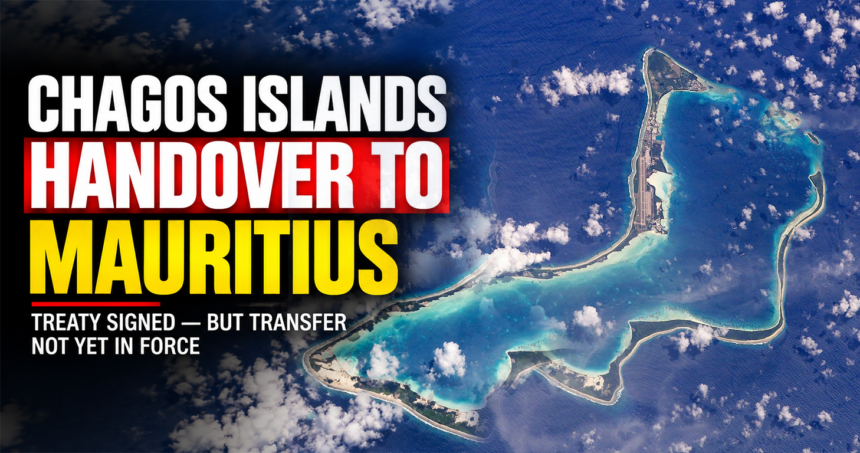
Britain’s planned transfer of sovereignty over the Chagos Islands to Mauritius has entered a new period of uncertainty, with the landmark agreement yet to take effect more than a year after it was signed and renewed US concerns placing pressure on the British government over the future of the strategically important Diego Garcia military base.
The United Kingdom and Mauritius signed the agreement on May 22, 2025, under which Britain agreed to recognise Mauritian sovereignty over the Chagos Archipelago, ending more than two centuries of British control. However, Britain would retain extensive authority over Diego Garcia, home to a major joint UK-US military facility, through an initial 99-year arrangement.
The treaty has not yet entered into force. Legislation required to implement the agreement failed to complete its passage through the British Parliament before the previous parliamentary session ended in April 2026. The UK government confirmed in September that discussions with Mauritius were continuing.
Why Britain Agreed to Return the Chagos Islands
The dispute over the Chagos Archipelago stretches back to the period before Mauritius gained independence from Britain in 1968. Britain separated the islands from Mauritius in 1965 and subsequently established the British Indian Ocean Territory.

Between 1968 and 1973, the indigenous Chagossian population was removed from the islands as Britain and the United States developed the military facility on Diego Garcia. The displacement became one of the most controversial elements of Britain’s colonial legacy in the Indian Ocean. Mauritius has maintained that the separation of the islands was unlawful and that the archipelago should have been returned when the country became independent.
International legal and diplomatic pressure strengthened Mauritius’s position. In 2019, the International Court of Justice issued an advisory opinion concluding that the decolonisation of Mauritius had not been lawfully completed when the Chagos Archipelago was separated. The UN General Assembly subsequently called on Britain to end its administration of the territory. The UK-Mauritius negotiations eventually produced the 2025 treaty, under which Mauritius would become sovereign over the entire archipelago, including Diego Garcia.
Diego Garcia at the Heart of the Agreement

Despite the sovereignty transfer, the military base would remain under British operational authority. Under the treaty, Mauritius would authorise Britain to exercise the rights necessary to operate Diego Garcia for an initial 99 years, allowing both British and American forces to continue using the facility. The arrangement could potentially be extended further by agreement.
Diego Garcia is strategically important because of its location in the central Indian Ocean. The base has supported military operations and surveillance across the Middle East, Africa and Asia and has served US and British forces for decades. That strategic importance has also become the biggest obstacle to completing the handover.
US President Donald Trump has criticised the agreement, describing the Chagos deal as a mistake and raising concerns over the long-term security of Diego Garcia. During a September 22 meeting with British Prime Minister Andy Burnham in New York, Trump again criticised the proposed arrangement. Burnham, who inherited the agreement negotiated under his predecessor Keir Starmer, has said his government wants to find a solution with both Washington and Mauritius while protecting the long-term operation of Diego Garcia.
What Does Mauritius Gain?
Once the treaty enters into force, Mauritius would exercise sovereignty over the Chagos Archipelago, while Britain would retain extensive authority specifically connected with the Diego Garcia base. The agreement also includes financial arrangements under which Britain would make long-term payments to Mauritius connected with the continued operation of the military facility. Current UK government figures put the annual payment at about £101 million, with the overall cost estimated at approximately £3.4 billion in present-value terms over 99 years.
Mauritius has described recognition of its sovereignty as an important step in completing its decolonisation. However, another major issue concerns the Chagossian people themselves. Many Chagossians and their descendants have argued that their interests and views were not sufficiently represented during negotiations.
The agreement provides for resettlement on some islands but excludes Diego Garcia because of its continuing military role. Britain has said existing British citizenship rights held by Chagossians will not be removed when the treaty takes effect.
Support, Criticism and Strategic Concerns
Supporters of the agreement argue that it resolves a decades-old sovereignty dispute while providing a legal framework to keep the Diego Garcia base operating for generations. The British government has repeatedly said that securing long-term operational control of the base is the central purpose of the treaty.
Critics have focused on several different issues. British opposition politicians have questioned the financial cost and whether transferring sovereignty could create future security risks. Some Chagossians have criticised their limited role in deciding the islands’ future, while the Trump administration has questioned whether the arrangement provides sufficient protection for the strategically important base.
Mauritius, meanwhile, has emphasised that the agreement recognises a sovereignty claim it has pursued for decades. The debate therefore involves three overlapping questions: decolonisation and sovereignty, the rights of displaced Chagossians, and the strategic importance of Diego Garcia to Western security.
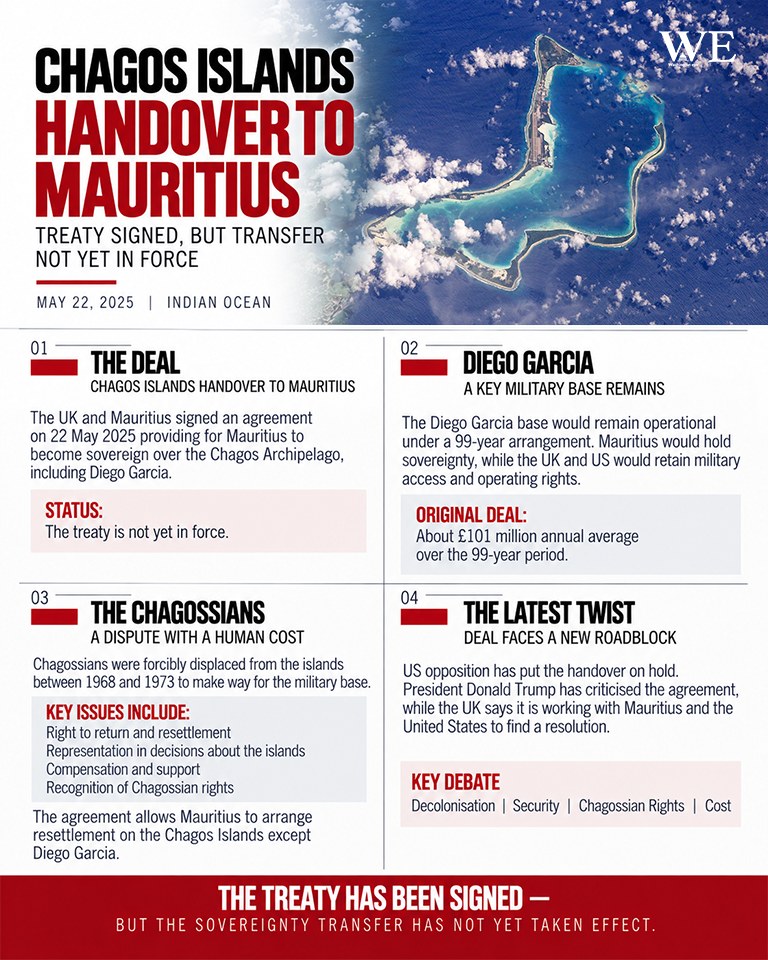
For now, the proposed transfer remains unfinished. The treaty has been signed, but the UK has not completed the domestic process necessary for it to take effect. The British government said this month that discussions with Mauritius are continuing, while Burnham has also sought to resolve US concerns. The eventual outcome will determine not only who formally governs the Chagos Archipelago but also the future of one of the most strategically significant military facilities in the Indian Ocean.