
The Taliban government in Afghanistan has introduced a controversial new family law regulation governing marriage, divorce and child marriage, sparking widespread condemnation from human rights organizations and international observers. The new regulation, approved by Taliban supreme leader Hibatullah Akhundzada, was published in the country’s official gazette in mid-May and contains provisions that critics say further erode the rights and autonomy of Afghan women and girls.
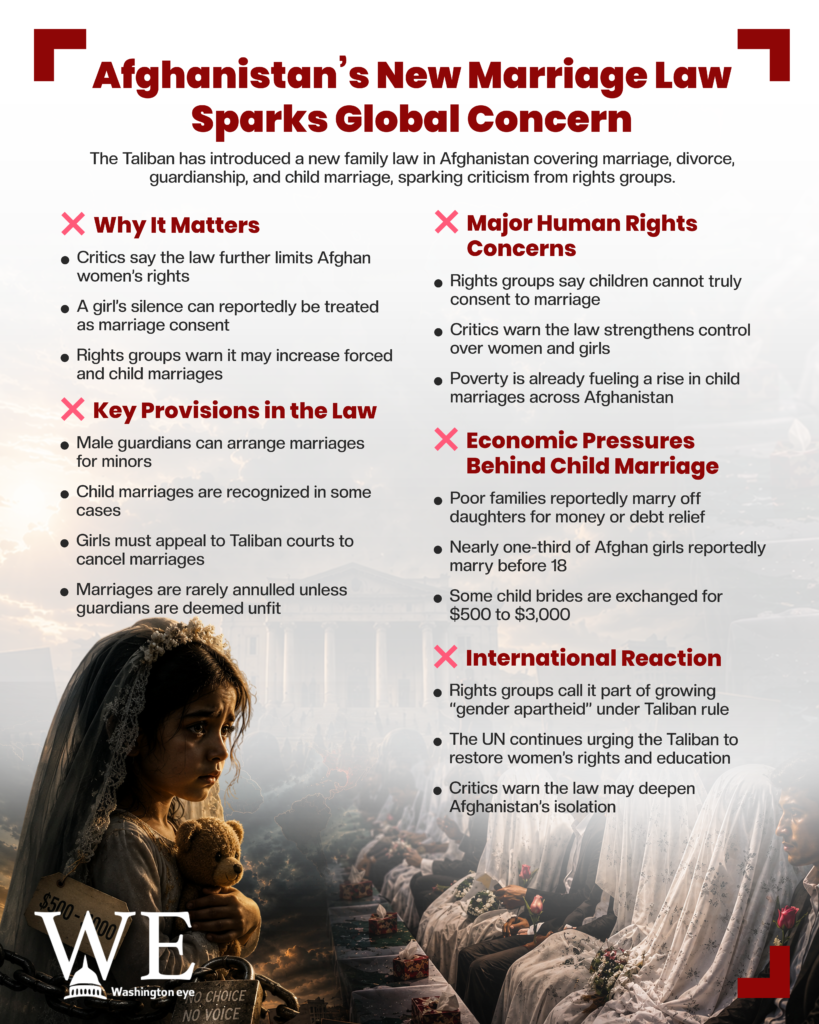
The 31-article decree, titled “Principles of Separation Between Spouses,” outlines rules related to marital disputes, annulments, guardianship and separation under the Taliban’s interpretation of Islamic law. One of the most controversial clauses states that the silence of a “virgin girl” can be interpreted as consent to marriage. Rights activists argue that such a provision effectively strips girls of the ability to freely consent and institutionalised forced marriage practices in the country.
Under the regulation, child marriages are formally recognized in certain circumstances. Although the law allows minors to seek annulment upon reaching puberty, such requests can only proceed through Taliban-controlled religious courts. Critics say this condition severely limits girls’ ability to challenge forced marriages, especially in rural areas where access to legal mechanisms is limited and social pressure remains intense.
The new rules also grant fathers and grandfathers broad authority over arranging marriages involving minors. According to the decree, such marriages may only be invalidated if guardians are deemed abusive, mentally unfit or morally corrupt by Taliban courts. Human rights experts say the law reinforces patriarchal control over girls and normalizes the treatment of daughters as family property rather than independent individuals with legal rights.

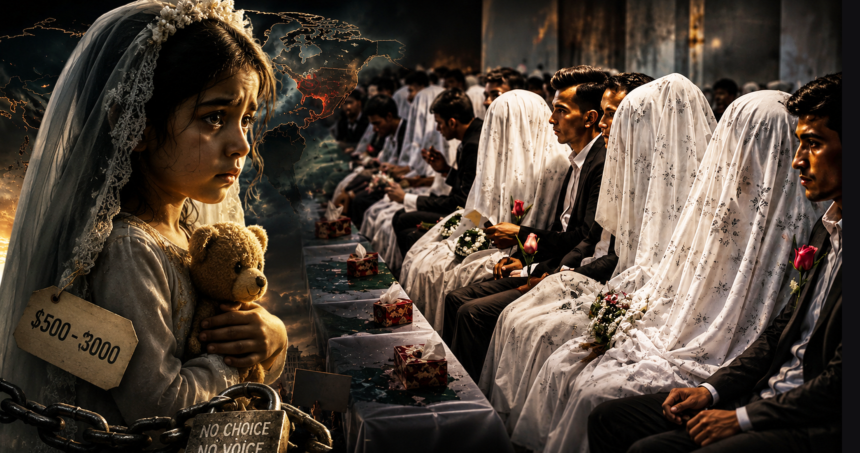
The Taliban’s latest move comes amid worsening economic hardship in Afghanistan, where poverty has driven some families to marry off young daughters in exchange for money or debt relief. Human rights groups have documented cases in which girls as young as infants were promised in marriage to older men. According to advocacy organization Girls Not Brides, nearly one-third of Afghan girls are married before the age of 18. Reports indicate that child brides may be exchanged for sums ranging from $500 to $3,000, particularly in impoverished rural regions.
International rights organizations and Afghan activists have sharply criticized the regulation, describing it as another step toward what many call “gender apartheid” under Taliban rule. Since regaining power in August 2021, the Taliban have imposed sweeping restrictions on women and girls, including banning secondary and university education for girls, limiting women’s employment opportunities, restricting movement without male guardians, and enforcing strict dress codes.
Political commentator Fahima Mahomed warned that the law undermines the concept of meaningful consent. She stated that a child cannot properly consent to marriage and that interpreting silence as approval effectively removes a girl’s voice from decisions affecting her life. She also argued that the Taliban’s interpretation should not be seen as representative of Islam as a whole, noting that many Islamic scholars reject forced marriage and coercion.

The Taliban, however, defend the decree as part of their interpretation of Sharia law and insist that the regulations are intended to standardize family matters within the Islamic Emirate. Taliban officials say the law clarifies procedures surrounding separation and marital disputes under religious principles.
The issue has reignited global concern over the future of women’s rights in Afghanistan. The United Nations and several international organizations have repeatedly urged the Taliban to reverse policies restricting women’s freedoms and access to education. Analysts warn that laws legitimizing child marriage and limiting female consent could deepen Afghanistan’s humanitarian and social crisis while further isolating the country diplomatically.
Many Afghan women’s rights advocates fear the new regulation will normalize forced and underage marriages at a time when girls already face shrinking educational and economic opportunities. For critics, the decree symbolizes the Taliban’s continuing effort to reshape Afghan society through strict gender-based controls that disproportionately affect women and girls across the country.