
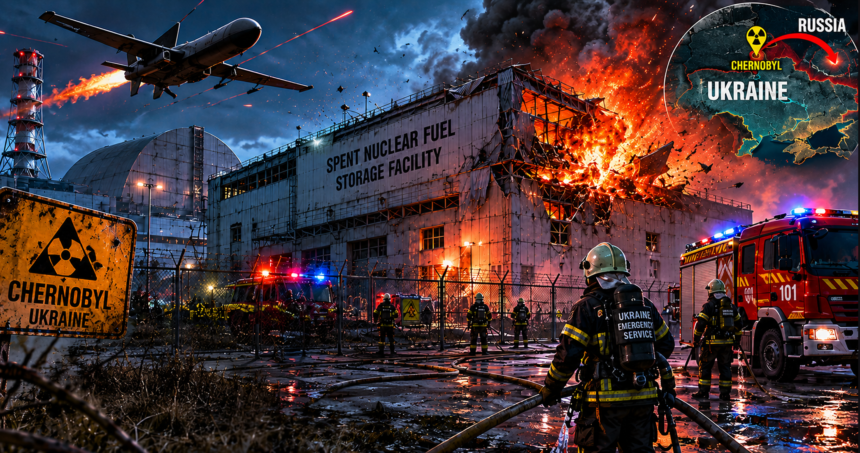
A Russian drone strike has damaged a facility used for storing spent nuclear fuel near the decommissioned Chernobyl nuclear power plant in northern Ukraine, triggering fresh international concerns over the safety of nuclear infrastructure amid the ongoing Russia-Ukraine war. Ukrainian authorities described the attack as a deliberate strike on critical nuclear-related infrastructure, while international monitors confirmed that radiation levels remained within normal limits despite significant structural damage.
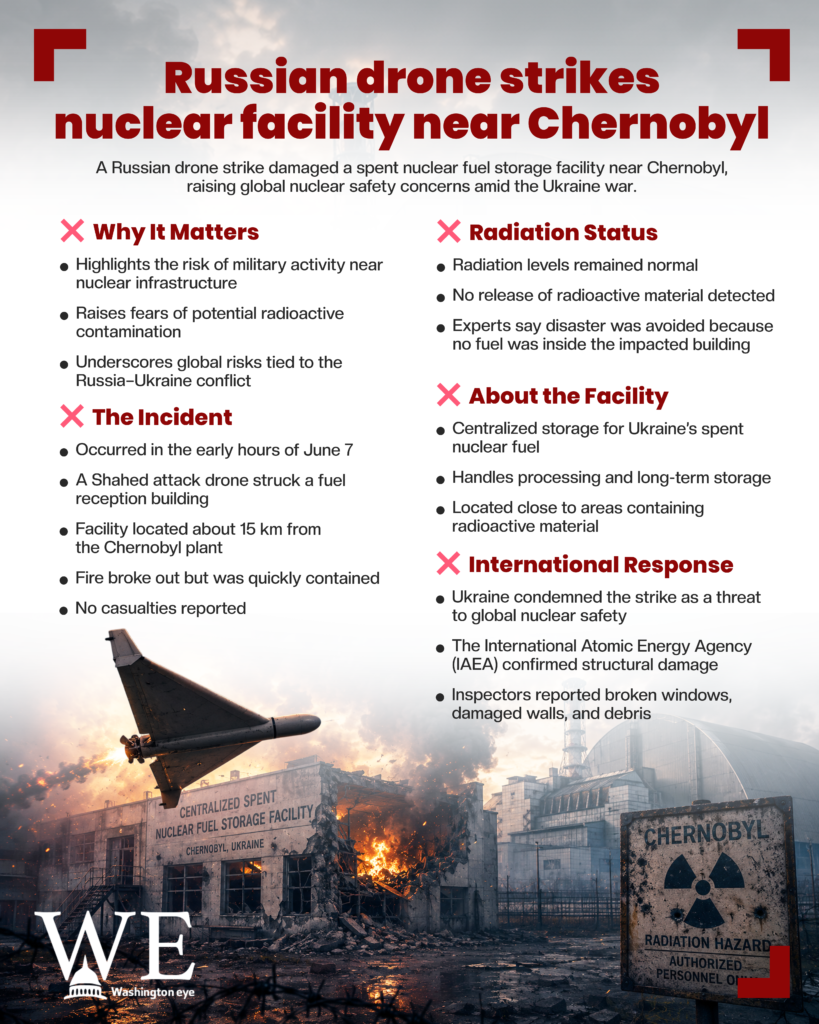
The incident occurred in the early hours of June 7 when a Russian-made Shahed attack drone struck the reception building of the Centralized Spent Nuclear Fuel Storage Facility located approximately 15 kilometers from the Chernobyl nuclear power plant. According to Ukraine’s state nuclear energy company Energoatom, the building suffered substantial damage and a fire broke out following the impact. Emergency crews quickly extinguished the blaze, preventing further destruction. No casualties were reported.
President Volodymyr Zelensky condemned the attack, calling it an “extremely vile” strike against critical infrastructure. He argued that targeting a facility associated with nuclear materials demonstrated Russia’s disregard for global nuclear safety standards. Ukrainian officials stated that while no radioactive material was released, the attack heightened fears surrounding the vulnerability of nuclear facilities during wartime.

The damaged facility plays a crucial role in Ukraine’s nuclear energy system. It is designed to receive, process and safely store spent nuclear fuel generated by the country’s nuclear power plants. Although the building hit by the drone was not housing nuclear fuel containers at the time of the strike, it is located only meters away from storage areas containing significant quantities of radioactive material. The International Atomic Energy Agency (IAEA) confirmed that the impact caused notable structural damage to the fuel reception building and even affected an office used by its safeguards inspectors.

Inspectors from the IAEA visited the site after the attack and reported shattered windows, damaged walls, broken staircases and debris scattered around the building. However, radiation monitoring systems detected no abnormal readings, indicating that radioactive contamination had not occurred. Experts noted that the absence of nuclear material inside the struck building likely prevented a more serious incident.
The strike has nevertheless reignited concerns about the potential consequences of military operations around nuclear sites. Since Russia’s invasion of Ukraine began in 2022, international organizations have repeatedly warned that combat near nuclear facilities could lead to accidents with transboundary environmental and health impacts. The latest attack is being viewed by many analysts as another reminder of the risks posed by warfare in proximity to sensitive nuclear infrastructure.
This is not the first time Chernobyl-related infrastructure has been damaged during the conflict. In February 2025, a drone strike damaged the massive New Safe Confinement structure that covers Reactor No. 4, the reactor that exploded during the catastrophic 1986 Chernobyl disaster. While radiation levels remained stable following that attack, international experts later warned that repairs would be costly and that the integrity of protective systems had been compromised.
The 1986 Chernobyl disaster remains the worst nuclear accident in history, releasing radioactive material across large parts of Europe and forcing the evacuation of hundreds of thousands of people. The area surrounding the plant remains largely uninhabited, and maintaining strict safety standards at all nearby facilities remains a priority for both Ukraine and the international community.
Ukraine’s Foreign Ministry accused Moscow of systematically threatening nuclear safety through attacks on energy and nuclear-related infrastructure. Russia has not publicly commented on the latest allegations. The Kremlin has previously denied responsibility for attacks on Chernobyl facilities, including the 2025 drone incident.
As investigations continue, nuclear watchdogs are closely monitoring the site. While the immediate danger of radioactive contamination appears to have been avoided, experts warn that repeated attacks on nuclear facilities increase the risk of a future accident with potentially devastating consequences. The latest strike underscores the growing challenge of safeguarding critical nuclear infrastructure during one of Europe’s most destructive conflicts in decades.