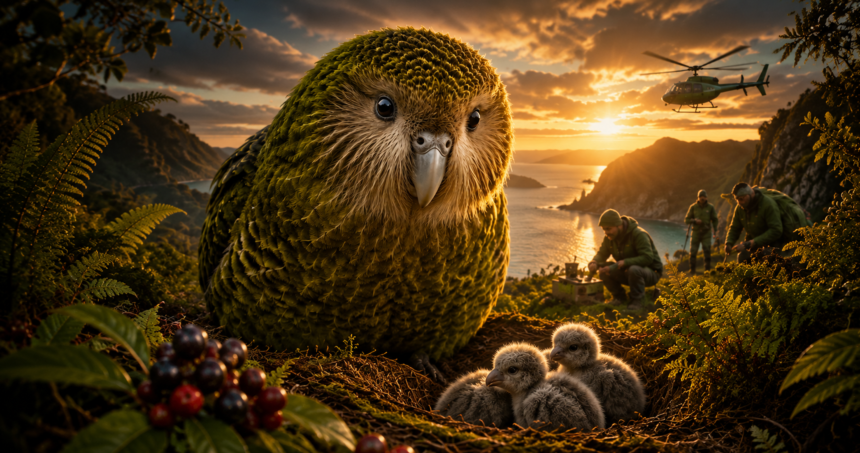
A rare conservation success story is unfolding in New Zealand, where the world’s rarest parrot, the critically endangered Kākāpō, is making history with its biggest breeding season ever recorded. Wildlife experts and conservation teams have confirmed that the iconic green parrot has reached a historic milestone in 2026, marking a major breakthrough for one of the planet’s most endangered bird species after decades of intensive recovery efforts.
The kākāpō, also known as the owl parrot because of its round face and owl-like features, is found only in New Zealand. It is unlike any other parrot in the world: flightless, nocturnal, heavy-bodied and remarkably long-lived. Once widespread across the country’s forests, the species was pushed to the brink of extinction after habitat destruction and the arrival of invasive predators such as rats, cats and stoats. By the mid-1990s, conservationists recorded only 51 birds remaining, placing the species in critical danger of disappearing forever.
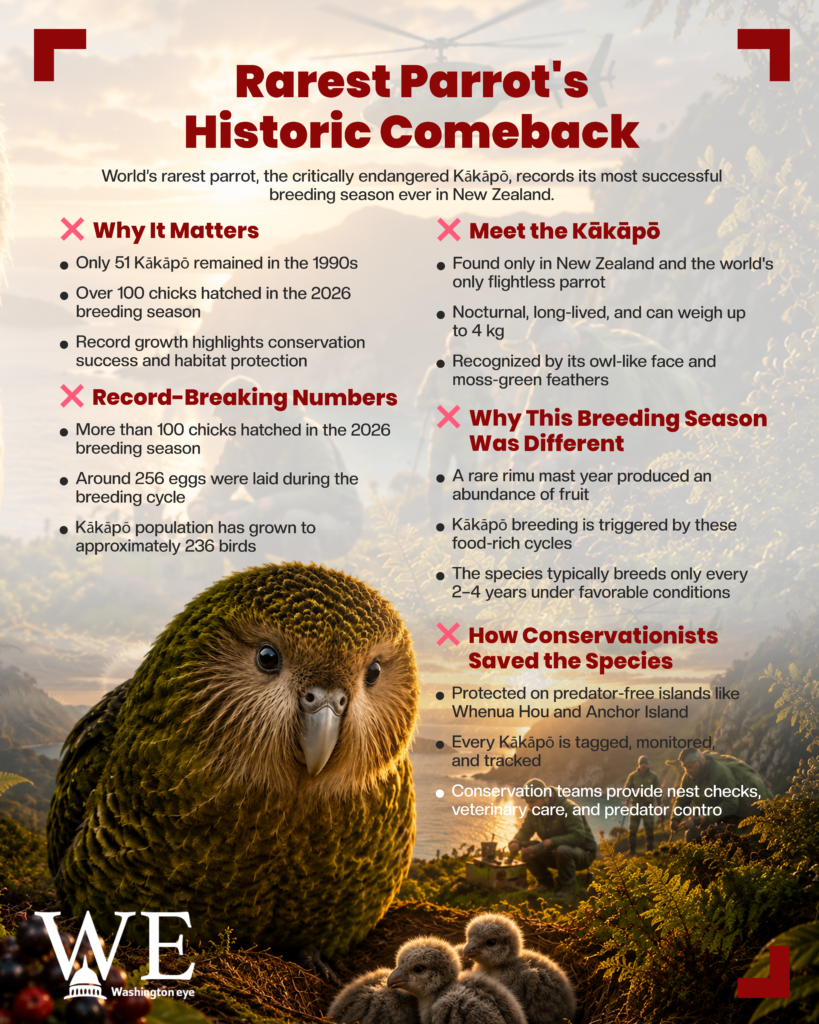
Now, in what experts are calling a historic comeback, the 2026 breeding season has broken every previous record. According to conservation updates released in April, more than 100 kākāpō chicks have hatched this season, surpassing the previous record set in 2019. Officials said around 256 eggs were laid, while approximately 95 chicks remained alive by mid-April, with some still under close veterinary observation. The achievement has been described as the largest breeding season since formal records began roughly three decades ago.

The breeding surge is happening on predator-free offshore islands in southern New Zealand, including Pukenui Anchor Island and Whenua Hou/Codfish Island, where the birds are carefully monitored. Every individual kākāpō is known by name, tagged and tracked by wildlife teams. Conservation workers regularly check nests, monitor feeding, and in some cases incubate eggs or provide medical support to vulnerable chicks. The first chick of the season hatched on February 14 Valentine’s Day, adding symbolic significance to a breeding season many conservationists had been waiting years to see.

Experts say the timing of the breeding boom is linked to a “rimu mast” year, when native rimu trees produce unusually large quantities of berries. These berries are a vital food source and naturally trigger reproduction among kākāpō, which typically breed only every two to four years when food is abundant. Because of this unpredictable cycle, each successful season carries enormous importance for the species’ survival.
The kākāpō itself remains one of the most unusual birds in the world. Adult males can weigh up to four kilograms, making it the heaviest parrot species alive. It cannot fly, instead using strong legs to climb and move across forest floors. Its moss-green feathers provide camouflage, while its distinctive face gives it a gentle owl-like appearance. The bird’s rarity and unusual personality have made it a national conservation symbol in New Zealand and a global example of wildlife restoration.
Officials say the numbers remain fragile despite the encouraging progress. The total living population is estimated at around 236 birds, and long-term survival still depends on intensive conservation management and predator-free habitats. Yet the record-breaking hatchlings offer fresh hope that the species can move toward a more stable future. Environmental groups and wildlife observers around the world have welcomed the development, describing it as one of the most uplifting conservation stories of the year.

At a time when biodiversity loss continues to threaten species globally, New Zealand’s rare parrot is offering a reminder that recovery is possible when science, community support and sustained protection work together. For conservationists who have spent decades protecting the species, 2026 may be remembered as the year the world’s rarest parrot made history, and took another powerful step away from extinction.