
A massive cyberattack targeting refrigeration systems at hundreds of supermarkets across France has caused widespread food spoilage, damaged equipment and triggered fires, exposing serious vulnerabilities in Europe’s increasingly digital food supply chains. The unprecedented incident, which began overnight between October 11 and 12, affected an estimated 700 supermarkets, with hackers remotely manipulating refrigeration controls to raise temperatures to as high as 50°C, forcing retailers to discard large quantities of fresh and frozen products.
The attack affected several of France’s largest supermarket chains, including Intermarché, Netto, Carrefour, Coopérative U, E.Leclerc and Monoprix. Initially, approximately 300 to 350 stores were reported to have been affected, but subsequent assessments indicated that the disruption extended to around 700 locations nationwide. The incident has been described as particularly alarming because, unlike conventional cyberattacks that target customer information or financial systems, hackers directly interfered with physical equipment essential for food preservation.
According to French authorities and supermarket representatives, the attackers gained remote access to internet-connected refrigeration controllers, changing temperature settings and activating prolonged defrosting cycles. In some stores, refrigeration systems that normally maintain freezing temperatures were instead heated to approximately 50°C for several hours. This caused meat, fish, dairy products, vegetables and frozen goods to become unsafe for consumption, leaving retailers with little choice but to destroy the affected stock.
The attack was particularly damaging at Intermarché supermarkets, where refrigeration failures resulted in extensive food losses. At one store in La Haye-du-Puits, Normandy, temperatures reportedly climbed as high as 80°C in some equipment, causing components to melt. Store director Julien Fréret described the incident as devastating, revealing that approximately $112,000 worth of food had to be discarded. The destroyed products amounted to around 30 cubic metres of waste, illustrating the financial and environmental consequences of the attack.

Investigators identified vulnerabilities in refrigeration management systems associated with Danish industrial technology manufacturer Danfoss. The affected equipment included remotely accessible controllers used to monitor cooling temperatures, energy consumption and defrosting cycles. Security specialists reported that some devices were exposed to the public internet without adequate protective measures, allowing attackers to manipulate their settings.
The hackers reportedly extended defrosting periods from approximately one hour to eight hours in some systems, delaying warnings and increasing the damage before employees discovered the problem. At a supermarket in Gradignan, southwestern France, staff realised something was wrong when a delivery driver found a flooded storage room early in the morning. The temperature had risen dramatically, triggering the building’s sprinkler system.
French Prime Minister Sébastien Lecornu instructed the country’s national cybersecurity agency, ANSSI, to investigate the incident and coordinate with European counterparts. The Paris prosecutor’s office also opened a criminal investigation into the large-scale attack. Authorities have warned that similar vulnerabilities could exist in thousands of refrigeration controllers across Europe, potentially exposing additional businesses to comparable incidents.

The financial consequences are substantial. Retailers have reported losses reaching tens of millions of euros, although the final damage assessment remains incomplete. Beyond the destruction of food, supermarkets face additional expenses associated with repairing refrigeration equipment, replacing inventory, conducting cybersecurity assessments and temporarily disrupting normal operations.
The cyberattack has also raised broader concerns about food security. Modern supermarkets rely heavily on automated refrigeration systems to preserve perishable products throughout storage and distribution. While internet connectivity enables businesses to monitor temperatures remotely, improve energy efficiency and reduce operational costs, insufficient cybersecurity protections can transform these technologies into potential entry points for malicious interference.
The incident has prompted renewed scrutiny of industrial cybersecurity standards across Europe. Experts warn that outdated software, weak passwords and internet-exposed control systems can leave essential infrastructure vulnerable to manipulation. Similar concerns have emerged in other sectors, including healthcare, energy, transport and manufacturing, where connected equipment increasingly controls physical operations.
Reports of related incidents in other European countries have further heightened concerns, although investigators have not established that all disruptions were connected. Dutch supermarket operator Ahold Delhaize experienced a separate cybersecurity incident affecting online services, but authorities have not confirmed any direct relationship with the attacks on French refrigeration systems.
As investigations continue, the identity and motives of the perpetrators remain unknown. No group had publicly claimed responsibility in the initial days following the attack, and investigators were examining whether the disruption represented deliberate sabotage, financially motivated cybercrime or another form of malicious activity.
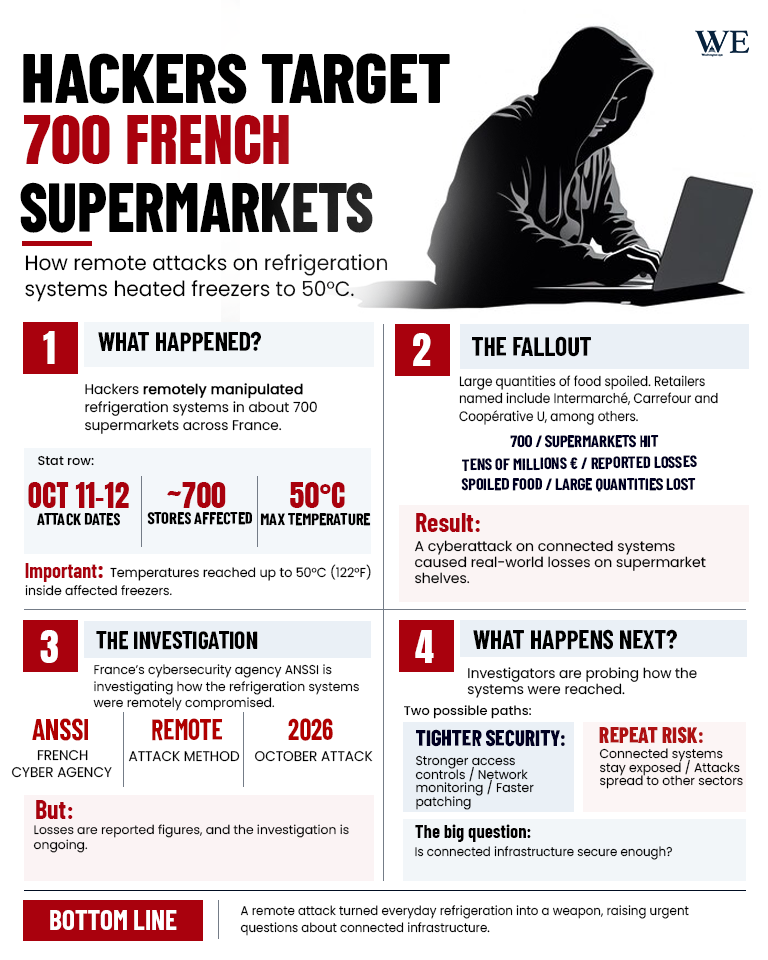
The incident serves as a warning about the growing risks associated with digitally connected infrastructure. What began as unauthorised access to supermarket refrigeration controls rapidly developed into a nationwide disruption involving food waste, financial losses and potential safety hazards. For France and the wider European Union, the attack highlights the urgent need to strengthen cybersecurity protections beyond traditional computer networks, ensuring that essential equipment supporting everyday life remains secure against increasingly sophisticated digital threats.