
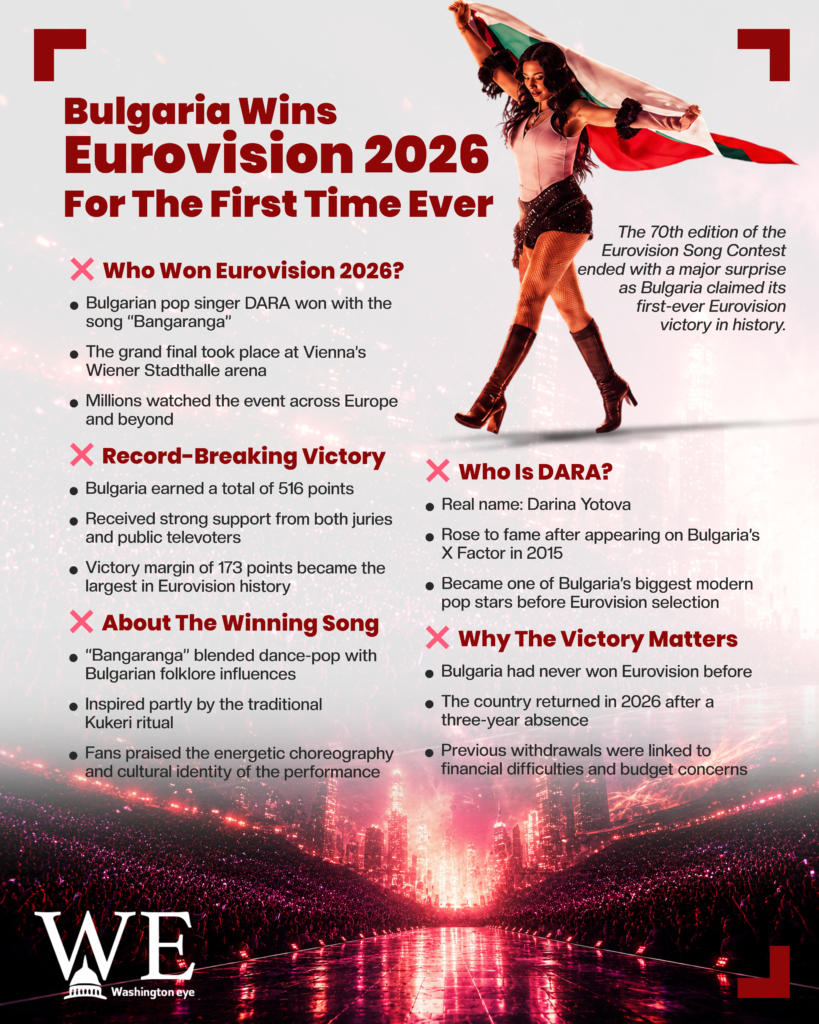
Eurovision Song Contest 2026 ended in dramatic fashion on Sunday night as Bulgaria secured its first-ever victory in the history of the competition, with Bulgarian pop singer DARA winning the contest with her energetic song “Bangaranga.” The 70th edition of the globally watched music competition took place at the Wiener Stadthalle arena in Vienna, attracting millions of television viewers across Europe and beyond.
Eurovision is one of the world’s largest live music events, organized annually by the European Broadcasting Union (EBU). The contest brings together participating countries from Europe and neighboring regions, each represented by an original song performed live before international juries and public audiences. Countries award points through a combined voting system that includes professional music juries and televoting by viewers watching at home. The event is known for its extravagant performances, cultural symbolism, political undertones, and passionate fan following.
This year’s final featured 25 competing countries, but Bulgaria emerged as the surprise winner after collecting a total of 516 points, including strong support from both national juries and public televoters. According to Eurovision organizers, DARA’s performance received 204 jury points and 312 public votes, giving Bulgaria a historic landslide victory margin of 173 points, the largest in Eurovision history.

DARA, whose real name is Darina Yotova, is a 27-year-old Bulgarian singer who first gained popularity after participating in the Bulgarian edition of “The X Factor” in 2015. Over the years, she became one of Bulgaria’s most recognizable pop artists and was selected to represent the country after winning the national Eurovision selection process earlier this year. Her winning song “Bangaranga” blended modern dance-pop with Bulgarian folklore influences and references to the traditional Kukeri ritual, a centuries-old custom believed to ward off evil spirits.

The victory carries special significance for Bulgaria, which had never won Eurovision despite participating multiple times since 2005. The country previously achieved strong results with artists such as Kristian Kostov and Poli Genova but had struggled financially in recent years and even withdrew from several competitions due to budget constraints. Bulgaria only returned to Eurovision in 2026 after a three-year absence, making this year’s triumph even more emotional for Bulgarian fans and broadcasters.
Scenes of celebration erupted across Bulgaria shortly after the results were announced. Crowds gathered in the capital Sofia waving Bulgarian flags, singing the chorus of “Bangaranga,” and celebrating what many described as a defining cultural moment for the country. Bulgarian officials also praised the singer, with national leaders calling DARA a cultural ambassador who united audiences through music.
The Eurovision 2026 final, however, was not without controversy. This year’s event unfolded amid growing political tensions linked to the ongoing Gaza conflict. Several countries, including Spain, Ireland, Iceland, Slovenia, and the Netherlands, staged a political boycott over Israel’s participation in the competition. Demonstrations also took place outside the Vienna venue, making this edition one of the most politically charged Eurovision contests in recent history. Despite the controversy, Israel still finished second in the final rankings.

Social media exploded after Bulgaria’s victory, with Eurovision fans describing the outcome as one of the competition’s biggest surprises in years. Clips of DARA’s live performance quickly spread across platforms including Instagram, TikTok, and YouTube, where millions viewed her energetic choreography and dramatic stage visuals within hours of the result announcement. Online fan communities praised the song’s catchy hook and cultural authenticity, while others expressed shock at the overwhelming voting margin.
The victory also means Bulgaria is now expected to host the next edition of Eurovision in 2027, likely in Sofia or another major Bulgarian city. Hosting the competition could bring significant tourism, media exposure, and economic activity to the country, as Eurovision events typically attract tens of thousands of international visitors and global broadcasting audiences exceeding 100 million viewers.
For many fans, Bulgaria’s triumph symbolized Eurovision’s enduring appeal: unexpected winners, cross-cultural celebration, and music powerful enough to unite audiences despite political divisions. As confetti fell over Vienna and DARA lifted the famous Eurovision trophy, Bulgaria officially entered Eurovision history for the first time in the contest’s 70-year existence.