Rizkullah Abd has spent nearly four decades rescuing neglected books and manuscripts to preserve Aleppo’s cultural memory
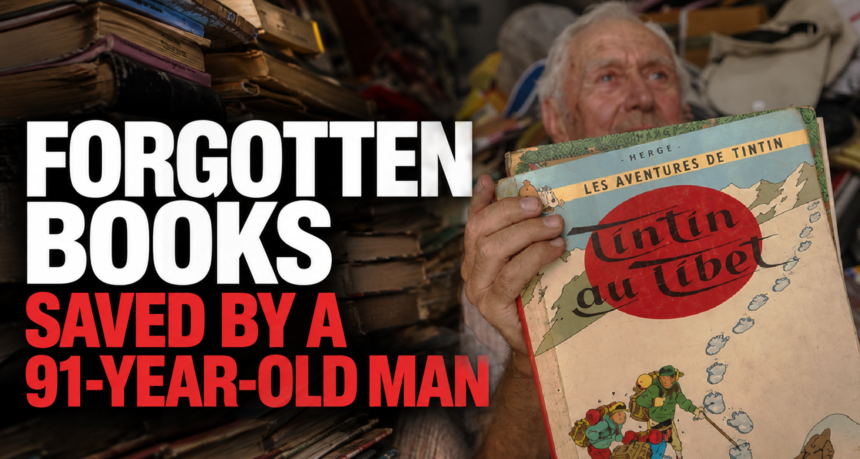
In the historic Syrian city of Aleppo, a 91-year-old bookseller has devoted nearly four decades of his life to rescuing forgotten books, manuscripts and documents, building an extraordinary collection that he says now contains around one million volumes. At an age when most people have long retired, Rizkullah Abd continues working among towering shelves of books, determined to protect works that might otherwise disappear forever.
Abd’s remarkable collection includes publications in several languages and covers subjects ranging from history and literature to philosophy, religion, science and culture. Some of the works are old and rare, while others were simply abandoned or neglected by previous owners. For Abd, however, their financial value is secondary to the knowledge and history contained within their pages.
His story, reported in August 2026, has attracted attention at a time when Syria is confronting the enormous challenge of preserving its cultural heritage following years of conflict. Aleppo, one of the world’s oldest continuously inhabited cities, suffered extensive destruction during the Syrian war, including damage to historic buildings, markets and cultural institutions.

Four Decades of Saving Books
Abd began seriously collecting books around 40 years ago. What started as a passion gradually developed into a personal mission: locating books that had been forgotten, discarded or left without proper protection and giving them a safe home. Over the years, the collection expanded dramatically. Abd searched for books in different places, acquiring volumes that other people no longer wanted and preserving material that he believed remained culturally or intellectually valuable.

Today, he estimates that his collection has reached approximately one million books and manuscripts. The sheer quantity makes his work remarkable, but Abd’s motivation is not simply to own a huge private library. He views preserving neglected books as a responsibility, particularly because losing them can mean losing pieces of collective history.
His collection includes material in Arabic and several other languages, reflecting the multicultural history of Aleppo itself. For centuries, the Syrian city served as a major commercial and intellectual crossroads connecting the Middle East with Europe and Asia. Books, manuscripts and historical documents therefore provide an important record of the people, ideas and communities that shaped the region.
Preserving Aleppo’s Memory After Years of War

Abd’s work has taken on additional significance because of what Aleppo has experienced during the past decade and a half. Once Syria’s largest city and its commercial powerhouse, Aleppo became one of the major battlegrounds of the country’s civil war. Fighting caused enormous destruction and displaced large sections of the population.
The city’s historic centre, recognised as a UNESCO World Heritage Site, suffered extensive damage. Libraries, private collections, shops and historic structures were also placed at risk during the conflict. Against that background, Abd’s determination to preserve books represents something larger than collecting. Every rescued manuscript or forgotten publication potentially preserves information that could otherwise be permanently lost. Even at 91, Abd remains closely involved with his collection. Rather than seeing the books merely as merchandise, he treats them as records of human experience.
The economic reality of maintaining such a collection, however, can be challenging. Rare books require appropriate storage, protection from moisture and insects and, ideally, controlled temperature and humidity. Cataloguing hundreds of thousands of items is itself an enormous undertaking. Digitisation could provide another layer of protection, but scanning and cataloguing a collection approaching one million volumes would require substantial money, equipment and specialist assistance.
Abd’s work consequently highlights a wider issue facing countries recovering from conflict: rebuilding cultural heritage can be just as important as reconstructing roads, homes and businesses. Libraries and archives preserve information about how societies developed. Once an irreplaceable manuscript is destroyed, stolen or allowed to deteriorate beyond repair, part of that historical record may disappear with it.
Aleppo has a particularly strong relationship with books and scholarship. Its position along historic trade routes brought merchants, scholars and travellers from different cultures into the city for centuries. Arabic, Armenian, Turkish, Persian and European influences have all contributed to its cultural landscape. That history helps explain why an enormous multilingual collection can provide insights extending far beyond modern Syria.
For Abd, however, the mission remains remarkably personal. He has spent nearly half his lifetime searching for publications that others overlooked and ensuring that they survive for another generation. His age has made the future of the collection an increasingly important question. Preserving a million-volume library after its collector can no longer manage it requires institutions, researchers or younger custodians willing to continue the work. Proper cataloguing and digitisation could eventually allow scholars around the world to study rare material while protecting fragile originals.
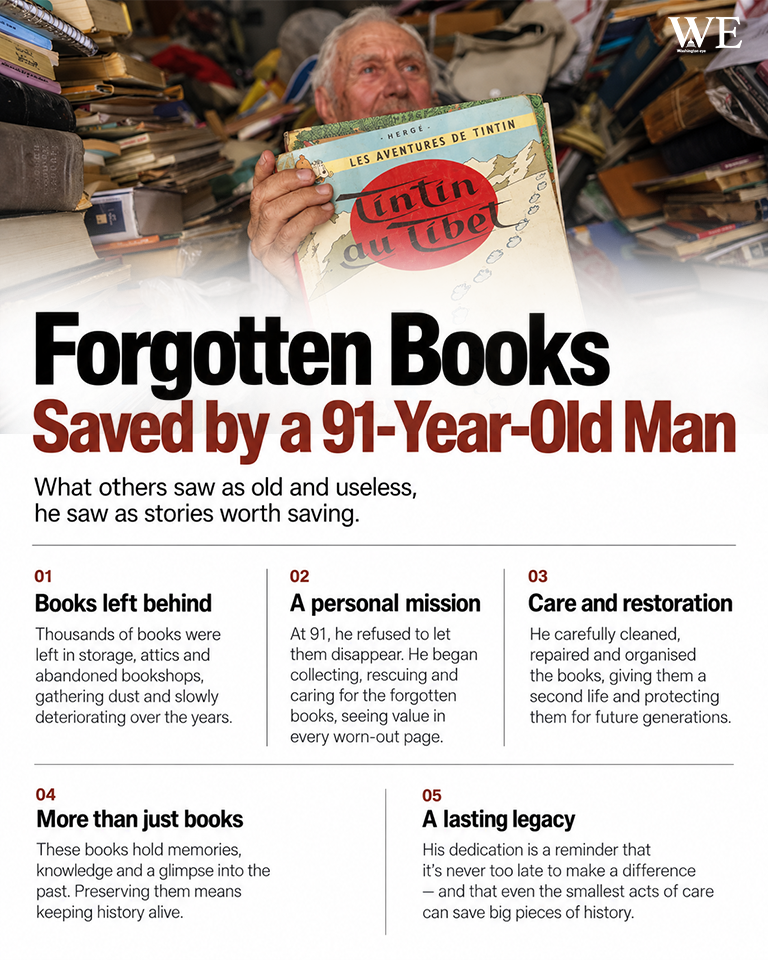
Abd’s story is therefore not simply about the number of books he has accumulated. It is about the belief that old knowledge remains valuable even when the physical books containing it have been forgotten. After almost four decades of collecting, the 91-year-old bookseller has effectively created a vast personal archive of Aleppo and the wider region’s intellectual history. In a city where war has destroyed so much, his shelves have become an unusual form of cultural preservation. And while individual books may appear old, damaged or unwanted, Abd continues to see something worth saving in them, ensuring that stories and knowledge from previous generations have a chance to reach the next.