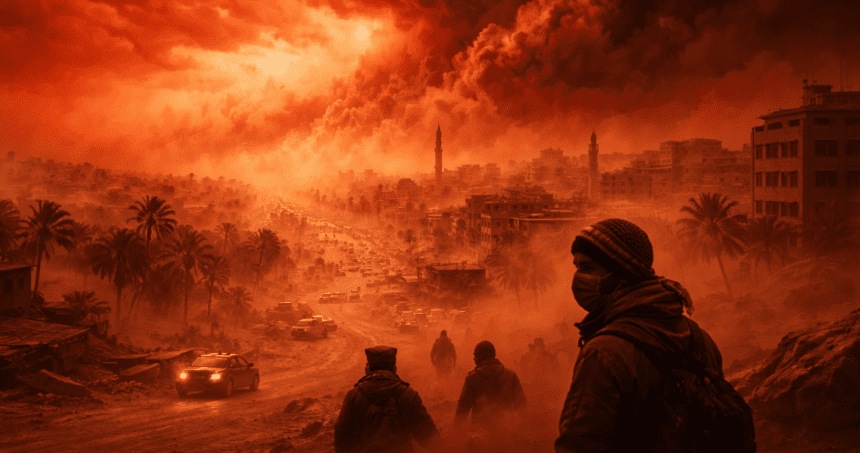
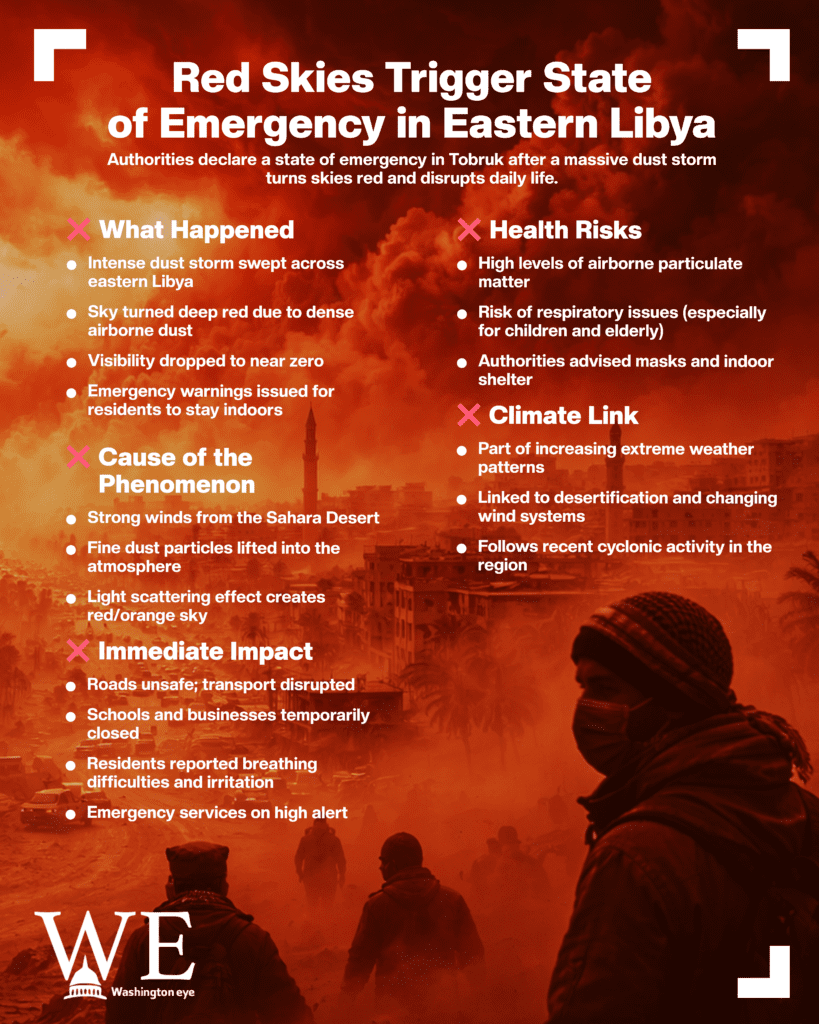
Authorities in eastern Libya declared a state of emergency after an intense dust storm swept across the coastal city of Tobruk, turning the sky a deep, apocalyptic red and severely reducing visibility. The rare weather event, which struck on April 1, prompted urgent warnings for residents to remain indoors, as strong winds carried dense Saharan dust across large parts of the region, disrupting daily life and raising concerns over public health and safety.
The municipal authorities in Tobruk issued the emergency order covering a wide geographic area, from Amahid in the east to Ain Ghazala in the west, after the storm intensified rapidly, engulfing the city in thick clouds of reddish-brown dust. Footage shared online showed streets plunged into an eerie crimson glow, with visibility dropping to near zero as dust particles blocked sunlight and filled the air. Officials described the situation as “extreme,” advising residents to avoid travel, stay inside their homes, and take precautions such as wearing masks to prevent respiratory issues.
Meteorologists say the phenomenon was driven by powerful winds sweeping across the Sahara Desert, lifting vast quantities of fine sand and dust into the atmosphere and transporting them northward. This process, commonly associated with regional wind systems such as the “gibli” in Libya, can create intense dust storms that significantly degrade air quality and visibility. The red coloration of the sky occurs when sunlight scatters through dense dust particles, filtering out shorter wavelengths and leaving behind a deep orange or red hue, an effect that often gives such storms their dramatic, almost otherworldly appearance.

The dust storm also reflects broader climatic patterns affecting North Africa and the Mediterranean basin. In recent weeks, the region has experienced unstable weather conditions, including strong cyclonic activity that helped transport Saharan dust across multiple countries. Scientists note that such events may become more frequent or severe due to climate change, which is intensifying desertification and altering wind patterns across the region.
The immediate impact on Tobruk has been significant. Transportation was disrupted as roads became unsafe due to near-zero visibility, while businesses and schools were temporarily closed in response to the emergency declaration. Residents reported difficulty breathing and irritation in the eyes and throat, particularly among vulnerable groups such as children and the elderly. Emergency services remained on high alert to respond to potential accidents, health emergencies, or infrastructure disruptions caused by the storm.
Local authorities emphasized that dust storms of this magnitude pose serious risks beyond visibility issues. Fine particulate matter in the air can penetrate deep into the lungs, exacerbating conditions such as asthma and other respiratory illnesses. Health officials urged people to remain indoors, seal windows and doors, and use protective gear if they must go outside. Drivers were also warned against traveling, as sudden drops in visibility are a leading cause of accidents during such weather events.
The situation in Tobruk is part of a wider pattern of extreme weather events affecting Libya in 2026. Earlier in March, a rare Mediterranean cyclone, known as a “medicine”, brought heavy rains, flooding, and large-scale dust movement across the region, highlighting the country’s vulnerability to climate-related hazards. These overlapping events underscore the challenges faced by local authorities in responding to increasingly unpredictable weather conditions.

As the dust storm gradually subsides, officials continue to monitor conditions and assess damage. While no major casualties have been reported so far, authorities remain cautious, warning that lingering dust in the atmosphere could continue to affect air quality for several days. Residents have been advised to stay updated through official channels and follow safety guidelines until normal conditions are fully restored.
The dramatic red skies over Tobruk have drawn global attention, serving as a stark reminder of the power of natural forces and the growing impact of environmental change. For many residents, the event was both awe-inspiring and alarming, an unusual spectacle that quickly turned into a public safety emergency.