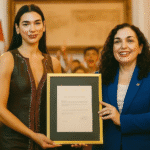
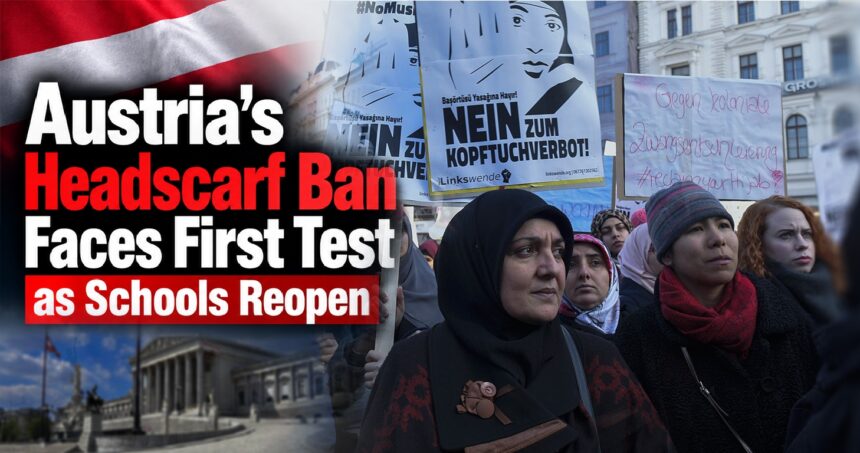
Austria’s controversial ban on headscarves for girls under 14 is facing its first test as schools reopen, with Muslim groups warning that the measure violates religious freedom and legal challenges expected.
The legislation, passed by parliament in December, prohibits pupils under 14 from wearing headscarves in schools. Austria’s three-party centrist coalition backed the measure, arguing that it would protect girls’ freedom and prevent social pressure. The far-right Freedom Party also supported the bill, while the Greens were the only parliamentary group to oppose it.
The rule is now being introduced as the school year begins in Vienna, Lower Austria and Burgenland. Schools in the remaining six states are expected to reopen the following week.
Austria’s main Muslim representative body, the Islamic Religious Community in Austria, has strongly criticised the ban. It says the legislation unfairly targets Muslim girls and breaches fundamental rights. The organisation has promised to challenge the law before the Constitutional Court.
The court struck down an earlier headscarf ban in 2020. That law applied to children under the age of 10 and was found to discriminate against Muslims. Judges said the state had a duty to remain religiously neutral and that any departure from this principle required especially strong justification.

The new legislation could therefore face a difficult constitutional examination. Education Minister Christoph Wiederkehr acknowledged that the court’s decision could not be predicted with certainty. He said the government had held extensive consultations and had tried to ensure that the law complied with Austria’s constitution.
Under the new rules, schools must first hold discussions with pupils who breach the ban. If the issue continues, families could face fines ranging from €150 to €800. Critics argue that the penalties could place additional pressure on children and their parents, while supporters say enforcement is necessary to make the law effective.
Left-wing student groups have called for protests, adding to the political tension surrounding the measure. Opponents say decisions about religious clothing should remain with families and individuals rather than being imposed by the state.
Supporters, however, maintain that the ban is intended to protect young girls from coercion and promote equality in classrooms.
The dispute is now likely to move beyond schools and into the courts. The Constitutional Court’s response could determine whether Austria’s latest headscarf restrictions remain in force or become another example of legislation rejected on grounds of religious discrimination.