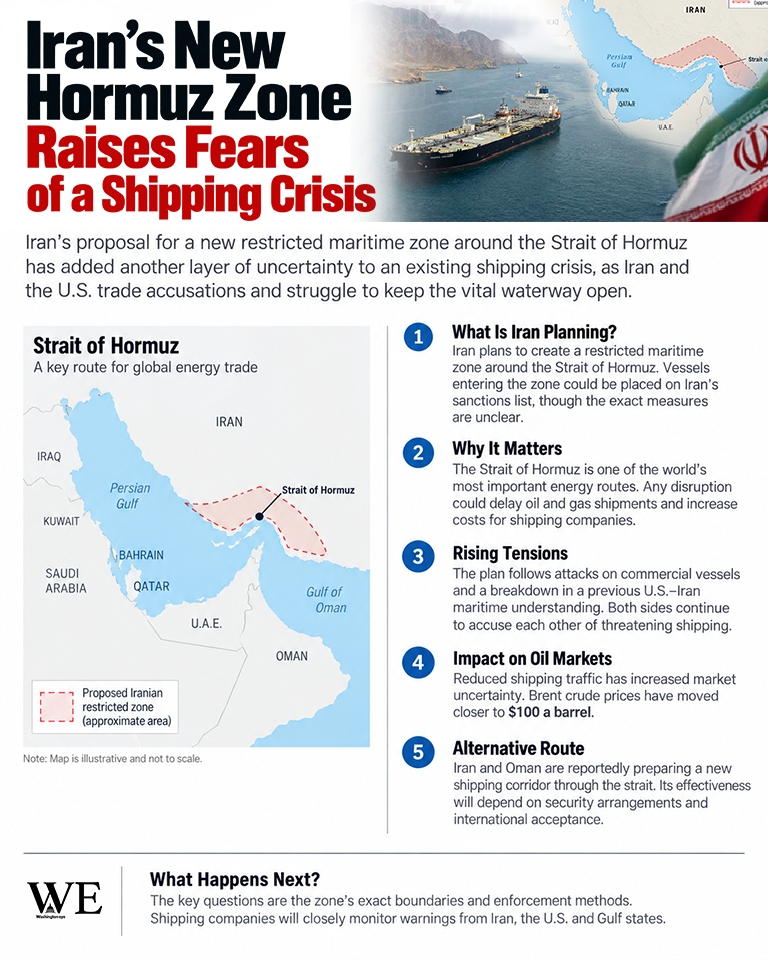
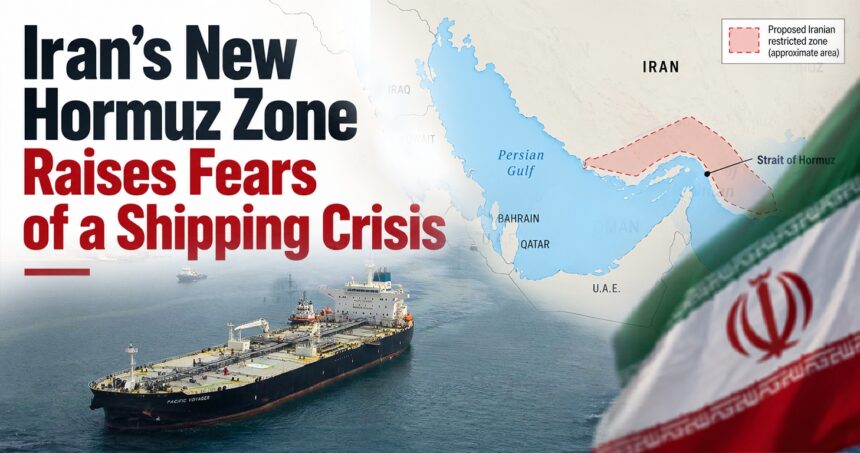
Iran’s proposal for a new restricted maritime zone around the Strait of Hormuz has added another layer of uncertainty to an existing shipping crisis. The announcement comes as Iran and U.S. Washington trade attacks on vessels and diplomatic efforts to restore safe passage through the strategic waterway.
Mohsen Rezaei, secretary of Iran’s Supreme National Security Council, said the zone would be announced in the coming days. He described an area beginning at the line of the US naval blockade and extending toward the strait and into parts of the Persian Gulf. Tehran has not yet published a detailed map, leaving the precise boundaries and enforcement arrangements unclear.
Iran says vessels entering the proposed zone would be placed on its sanctions list. The warning appears intended to make shipping companies think carefully before using routes that Tehran considers unauthorised. However, it remains uncertain whether the measure would involve inspections, financial penalties, military action or some combination of those measures.
The announcement follows a sharp deterioration in relations between Iran and the United States. A 60-day memorandum of understanding signed in June had provided a temporary framework for negotiations and maritime arrangements, but it expired without producing a lasting settlement. Since then, both sides have continued to accuse the other of threatening shipping and undermining efforts to keep the strait open.
The waterway is central to the dispute because it carries a substantial share of the world’s energy trade. Disruptions have already reduced commercial traffic, while renewed attacks have pushed oil prices higher. Reuters reported on Monday that Brent crude was approaching $100 a barrel as markets reacted to the latest escalation.
Iran is also preparing a separate proposal with Oman for a new shipping corridor through the strait. Rezaei said maps for the route had been agreed and would be approved soon. The arrangement could provide a practical way to restore commercial movement, but it also raises questions about who would manage the corridor and whether the United States would accept Iran’s role in controlling access.
The U.S. has rejected Iranian claims about an alleged attack on an American vessel, calling the account false. Washington has also maintained that its military presence is intended to protect navigation and counter Iranian restrictions. The conflicting statements underline how difficult it may be to establish a shared understanding of what constitutes a safe or authorised passage.
For shipping companies, the immediate concern is not only the legal status of the proposed zone but also the risk of being caught between competing military and diplomatic demands. Even without a formal closure, uncertainty can encourage vessels to delay journeys, seek alternative routes or pay higher insurance costs.
Iran’s plan therefore represents more than a new maritime announcement. It is part of a wider struggle over control, security and diplomatic leverage in the Gulf.