
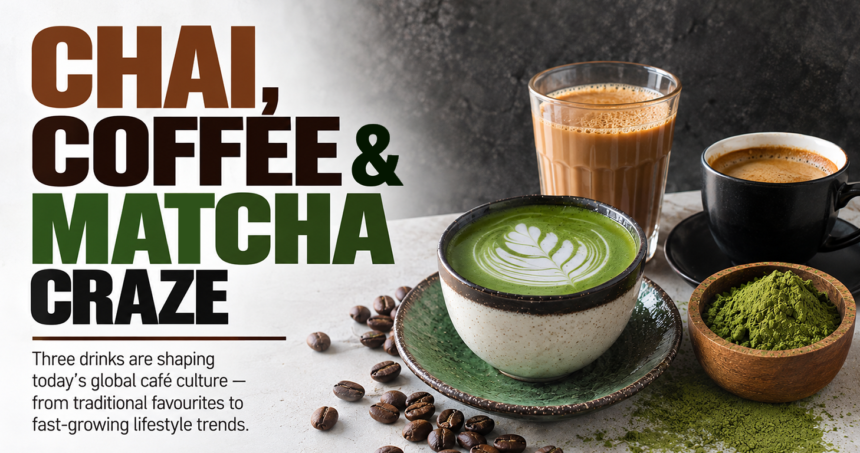
From the morning coffee run to iced matcha lattes and spiced chai, three caffeinated drinks are increasingly sharing space on café menus around the world. Coffee remains the established global favourite, but chai has expanded far beyond its South Asian roots while matcha has transformed from a traditional Japanese tea into one of the most visible lifestyle drinks of the decade.
The trend has accelerated through the mid-2020s, particularly among younger consumers who increasingly treat beverages as more than a caffeine fix. Flavour, appearance, perceived health benefits, customisation and social-media appeal are influencing what people order. Consumer research released in 2026 found that 60% of respondents had tried matcha and 56% had tried chai. Social media has become an important discovery channel, while cafés themselves are helping international flavours enter the mainstream.
From Traditional Drinks to Global Café Craze

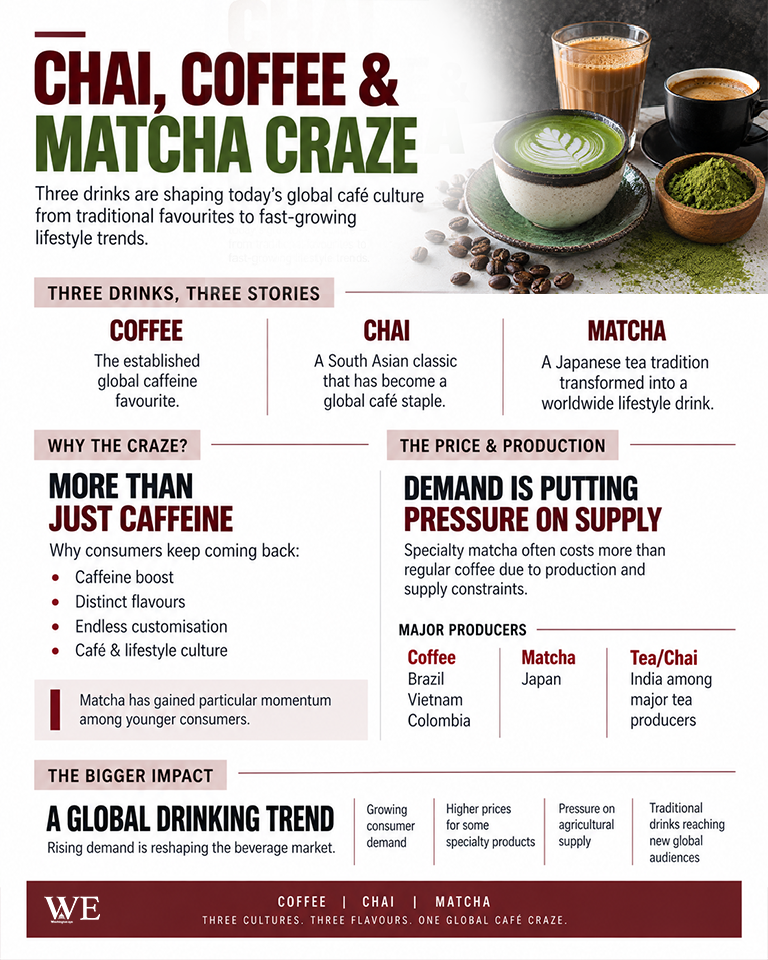
Coffee remains by far the most established of the three. Brazil, Vietnam and Colombia are among its biggest producers, while the European Union and United States represent major consuming and importing markets. The industry supports millions of livelihoods, with as many as 25 million farming households involved in coffee production worldwide. Chai has a different story. The word simply means “tea” in several South Asian languages, but internationally, “chai” usually refers to masala chai, a combination of black tea, milk, sugar and spices such as cardamom, ginger, cinnamon and cloves.
Long an everyday drink across India and other parts of South Asia, chai has become increasingly common in Western coffee shops as “chai latte,” often served hot or iced and combined with flavours ranging from vanilla to mango. Matcha has undergone perhaps the most dramatic transformation. Traditionally associated with Japanese tea culture, the finely ground green tea powder is now appearing in lattes, smoothies, desserts and increasingly elaborate café creations.

The bright green colour has made it particularly suited to Instagram and TikTok culture. In Australia, matcha orders increased 133% year-on-year, with customers under 35 driving much of the growth. An iced matcha latte there can cost around A$8, roughly A$2 more than a standard milk coffee. Interest is spreading elsewhere. In India, Google searches for “how to make matcha” reportedly jumped 1,300% over the past year, suggesting that consumers are increasingly experimenting with the Japanese drink at home as well as ordering it in cafés.
Popularity Comes With a Price
The craze is having consequences thousands of kilometres away from trendy urban cafés. Japan is struggling to produce enough matcha to satisfy international demand. Matcha is made from tencha, shade-grown tea leaves that are processed and ground into a fine powder. Production cannot simply be increased overnight, and extreme heat has further complicated the situation.

Japan produced 5,336 tonnes of tencha in 2024, almost 2.7 times the amount produced a decade earlier. Yet supply has struggled to keep pace with demand. Heat damage reduced yields in important growing areas, while viral social-media attention contributed to a surge in international orders. The boom became even clearer in fiscal 2025. Japan exported 13,125 tonnes of green tea, up 42% from the previous year, while the value of exports more than doubled to ¥84.7 billion. Powdered green tea, including matcha, accounted for around 70% of export volume.
Coffee is facing its own pressures. Weather shocks, labour and input costs, geopolitical tensions and transport disruptions can all affect global beverage prices. The UN Food and Agriculture Organization said in July that international coffee, cocoa and tea prices had experienced major fluctuations, with concentrated production leaving markets vulnerable to supply disruptions. Consumers therefore increasingly face a premium for fashionable café drinks, particularly those requiring high-quality matcha, specialty coffee beans or elaborate ingredients.
Why Are People Drinking Them?
Part of the answer is caffeine, but the craze goes further. Coffee is deeply embedded in workplace and social culture. Chai offers warmth, spice and customisation, while matcha has benefited from its association with wellness and a different caffeine experience. Matcha contains naturally occurring compounds including catechins, though the health impact of any café drink also depends on added sugar, syrups and milk.
Social media has added another dimension. Colourful iced drinks, layered milk, elaborate foam and attractive takeaway cups turn an everyday beverage into shareable content. Large chains have noticed. Starbucks said its tea sales had risen more than 70% since 2021, and in 2026 it continued expanding flavoured chai and matcha offerings in the United States. The drinks also reflect cultural exchange. Indian chai and Japanese matcha have moved into mainstream Western café culture, often being adapted far beyond their traditional forms.
That transformation has generated both enthusiasm and debate. Some consumers enjoy discovering new flavours and traditions, while purists argue that heavily sweetened “chai” and flavoured matcha lattes can bear little resemblance to the drinks traditionally consumed in India or Japan. For producers, however, the stakes are increasingly economic. Rising global demand can create new opportunities for farmers and exporters, but shortages, extreme weather and volatile prices also expose weaknesses in supply chains.
Coffee may still dominate the world’s caffeine habit, but chai and matcha are no longer niche alternatives. Together, the three drinks show how tradition, wellness culture, globalisation and social media are reshaping what the world drinks, one cup at a time.