War’s reach is increasingly measured not only in destroyed buildings and displaced communities, but also in the price of bread, fuel and borrowing far from the fighting. UN Secretary General António Guterres has warned that interconnected conflicts are transmitting economic shocks across borders, placing disproportionate pressure on people least able to absorb them. His comparison with El Niño presents a central challenge: violence that begins locally can undermine livelihoods globally.
A Warning Beyond the Battlefield
Speaking on October 22, Guterres linked conflicts in the Middle East, Ukraine and Sudan to disruption spreading through energy markets, shipping routes, supply chains and financial systems. He also condemned Houthi attacks on civilian targets in Saudi Arabia and called for restraint and renewed political dialogue in Yemen, where escalating fighting is worsening civilian suffering.
The significance of his warning lies in the connections between these crises, rather than an assumption that their causes are identical. Separate conflicts can produce overlapping economic consequences, exposing households to rising costs through several channels simultaneously. This makes distance from a battlefield an unreliable measure of economic vulnerability.
How Conflict Reaches the Household
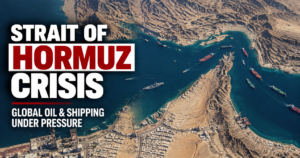
Energy and transport provide important links between military escalation and household hardship. Disrupted maritime routes and higher operating costs can slow deliveries of food and essential supplies. The World Food Programme reports that increased security risks and disruption to maritime corridors are already complicating humanitarian deliveries across the Middle East and beyond.
These pressures are not distributed evenly. The World Bank identifies poorer households as particularly exposed because food and fuel account for a larger share of their spending. Governments carrying substantial debt face an additional constraint: higher borrowing costs can narrow their capacity to protect living standards while maintaining development expenditure. The resulting problem is therefore both immediate and structural, affecting consumption today and public investment tomorrow.
When Humanitarian Buffers Weaken
Gaza illustrates how declining assistance can compound the consequences of conflict. On October 19, WFP reported that funding shortages had forced reductions in food assistance, including smaller household allocations. It said approximately 1.4 million people, equivalent to 67 percent of Gaza’s population, faced acute food insecurity at crisis levels or worse. The agency requested $450 million to sustain operations in Gaza and the West Bank from October 2026 through March 2027.
These figures highlight a distinction between humanitarian need and humanitarian capacity. Improved access and deliveries can support recovery, but those gains remain vulnerable when funding declines. Emergency assistance cannot resolve the underlying conflict, yet its contraction can remove a vital buffer before families regain secure livelihoods.
The Policy Test
Guterres’s warning suggests that diplomacy and economic protection should be treated as connected responsibilities. Preventing escalation and protecting civilians address the sources of disruption, while sustained humanitarian financing helps limit its consequences. Neither approach substitutes for the other.

A neutral assessment must also distinguish shared consequences from identical responsibilities. The conflicts he cited have different actors and political dynamics. Recognizing their combined economic effects does not remove the need to assess conduct and pursue negotiations within each setting.
A Final Note
The central issue is resilience: whether households, governments and aid agencies can withstand successive shocks. Guterres’s warning frames peace and civilian protection not only as security priorities, but also as conditions for limiting hardship far beyond the battlefield.