
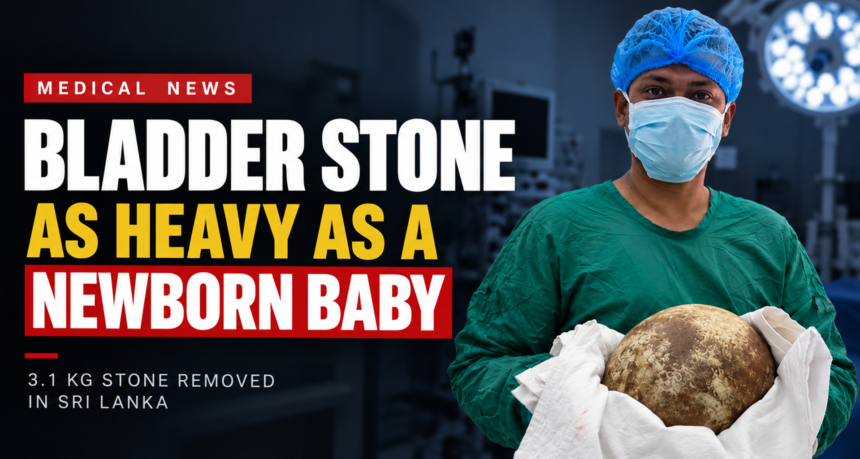
Extraordinary surgery may have removed the heaviest bladder stone ever documented
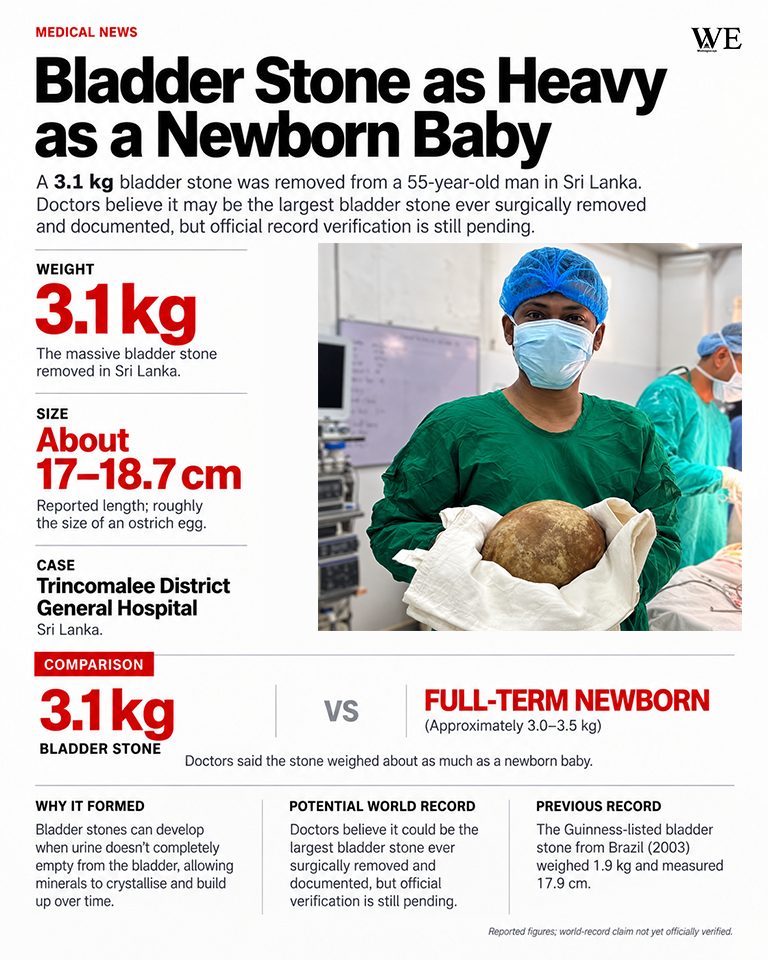
Doctors in Sri Lanka have successfully removed an enormous 3.1-kilogram bladder stone from a 55-year-old man, with the extraordinary mass weighing roughly as much as a newborn baby. Measuring about 17 centimetres, the stone was also compared in size to an ostrich egg and could potentially set a new world record if officially verified.
The unusual operation was performed at Trincomalee District General Hospital in eastern Sri Lanka in August 2026. The surgical team was led by urologist Dr Pragaladhan Balakrishnan, who said available records suggested it could be the largest bladder stone ever documented and surgically removed. The record claim, however, has yet to receive official verification.
How Doctors Discovered the Giant Stone

Interestingly, the 55-year-old patient had not originally been admitted to hospital specifically for the bladder stone. He was receiving treatment after suffering a stroke when medical staff noticed that he was experiencing problems with urination. Further investigations revealed the huge mass occupying his urinary bladder.
Doctors subsequently decided that surgery was necessary. The stone was successfully removed and found to weigh approximately 3.1 kilograms — 6 pounds and 13 ounces — and measure around 17 centimetres in length. For comparison, the average full-term newborn typically weighs around three to four kilograms, making the scale of the discovery particularly striking.

Despite undergoing such a major procedure, doctors reported that the patient was recovering well. He remained in hospital for treatment of his other medical conditions following the surgery. Medical staff reportedly estimated that the stone may have been developing inside the patient’s bladder for approximately five to 10 years, gradually increasing in size as minerals accumulated.
How Can a Bladder Stone Become So Large?
Bladder stones are hardened masses of minerals that develop inside the urinary bladder. They usually form when a person cannot completely empty their bladder. Urine remaining inside becomes concentrated, allowing minerals to crystallise and eventually stick together. Some bladder stones remain extremely small and can pass naturally during urination. Larger stones, however, can become trapped and require medical intervention.

Stones exceeding around four centimetres are generally described as “giant” bladder stones, making the approximately 17-centimetre Sri Lankan case exceptionally unusual. A number of conditions can increase the likelihood of developing bladder stones. An enlarged prostate can obstruct urine flow in men, while neurological problems affecting bladder function can prevent complete emptying. Recurrent urinary infections, urinary tract obstruction and prolonged catheter use may also contribute to stone formation.
Symptoms can include lower abdominal pain, painful or burning urination, frequent urination, difficulty starting urine flow, an interrupted or weak stream and blood in the urine. In severe cases, a stone may obstruct the urinary tract and make passing urine extremely difficult. What makes this case remarkable is not simply the stone’s dimensions but its weight. According to reports, the previous Guinness-recognised benchmark cited for the largest bladder stone involved a stone removed in Brazil in 2003. That stone weighed approximately 1.9 kilograms and measured 17.9 centimetres.
The Sri Lankan stone is therefore slightly shorter but approximately 1.2 kilograms heavier. At 3.1 kilograms, it weighs about 63% more than the previous 1.9-kilogram example. If formally recognised, the case could consequently establish a new record based on weight. The operation has also drawn attention to the capabilities of Sri Lanka’s healthcare system. Trincomalee General Hospital described the procedure as demonstrating the expertise of its medical, surgical and supporting teams in managing an exceptionally complicated case.
The case is a dramatic reminder that urinary symptoms should not be ignored. Most bladder stones are detected and treated long before reaching anything close to this size. Identifying the reason why the bladder is failing to empty is also important because simply removing a stone without addressing the underlying problem can allow new stones to develop.
For the Sri Lankan patient, what began as hospital treatment for an unrelated stroke ultimately uncovered an extraordinary condition that may have been silently developing for years. The successful removal of a 17-centimetre, 3.1-kilogram stone has now attracted international attention, both because of the remarkable surgery and because the mass removed from one man’s bladder weighed almost as much as a newborn child.