
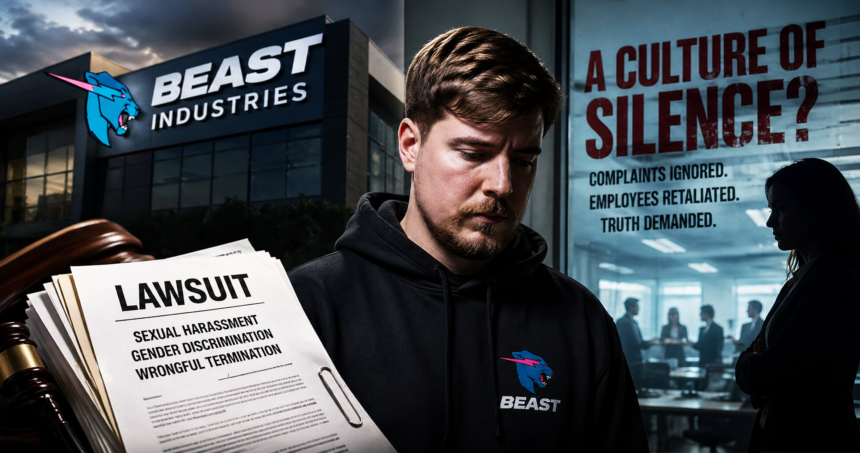
A major controversy has erupted around Jimmy Donaldson, one of the world’s most influential digital creators, after his media company, Beast Industries, was sued over allegations of sexual harassment, gender discrimination, and wrongful termination. The lawsuit, filed in April 2026 in the United States, reportedly in North Carolina, has triggered widespread debate about workplace culture in influencer-led companies and the governance of rapidly expanding digital empires.
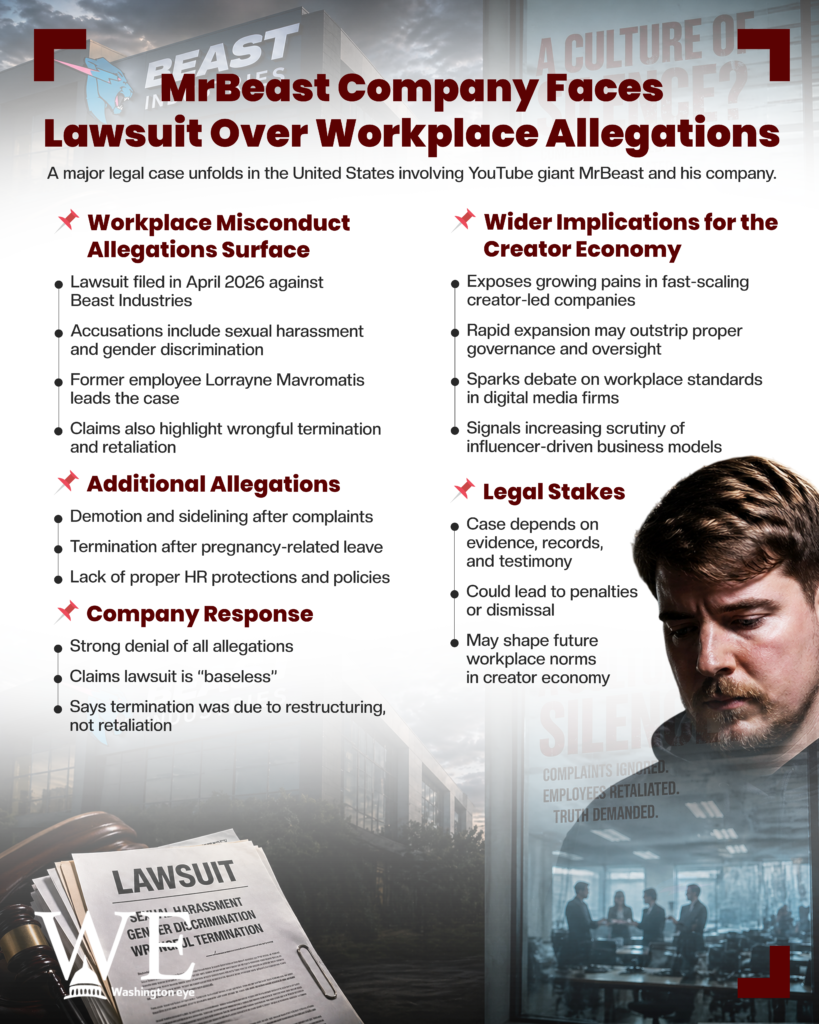
The case was brought forward by Lorrayne Mavromatis, a former senior employee who served as head of Instagram operations at Beast Industries. According to court filings, she joined the company in 2022 and alleges that during her tenure she experienced a hostile and toxic workplace environment, where inappropriate behavior toward female employees was “condoned and/or perpetuated” by supervisors. Her complaint outlines multiple instances of alleged sexual harassment, including inappropriate comments, gender bias, and uncomfortable one-on-one interactions with senior executives.
The lawsuit further claims that Mavromatis raised concerns about the alleged misconduct internally in 2023, reporting the issue to the company’s human resources department. However, she asserts that her complaints were dismissed as “unsubstantiated,” and instead of corrective action, she faced retaliation. She alleges that she was demoted, sidelined into a less significant role, and eventually terminated shortly after returning from pregnancy-related leave, raising additional concerns about discrimination tied to motherhood and violations of labor protections.
Beyond individual incidents, the lawsuit paints a broader picture of company culture, describing Beast Industries as a “boys’ club” where male executives held disproportionate power and female employees were subjected to demeaning treatment. Allegations also include claims that inappropriate remarks were made by high-level figures and that female staff were treated differently from male counterparts in terms of responsibilities and opportunities. The complaint suggests systemic issues rather than isolated events, pointing to what the plaintiff describes as a lack of formal workplace policies and professional safeguards.

In response, Mr Beast and his companies, including Mr Beast YouTube LLC and Game Changer 24/7 LLC, have strongly denied all allegations. In legal filings and public statements, company representatives described the lawsuit as “baseless” and motivated by publicity. They argue that Mavromatis’ termination was part of a legitimate restructuring process affecting an underperforming business unit, rather than retaliation. The company also claims to possess documentary evidence, including internal communications and employee records, which it says contradict the accusations.
The defense further contends that the company maintains appropriate workplace policies and that the allegations misrepresent internal practices. In some responses, the company suggested that the plaintiff attempted to leverage her association with a high-profile brand to gain attention. Legal representatives for Beast Industries have requested that the court dismiss the case.
This lawsuit adds to a growing list of legal challenges linked to MrBeast’s expanding media ventures. In recent years, his brand has evolved from a YouTube channel into a multi-entity business empire spanning production companies, consumer products, and large-scale entertainment projects. However, that rapid growth has also brought increased scrutiny. Previous lawsuits, including a 2024 class action involving contestants from the “Beast Games” production, also included allegations of mistreatment and workplace concerns.
Industry analysts note that the case highlights broader structural challenges in influencer-led companies, where rapid scaling often outpaces the development of formal corporate governance systems. Unlike traditional media firms, many creator-driven enterprises begin as small teams before expanding into multimillion-dollar operations, sometimes without robust human resource frameworks.
The implications of the lawsuit extend beyond the immediate parties involved. As Mr Beast remains one of the most-followed and commercially successful creators globally, the case could influence how brands, advertisers, and platforms assess partnerships with influencer businesses. It may also prompt discussions about labor rights, workplace protections, and accountability within the creator economy.
Legal experts suggest that the outcome of the case will depend heavily on documentation, witness testimony, and the court’s interpretation of employment protections, particularly regarding harassment claims and retaliation. If proven, the allegations could result in financial penalties and reputational damage. If dismissed, it could reinforce the company’s position and potentially deter similar claims.
For now, the case remains ongoing, with both sides presenting sharply contrasting narratives, one alleging systemic misconduct and retaliation, the other insisting on procedural fairness and denial of wrongdoing. As proceedings unfold, the lawsuit is expected to remain under intense public and media scrutiny, reflecting the growing intersection of digital influence, corporate responsibility, and workplace ethics in the modern media landscape.