
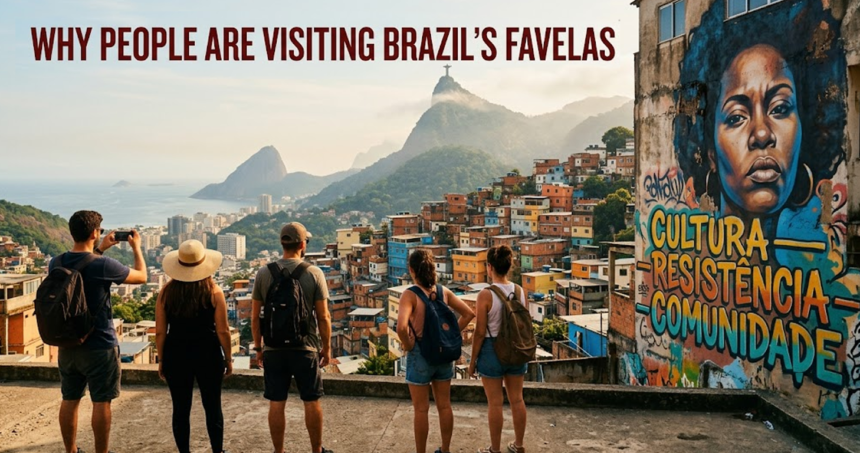
Once viewed almost exclusively through the lens of poverty, crime and social inequality, Brazil’s favelas are increasingly becoming a major draw for international tourists seeking cultural immersion, local experiences and a deeper understanding of Brazilian society. In recent years, guided tours through communities such as Rocinha, Vidigal and Santa Marta in Rio de Janeiro have seen growing demand, transforming favela tourism into one of the country’s most debated travel trends.
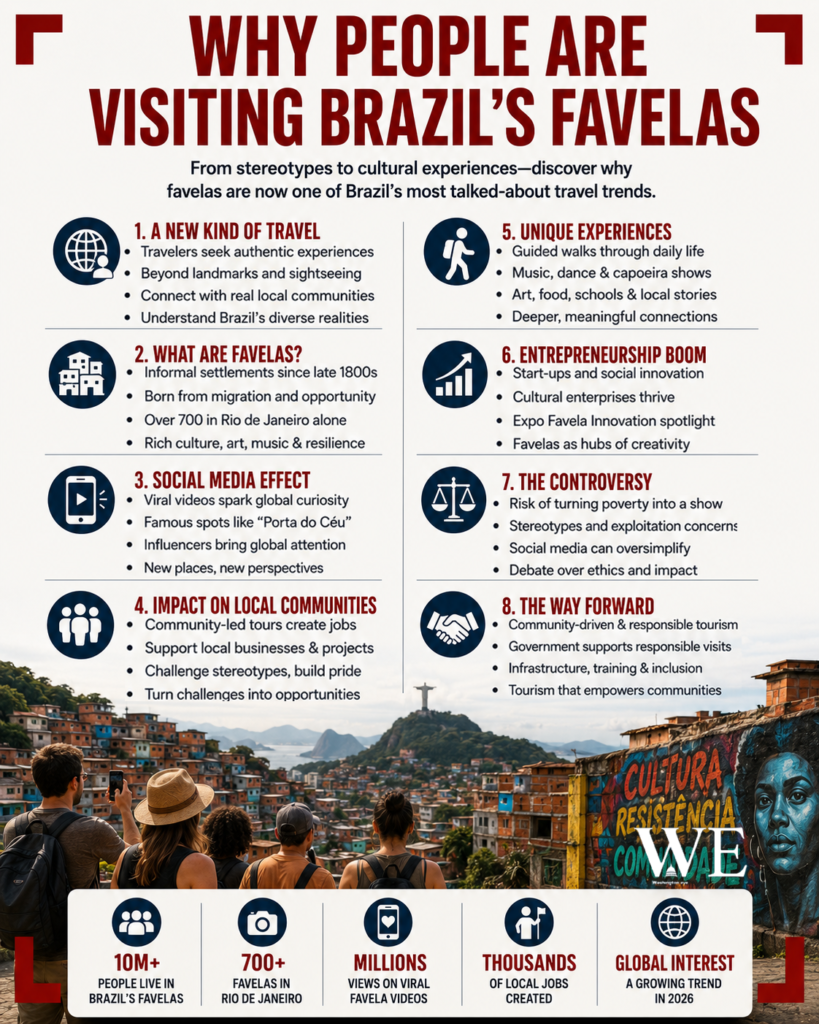
The rise of favela tourism reflects a broader shift in global travel preferences. Rather than limiting their visits to famous attractions such as Christ the Redeemer and Sugarloaf Mountain, many travelers now seek authentic experiences that offer direct interaction with local communities. Tour operators and residents say visitors want to understand the realities, culture and resilience of the neighborhoods that house millions of Brazilians.
Favelas emerged in Brazil during the late 19th century as informal settlements created by former soldiers, freed slaves and rural migrants seeking opportunities in rapidly expanding cities. Today, hundreds of favelas are spread across major urban centers, with Rio de Janeiro alone home to more than 700 such communities. Despite long-standing challenges linked to poverty and inadequate public services, many favelas have developed vibrant cultural identities characterized by music, dance, street art, entrepreneurship and strong community networks.

A significant factor behind the recent surge in visitors is social media. Viral videos posted on platforms such as Instagram and TikTok have introduced global audiences to panoramic viewpoints, colorful alleyways and local cultural performances. One of the most notable examples is Rocinha’s “Porta do Céu” or “Gateway to Heaven,” a rooftop location that became internationally famous after drone videos attracted millions of views online. Influencers, celebrities and travelers from around the world began visiting the site, turning it into a symbol of a new tourism movement.

Local residents have increasingly embraced tourism as an economic opportunity. Community-led tours often highlight daily life, local businesses, cultural projects, schools, art initiatives and historical landmarks. For many guides, tourism provides employment while allowing residents to challenge stereotypes that have long defined international perceptions of favela communities. Some former residents involved in crime or informal work have rebuilt their livelihoods through tourism-related activities, demonstrating how the sector can contribute to social and economic development.
According to tourism experts, visitors are drawn not only by curiosity but also by the desire to witness a side of Brazil rarely portrayed in traditional travel brochures. Walking tours frequently include local music performances, capoeira demonstrations, artisan workshops and visits to community centers. These experiences provide tourists with a more nuanced understanding of Brazilian urban life while generating income for local entrepreneurs.
The growth of favela tourism has also coincided with a boom in entrepreneurship within these communities. Technology start-ups, cultural enterprises and social innovation projects have gained visibility through initiatives such as Expo Favela Innovation, helping reshape perceptions of favelas as places of creativity and business potential rather than merely areas of deprivation.

However, the trend remains controversial. Critics argue that favela tourism can risk turning poverty into a spectacle, with some visitors seeking dramatic social contrasts rather than meaningful engagement. Scholars and activists have questioned whether certain tours reinforce stereotypes or exploit marginalized communities for commercial gain. Others worry that viral social media content oversimplifies complex social realities by focusing only on visually appealing locations.
Supporters counter that community-led tourism differs significantly from exploitative forms of “slum tourism.” They argue that when residents control the narrative and benefit financially, tourism can become a powerful tool for education, cultural exchange and economic empowerment. Many local guides emphasize that their goal is to present the history, achievements and challenges of their communities from an insider perspective rather than allowing outsiders to define them.
Brazilian authorities have also shown interest in promoting responsible tourism initiatives within favelas. Previous government-backed projects sought to improve infrastructure, train local guides and integrate favela experiences into broader tourism strategies. Officials view such efforts as a way to diversify Brazil’s tourism offerings while ensuring economic benefits reach underserved communities.
As Brazil continues to attract record numbers of international visitors, the popularity of favela tourism highlights changing attitudes toward travel. For many tourists, the appeal lies not simply in sightseeing but in connecting with real communities, hearing local stories and experiencing the cultural heartbeat of Brazil beyond its beaches and landmarks. Whether celebrated as a form of cultural exchange or criticized as a complex ethical issue, favela tourism has undeniably become one of the most distinctive trends reshaping Brazil’s tourism landscape in 2026.