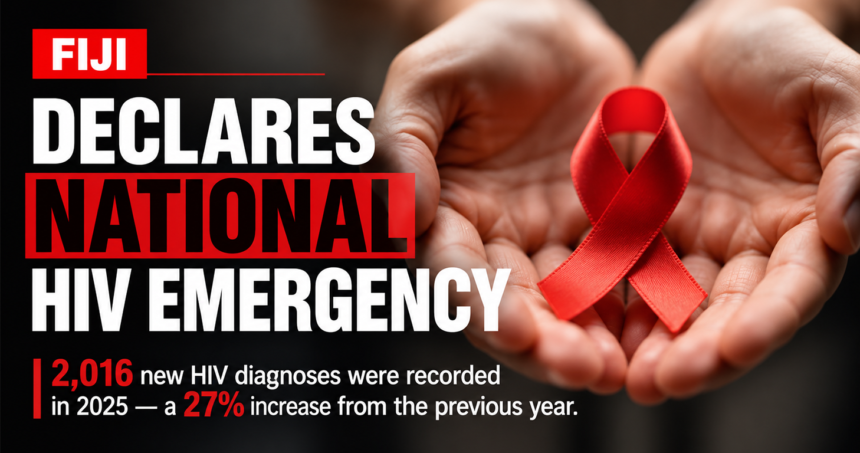
Fiji has declared HIV a national emergency as the Pacific island nation confronts one of the sharpest increases in new HIV infections recorded globally. The declaration, announced on September 15, 2026, marks a significant escalation of the country’s response after health authorities warned that existing measures were no longer sufficient to control the growing epidemic.
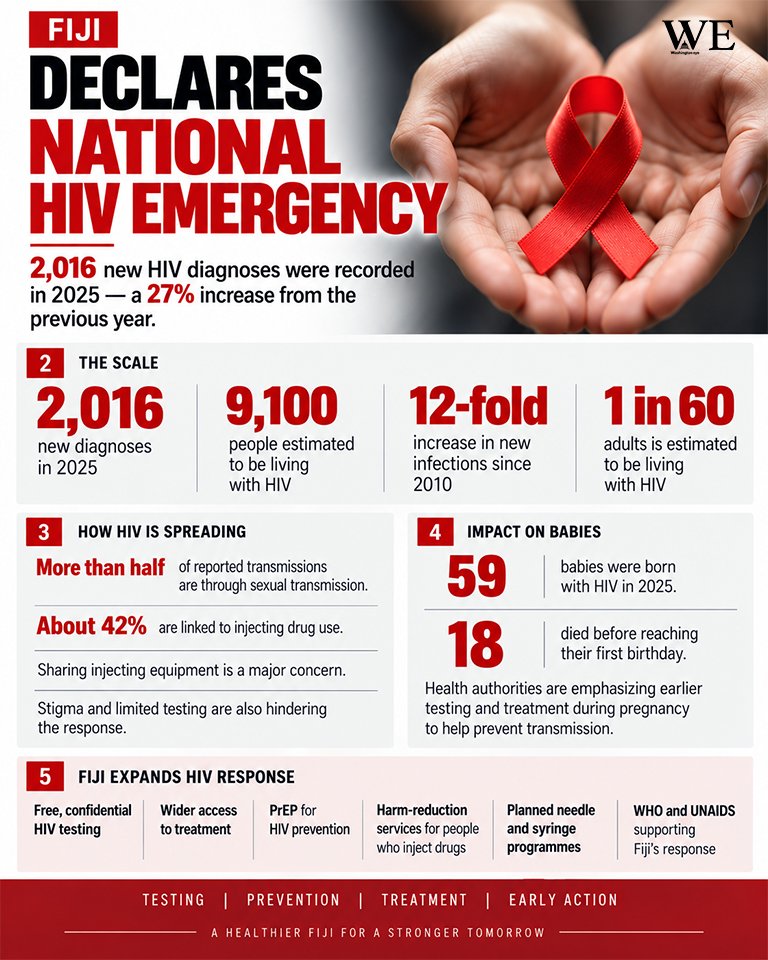
The decision comes amid alarming figures showing that an estimated one in every 60 adults in Fiji is now living with HIV, compared with approximately one in 167 five years ago. According to UNAIDS, around 9,100 people were living with HIV in Fiji in 2025, while only 39 percent knew their HIV status and just 22 percent were accessing antiretroviral treatment. New HIV infections are estimated to have increased twelvefold between 2010 and 2025.
A Rapidly Growing Health Crisis
Fiji had already declared an HIV outbreak in January 2025, leading to increased testing and other public-health measures. However, the latest data convinced the government that an outbreak-level response was no longer adequate. In 2025 alone, 2,016 people were newly diagnosed with HIV, representing a 27 percent increase from the previous year. The situation has also raised serious concerns about maternal and child health. Fifty-nine babies were born with HIV during 2025, and 18 died before reaching their first birthday. Among pregnant women attending antenatal care, HIV prevalence has reached approximately one in 50.
Health Minister Ratu Atonio Lalabalavu said the emergency declaration reflected both the seriousness of the epidemic and the need for a coordinated national response. The Ministry of Health alone could not tackle the problem, he said, making cooperation across government agencies and communities essential. The government has established a five-minister Cabinet subcommittee to address obstacles slowing the response. Authorities also intend to work with communities, faith-based organisations and traditional leadership structures to strengthen prevention, testing and continued care.

Why Are HIV Cases Increasing?
Health experts point to several factors behind Fiji’s rapidly growing epidemic. Sexual transmission remains a major route: among cases where the mode of transmission was known, more than half were associated with sexual transmission. More than 42 percent were linked to injecting drug use. The growth of injectable methamphetamine use and the sharing of contaminated needles have become particular concerns. Public-health specialists have therefore stressed that tackling HIV requires not only medical treatment but also effective harm-reduction services for people who inject drugs.
At the same time, expanded testing has contributed to the rise in recorded diagnoses because infections that previously went undetected are now being identified. Officials nevertheless say increased testing alone does not explain the scale of the problem. Another major challenge is stigma. Fear of discrimination can discourage people from seeking an HIV test, discussing their risk or continuing treatment. The Fijian government has emphasised that discrimination against people living with HIV is illegal and has urged communities to protect patients’ privacy and dignity.

Emergency Response and Precautions
Under the strengthened response, Fiji plans to expand free, voluntary and confidential HIV testing, including rapid testing, while improving access to treatment for people diagnosed with the virus. The government is also widening access to pre-exposure prophylaxis (PrEP), medication that can substantially reduce the risk of acquiring HIV when taken as prescribed.
Authorities are also moving forward with a needle-and-syringe programme so people who inject drugs can obtain sterile equipment instead of sharing needles. Follow-up services will be strengthened to ensure that people diagnosed with HIV remain connected to care and continue antiretroviral therapy. For individuals, prevention includes using condoms correctly and consistently, avoiding sharing needles or injecting equipment, undergoing HIV testing when appropriate, and seeking medical advice about PrEP when at increased risk.
Pregnant women should have access to HIV testing and treatment because effective antiretroviral therapy can greatly reduce the risk of transmission from mother to child. HIV attacks the body’s immune system and, without treatment, can progress to AIDS. Modern antiretroviral therapy can suppress the virus, allowing people living with HIV to lead long and healthy lives while also preventing sexual transmission when viral suppression is maintained.
International Reaction
International health organisations have welcomed Fiji’s decision to intensify its response. The World Health Organization said it would continue supporting Fiji and described the emergency declaration as an opportunity to accelerate work already underway through the country’s HIV Surge Strategy and National HIV Outbreak Response Plan.
UNAIDS Executive Director Winnie Byanyima said Fiji had recognised the urgency of the situation and was strengthening its response. She described the crisis as a reminder that the global AIDS epidemic is not over and that HIV outbreaks can change rapidly. The emergency declaration therefore represents more than a health warning. It is an attempt to mobilise government, healthcare providers and communities around testing, prevention, treatment and stigma reduction before the epidemic grows further.