
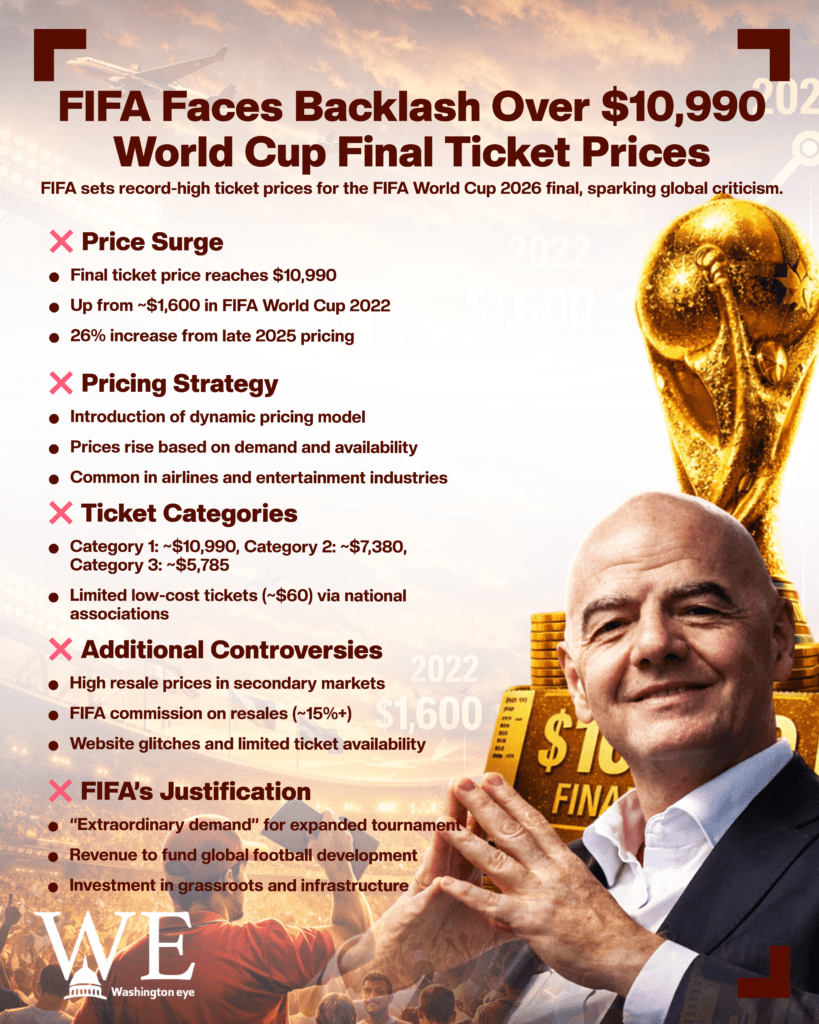
The sharp increase represents a dramatic jump from previous World Cup editions. During the 2022 World Cup in Qatar, the most expensive final ticket cost around $1,600, highlighting how rapidly prices have escalated within a single tournament cycle. Even within the current sales phases, the top price rose from approximately $8,680 in late 2025 to $10,990 in 2026, reflecting a 26 percent increase.
FIFA has attributed the price surge to its newly implemented dynamic pricing model, a system widely used in airline and entertainment industries where ticket costs fluctuate based on demand, timing, and market conditions. Under this model, high-demand matches, particularly the final, see significant price hikes as availability decreases and global interest intensifies. Officials argue that the pricing reflects “extraordinary demand” for what is expected to be the most attended World Cup in history, featuring 48 teams and 104 matches.
Beyond the headline figure of $10,990, other ticket categories have also seen substantial increases. Category 2 tickets for the final are priced around $7,380, while Category 3 tickets reach approximately $5,785. Even earlier pricing structures had already pushed final tickets into the range of $2,000 to over $6,000 depending on seating, indicating a broader upward trend across all tiers.

Despite the steep costs, FIFA maintains that not all tickets are priced at premium levels. A limited number of “supporter entry tier” tickets, priced at approximately $60, have been reserved for distribution through national football associations to loyal fans. However, these tickets represent only a small fraction of the total allocation, making them largely inaccessible to the general public.

The announcement has triggered widespread criticism from fans, advocacy groups, and even lawmakers. Critics argue that the pricing structure undermines the inclusive spirit of the World Cup, traditionally seen as a global event accessible to diverse audiences. Fan organizations have described the costs as “exclusionary,” warning that ordinary supporters are being priced out in favor of corporate clients and high-income spectators. In the United States, dozens of lawmakers have also voiced concerns, stating that such pricing contradicts FIFA’s mission of promoting global football participation.
Further controversy surrounds FIFA’s ticket resale system, where the organization reportedly takes commissions, around 15 percent or more, on transactions, potentially driving prices even higher in secondary markets. Reports of resale listings reaching tens of thousands of dollars have intensified concerns about affordability and transparency.
The issue is compounded by technical problems during ticket releases, including website glitches and limited availability, which have frustrated fans attempting to secure seats. Despite these challenges, demand remains extraordinarily high, with tickets for major matches selling out quickly, reinforcing FIFA’s argument that market demand justifies the pricing strategy.

Economically, FIFA defends the pricing by emphasizing that revenues generated from the tournament will be reinvested into football development programs worldwide. The organization claims that higher ticket income supports grassroots initiatives, infrastructure, and global expansion of the sport. However, critics counter that such justifications do little to address immediate accessibility concerns for fans hoping to attend the tournament.
As the 2026 World Cup approaches, the debate over ticket pricing reflects a broader shift in global sports economics, where mega-events increasingly prioritize revenue maximization. While FIFA’s strategy may set new financial benchmarks, it also raises fundamental questions about who the World Cup is truly for, elite spectators or the global fan base that has long defined the sport’s identity.