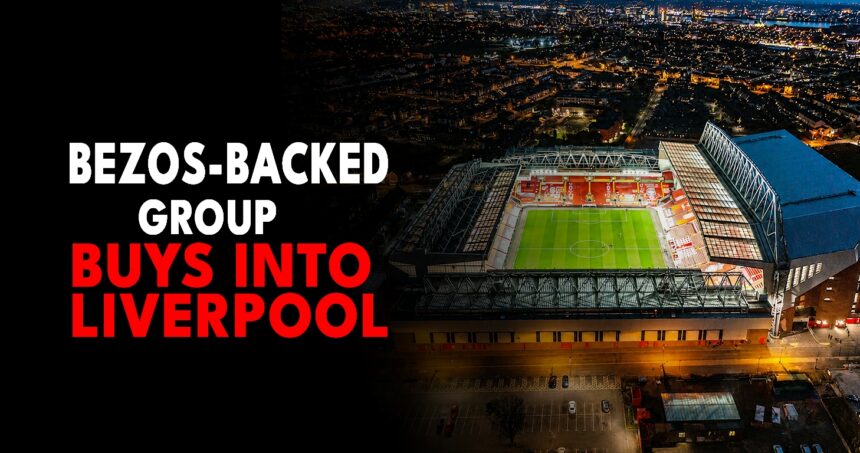
A billionaire investor consortium backed by Amazon founder Jeff Bezos has secured a substantial minority stake in Liverpool F.C., marking one of the biggest ownership deals in European football and valuing the Premier League club at more than $7 billion.
The transaction was formally announced on August 14, after weeks of negotiations with Liverpool’s American owner Fenway Sports Group (FSG). The investment is being made through 1892 Holdings, a consortium led by British-Indian businessman Amit Bhatia and involving the Mittal family, K5 Sports and EE Capital, the family office of Facebook co-founder Eduardo Saverin and his wife Elaine. Bezos is the lead investor in K5 Sports.
The deal is significant because it brings some of the world’s wealthiest technology and business figures into the ownership structure of one of football’s most famous clubs. However, it does not represent a full takeover: FSG retains majority ownership and operational control.
From 30% Talks to a Much Bigger Liverpool Investment
Initial reports on August 10 indicated that the consortium was close to purchasing approximately 30% of Liverpool for around £1.35 billion, which at that stage would have valued the club at roughly £4.5 billion. The final investment turned out to be larger. Subsequent reporting established that 1892 Holdings acquired approximately 38% of Liverpool, paying more than £2 billion and valuing the entire club at around £5.5 billion, or more than $7 billion.

That represents an extraordinary increase in Liverpool’s value under FSG. The American sports group acquired Liverpool in 2010 for approximately £300 million, when the club was experiencing serious financial difficulties. Sixteen years later, the valuation attached to the latest transaction is more than 18 times that purchase price.
Liverpool’s transformation on and off the pitch has contributed heavily to that rise. The club won the Champions League in 2019 and Premier League titles in 2019-20 and 2024-25, while expanding Anfield and increasing commercial revenues. Liverpool recorded revenues exceeding £700 million in 2024-25, according to the Financial Times.
Who Is Behind the Consortium?

The central figure is Amit Bhatia, a British-Indian businessman and the son-in-law of steel billionaire Lakshmi Mittal. Bhatia is already familiar with English football. He previously served as a shareholder and senior executive at Queens Park Rangers and therefore brings direct experience of football administration. He has now become Liverpool’s vice-chairman, although he has stressed that FSG remains responsible for the club’s major decisions.
The consortium also brings extraordinary financial firepower. Jeff Bezos is one of the world’s richest people and founded Amazon. His participation comes through K5 Sports rather than as Liverpool’s controlling owner. Eduardo Saverin, one of Facebook’s co-founders, is involved through EE Capital alongside Elaine Saverin. Liverpool’s official announcement described the investors as bringing expertise spanning global business, technology and investment, with the objective of supporting the club’s long-term development.
Why Does FSG Want Outside Investment?
The economics of elite football have changed dramatically. Premier League clubs are spending enormous sums on transfers, wages, stadiums, training facilities and commercial expansion. At the same time, valuations of leading sports franchises have surged as billionaires and institutional investors increasingly regard elite sport as a scarce global asset.
Liverpool already has an enormous international fan base, valuable broadcasting income and one of world football’s most recognizable brands. Bringing in new investors allows FSG to realize part of the enormous increase in Liverpool’s value without giving up control of the club. The new capital and business relationships could also help Liverpool expand commercially, particularly in rapidly growing markets such as India and Asia, although the investment does not automatically translate into billions of pounds being made available for player transfers. The transaction therefore appears designed around Liverpool’s long-term corporate value rather than simply financing another transfer window.
Could Bezos Eventually Own Liverpool?
This is where the deal becomes particularly interesting. 1892 Holdings reportedly has first refusal to become Liverpool’s majority shareholder during the next 12 months if FSG decides to sell its controlling interest. That does not mean FSG has decided to sell Liverpool. Bhatia has emphasized that the consortium is currently a minority partner and that FSG remains firmly in control. But the provision creates a potential route towards a much larger ownership change.
If FSG eventually decides that the time is right to exit Liverpool, the Bezos-backed consortium could be positioned ahead of other potential buyers. For supporters, that possibility will inevitably generate debate about the future identity of the club and the increasingly enormous sums involved in elite football ownership.
Impact on Liverpool and the Premier League
The investment demonstrates how attractive Premier League clubs have become to the world’s wealthiest investors. English football offers something particularly valuable: a globally recognized competition with enormous broadcasting reach and clubs whose fan bases cannot easily be replicated by conventional businesses. The deal also reflects a broader investment trend. Wealthy technology and investment figures are increasingly putting money into sports franchises as long-term assets built around loyal audiences and live experiences.
For Liverpool, the immediate impact should be evolutionary rather than revolutionary. FSG remains in charge, and there has been no indication that Bezos will personally participate in football decisions. Instead, Bhatia will provide the consortium’s most visible presence within Liverpool’s leadership.
New Money, Same Questions
The investment gives Liverpool access to an extraordinary network of wealth and business expertise, but it also raises familiar questions about the financial direction of modern football. Liverpool supporters traditionally view the club as more than a commercial asset. The arrival of billionaires, investment funds and family offices inevitably creates concern that football clubs are increasingly being treated like pieces of an international investment portfolio.
Supporters’ group Spirit of Shankly has sought discussions about the transaction and its implications, particularly given the size of the minority stake and the possibility of a future full takeover. The central question is therefore not whether Liverpool suddenly has wealthy investors, the club already had billionaire ownership, but what those investors intend to do with their influence.
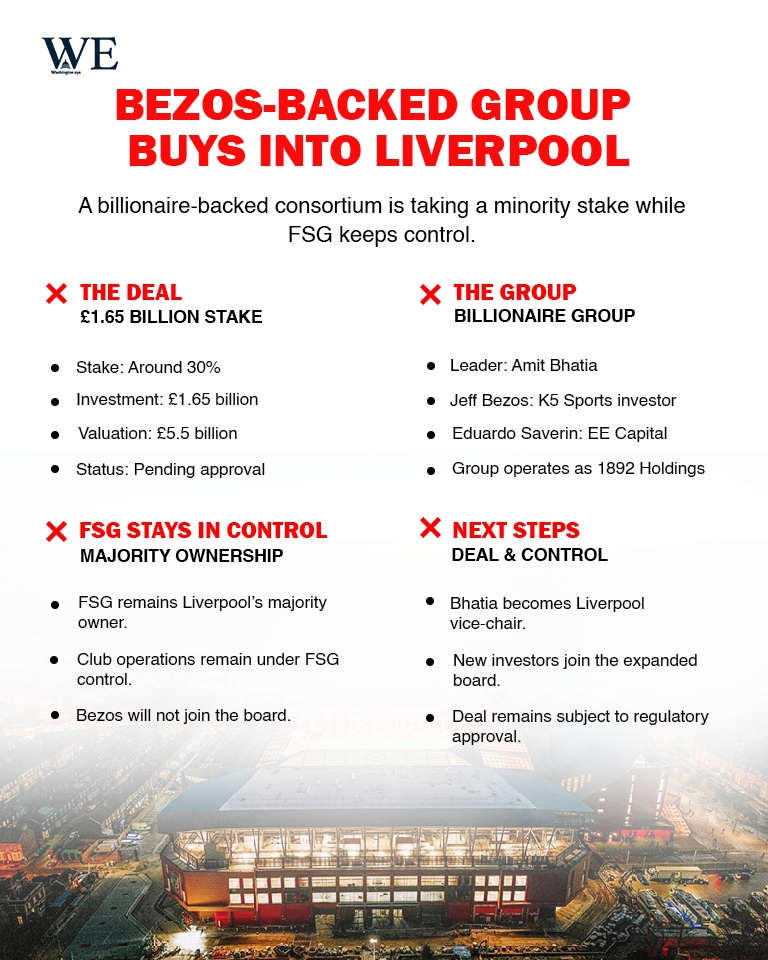
For now, the balance of power remains clear: FSG controls Liverpool, while 1892 Holdings owns a major minority stake. But a club bought for £300 million in 2010 is now valued at roughly £5.5 billion, and a consortium connected to Jeff Bezos is sitting inside its ownership structure. That alone represents a dramatic new chapter in Liverpool’s history, and potentially the beginning of an even bigger ownership transformation.