
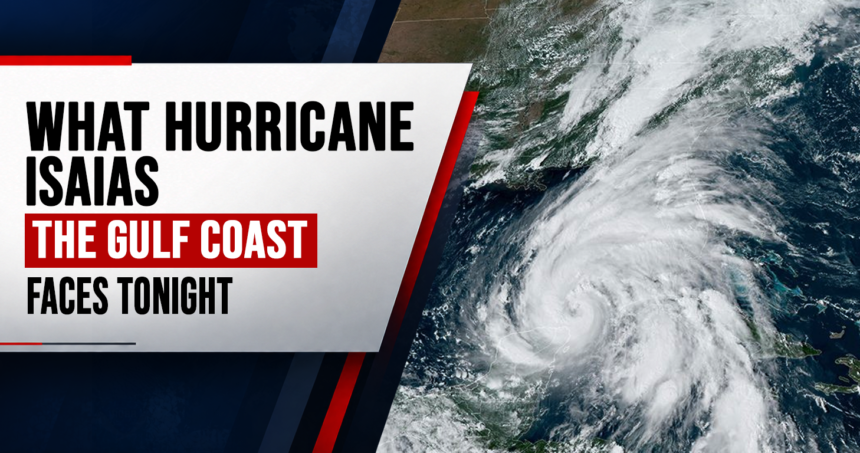
Hurricane Isaias, the first hurricane of the 2026 Atlantic season, struck the United States Gulf Coast on October 9, bringing destructive winds, heavy rainfall, widespread power outages and dangerous coastal flooding after an unusually quiet hurricane season. The storm’s arrival marked one of the latest formations of a season’s first Atlantic hurricane in more than a century, raising questions about unusual weather patterns and the influence of the El Niño climate phenomenon.
According to the United States National Hurricane Center (NHC), Isaias strengthened into a hurricane late on October 7 before intensifying rapidly over the Gulf of Mexico. It briefly reached Category 3 intensity on October 9, becoming the Atlantic season’s first major hurricane, before weakening to Category 2 as it made landfall near Destin, Florida, at approximately 8 p.m. Eastern Time.
The storm brought severe weather to Florida, Alabama, Mississippi and Georgia, forcing evacuations and leaving hundreds of thousands of homes and businesses without electricity. By October 10, Isaias had weakened into a post-tropical cyclone while continuing to spread heavy rainfall across the southeastern United States.
When and Where Did Hurricane Isaias Form?
Isaias developed from a tropical weather system over the Gulf of Mexico during the first week of October, becoming a named tropical storm early on October 7. Later that evening, observations collected by United States Air Force Reserve Hurricane Hunters confirmed that its sustained winds had reached hurricane strength.

Satellite images captured by the National Oceanic and Atmospheric Administration’s GOES-19 satellite documented the storm’s intensification as it travelled northward towards the American coastline. Its development was historically unusual. The Atlantic hurricane season officially begins on June 1 and continues until November 30, with the first hurricane normally forming during August. However, 2026 experienced more than four months without a single hurricane.
According to NOAA, Isaias was the latest first Atlantic hurricane to develop since at least 1905, when the first hurricane of that season also formed in early October. Before Isaias, eight named tropical storms had developed during the 2026 Atlantic season, but none had reached hurricane intensity. Its formation therefore ended an extraordinary period of suppressed hurricane activity across the Atlantic basin.
Destruction, Evacuations and Emergency Response

As Isaias approached the Gulf Coast, authorities declared states of emergency across parts of Florida and Alabama, ordering evacuations from vulnerable coastal communities. Florida Governor Ron DeSantis declared emergencies in more than two dozen counties, while Alabama Governor Kay Ivey issued a state of emergency covering 40 counties. Tourists and residents in exposed coastal areas, including Gulf Shores, Orange Beach and Dauphin Island, were instructed to leave ahead of the storm.
Forecasters warned that storm surges could reach nine feet in particularly vulnerable coastal locations, while rainfall totals of four to eight inches, and locally up to 15 inches, threatened severe flash flooding. A wind gust of 112 miles per hour was recorded at Santa Rosa Sound, Florida, demonstrating the storm’s destructive potential.
According to reports published on October 10, more than 697,000 electricity customers across Florida, Alabama and Georgia experienced power outages. Separate reporting indicated that at least two people had died, although the full extent of casualties and property damage remained under assessment. Emergency responders faced blocked roads, damaged infrastructure, dangerous floodwaters and disrupted electricity supplies as the storm moved inland.
Why Was the 2026 Atlantic Hurricane Season So Quiet?
Meteorologists have linked the unusually low hurricane activity in 2026 partly to a strong El Niño weather pattern, which influences atmospheric circulation and increases wind shear across parts of the Atlantic. Wind shear, involving changes in wind speed or direction at different atmospheric heights, can disrupt developing tropical cyclones by separating their thunderstorms from their circulation centres.
Despite favourable ocean temperatures in some regions, persistent atmospheric disturbances prevented several tropical systems from strengthening into hurricanes earlier in the season. Colorado State University researcher Philip Klotzbach described the exceptionally quiet season as surprising, even though forecasters had anticipated below-average activity.
The arrival of Isaias demonstrated that a quiet hurricane season does not necessarily mean coastal communities are safe from destructive storms. Scientists also caution that individual hurricanes cannot automatically be attributed to climate change without detailed attribution studies.
Latest Death Toll, Economic Impact and Recovery Efforts
By October 11, at least four deaths had been linked to Isaias, including two in Florida and two in Alabama. Authorities reported fatalities involving falling trees, a vehicle accident and carbon monoxide poisoning associated with generator use. Nearly 900,000 electricity customers experienced outages in the immediate aftermath, while restoration crews worked to reconnect affected communities. Strong winds damaged rooftops, businesses and infrastructure, including facilities around Pensacola and Destin.
The hurricane also disrupted Gulf of Mexico energy production, prompting temporary shutdowns at offshore oil and gas facilities. Federal authorities authorised emergency measures to address potential petroleum supply disruptions. President Donald Trump approved emergency federal assistance for affected states, including Georgia, as officials continued damage assessments and warned residents about fallen power lines, flooding and unsafe travel conditions.
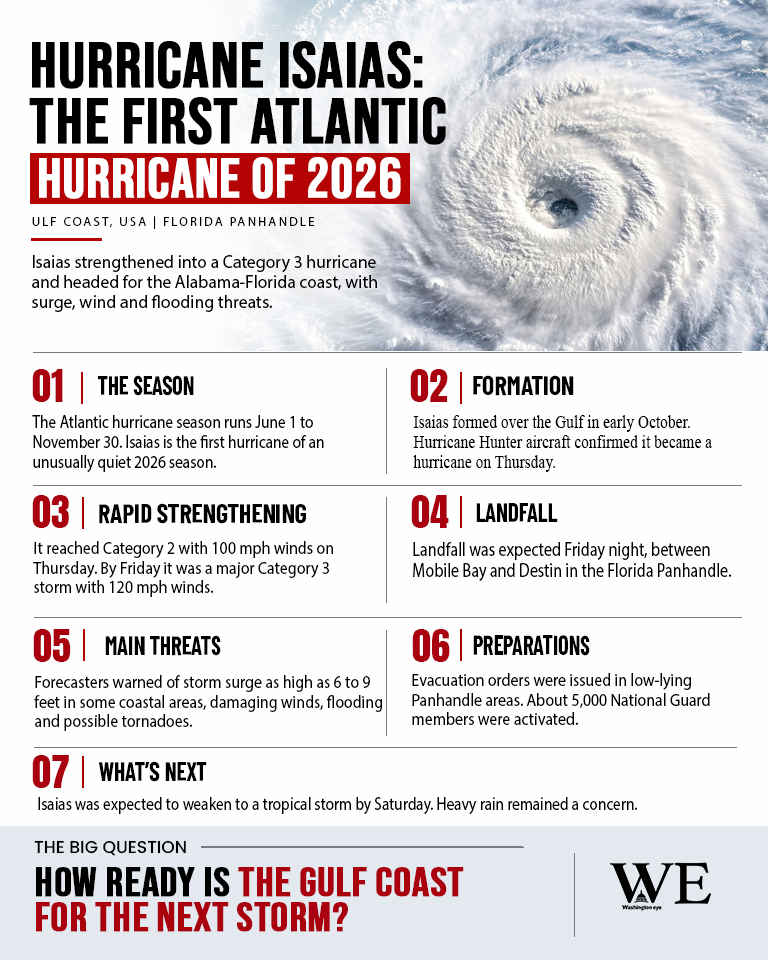
Although Isaias weakened after landfall, its remaining moisture continued to threaten inland communities with heavy rain, flash flooding and possible tornadoes. The storm has highlighted the importance of hurricane preparedness, particularly during seasons when prolonged calm weather can create a misleading sense of security. With the Atlantic hurricane season continuing until November 30, meteorologists are urging coastal residents to remain attentive to official forecasts and emergency guidance.