
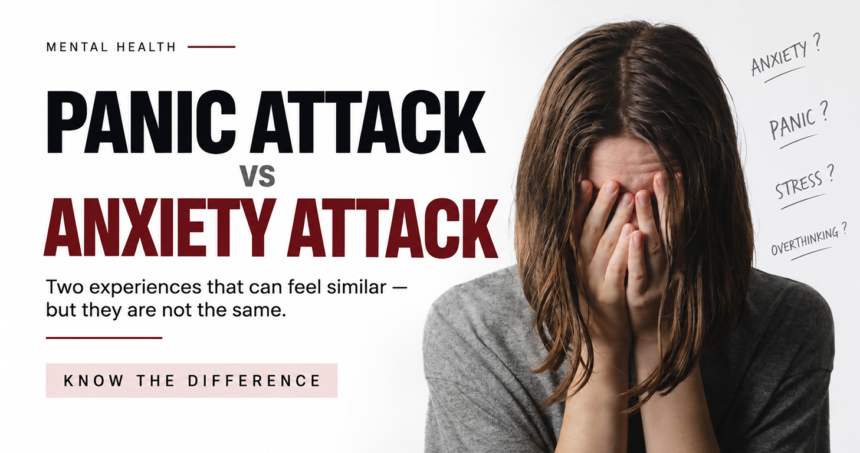
A racing heart, trembling hands, shortness of breath and an overwhelming feeling that something terrible is about to happen can be frightening experiences. People often describe these episodes as either a “panic attack” or an “anxiety attack,” but despite the terms frequently being used interchangeably, they do not have exactly the same medical meaning.
A panic attack is a recognised clinical phenomenon involving a sudden surge of intense fear or discomfort, often accompanied by powerful physical symptoms. An “anxiety attack,” meanwhile, is an informal expression commonly used to describe a period of intense anxiety or worry. It is not formally defined as a separate condition in the Diagnostic and Statistical Manual of Mental Disorders, or DSM-5-TR. The distinction matters because understanding what is happening can help people recognise symptoms, seek appropriate care and rule out medical problems that can sometimes resemble anxiety or panic.
Panic Attack: Sudden and Intense

One of the defining characteristics of a panic attack is its sudden onset. A person may feel relatively normal before experiencing an abrupt wave of intense fear or discomfort. Symptoms can include a pounding or racing heartbeat, sweating, shaking, chest discomfort, shortness of breath, dizziness, nausea, chills, tingling or numbness. Some people experience an intense fear of dying, losing control or that something catastrophic is happening.
The physical symptoms can be so strong that a first panic attack may be mistaken for a heart attack or another medical emergency. Panic attacks generally escalate rapidly. Cleveland Clinic notes that symptoms typically peak within about 10 minutes, although the overall experience can last longer. They can be expected, occurring in response to a particular trigger, or unexpected and seemingly appearing “out of the blue.” A single panic attack does not automatically mean someone has panic disorder. Panic disorder involves recurrent, unexpected attacks accompanied by continuing worry about further attacks or changes in behaviour because of them.

What People Mean by an “Anxiety Attack”
Anxiety usually develops differently. Rather than arriving as an abrupt explosion of fear, anxiety can build gradually, often in connection with a recognisable concern. Someone might become increasingly anxious before an examination, job interview, medical procedure, financial problem or difficult conversation.
Symptoms can include persistent worry, restlessness, tension, difficulty concentrating, disturbed sleep and physical discomfort. Anxiety itself is a normal human response and does not automatically indicate an anxiety disorder. The National Institute of Mental Health explains that anxiety can occur even when there is no immediate threat. It becomes more concerning when it persists and starts interfering with work, education, relationships, sleep or everyday activities.

This is why the phrase “anxiety attack” can be confusing. There is no single medical definition specifying exactly how intense it must be, how long it should last or which symptoms must occur. People may use the expression for anything from a period of overwhelming worry to an experience that clinically resembles a panic attack.
Panic vs Anxiety: How Can You Tell?
The biggest difference is generally how the episode develops and how intense it becomes. A panic attack typically begins suddenly, becomes extremely intense within minutes and often produces prominent physical symptoms. It can occur without an obvious immediate threat.
What people call an anxiety attack tends to be associated with mounting worry or stress. It may develop more gradually and continue for a longer period rather than reaching the rapid peak characteristic of panic.
There can nevertheless be substantial overlap. Both may involve a rapid heartbeat, sweating, difficulty breathing, dizziness, fear and a sense of losing control. Anxiety can also contribute to a panic attack, meaning the two experiences are not always easy for an individual to distinguish.
Why Do They Happen?
There is no single cause of panic attacks. Genetics, brain processes, stress and environmental factors may all contribute. Researchers have described panic attacks as resembling a false alarm in which the body’s survival response becomes activated too strongly or at an inappropriate moment.
Anxiety can arise in response to everyday stress, uncertainty or perceived threats, while persistent or excessive anxiety can occur as part of conditions such as generalized anxiety disorder, social anxiety disorder and phobias. Sleep deprivation, high stress and substances such as excessive caffeine may also worsen anxiety-related symptoms in some people.
What to Do During an Episode
During panic or severe anxiety, slow and controlled breathing may help reduce hyperventilation and the body’s escalating stress response. Grounding techniques, such as focusing attention on the immediate surroundings and physical sensations, may also help someone reconnect with the present moment.
Repeated attacks, persistent anxiety or symptoms that interfere with normal life should be discussed with a healthcare professional. Treatments for panic disorder can include psychotherapy and medication. Cognitive behavioural therapy (CBT) is particularly well studied and is commonly used to help people understand and change their responses to panic symptoms.
Importantly, chest pain, severe breathing difficulty, fainting or other new and concerning physical symptoms should not automatically be assumed to be anxiety. Medical conditions can produce similar symptoms, and urgent assessment may be necessary, particularly when symptoms are new or unusual.
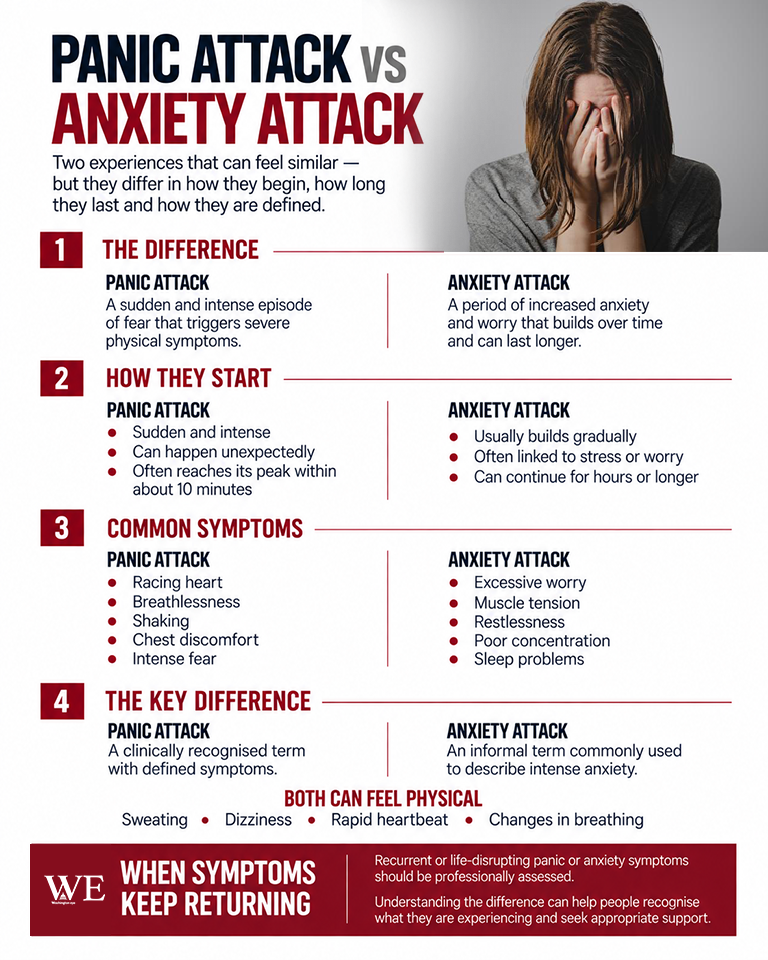
Panic and anxiety are closely connected, but the terminology matters. A panic attack is a defined episode of sudden, intense fear, while an “anxiety attack” is an informal description of overwhelming anxiety rather than a formal diagnosis. Recognising that difference can be the first step toward understanding the symptoms and finding appropriate support.