

A newly opened “study café” in Sydney has placed an international student debate under fresh examination: is a conventional coffee shop or a purpose-built study room better for productive work? O3 Space, which opened in Newtown in late July 2026, attracted queues resembling those outside a nightclub during its first weekend. Inside, however, visitors found laptops, books, matcha and low-volume music rather than a dance floor.
The business combines a café atmosphere with the practical features of a dedicated study centre. Students enter through an app and can work at tables, sofas, communal benches or on artificial grass. Shoes may be removed, conversation is permitted and drinks are available, but visitors do not have to keep ordering to retain their seats. O3 currently operates from 10 a.m. to 9 p.m. and plans to offer 24-hour access eventually.
The concept began in Auckland in 2024 before expanding to Melbourne and Sydney. Every user receives three free hours weekly. Additional time costs A$7.50 an hour, while memberships range from A$10 to A$50 per week. The model reflects growing demand for a “third place”—a social environment separate from home and formal work or education, particularly among students living in crowded accommodation or unable to concentrate at home.
Traditional cafés already perform that function. Their warm lighting, changing scenery, music and background conversation can reduce the isolation of studying alone. They are convenient for group discussions and relatively informal: a student can arrive without booking and work for the price of a coffee. Research involving the University of Portsmouth and University College London found that students generated more ideas, on average, with ambient noise than in silence. The benefit was strongest among people with greater cognitive flexibility, suggesting that cafés may suit brainstorming and creative writing.

The same noise can become a disadvantage during complex reading, memorisation or examination preparation. Coffee machines, telephone calls, crowded tables and unreliable access to electrical sockets can interrupt concentration. Students may also feel pressure to buy repeatedly or surrender a table during busy periods. A small 2025 student survey found that cafés were considered more comfortable and sociable than college spaces, but 48.2 percent of respondents reported being easily distracted in cafés, compared with 24.8 percent in college facilities.
Café owners face a separate problem. A customer buying one drink and occupying a four-person table for several hours may prevent the business from serving others. Independent cafés in London have introduced laptop-free periods or restricted computer users to selected tables. Some owners said the measures were necessary both for financial survival and to restore cafés as places for conversation.
Starbucks South Korea also asked customers in 2025 not to bring desktop computers, printers, extension cords or desk partitions after some long-stay patrons began treating shared stores as private offices. The work-and-study café trend is known in South Korea as cagongjok. Laptops remain welcome, but customers have been asked not to limit other people’s access to communal seating.

Dedicated study spaces answer these concerns by charging directly for a seat or providing it as a public service. They normally offer ergonomic desks, dependable internet, electrical outlets, printers, silent zones, group rooms and private booths. Rules requiring telephone calls to be taken outside create predictable working conditions. Seeing everyone else studying can also provide accountability and a shared sense of purpose.
Paid study rooms have expanded rapidly in China, where competition for postgraduate, civil-service and professional examinations has increased demand for quiet seats. An industry estimate cited in January 2026 placed the number of venues nationwide at approximately 100,000, with monthly passes averaging 400 yuan. A chain established in Hebei in 2023 reported more than 160 directly operated and franchised locations and about 140,000 registered users.
Publicly funded study hubs provide a more accessible alternative. Australia has 15 suburban and 55 regional university study hubs offering internet, computers, videoconferencing and academic or wellbeing support near students’ homes. The government committed A$66.9 million to expanding the network, viewing dedicated facilities as a way to improve university participation in regional and outer-suburban communities.
Critics nevertheless question the commercialisation of a basic social need. Paid centres may be calm and efficient but exclude students who cannot afford subscriptions. Libraries are generally free, yet they can be crowded, close early or lack the relaxed atmosphere students want.
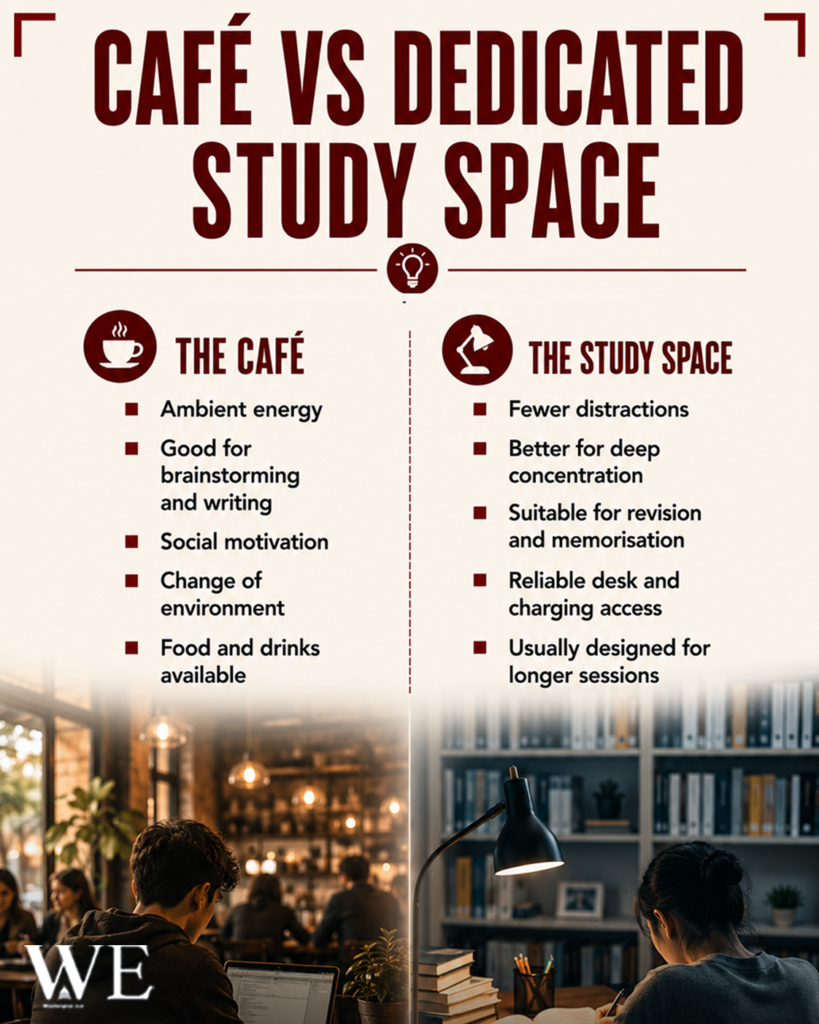
Neither setting is universally superior. Cafés can support creative work, informal meetings and shorter sessions, while dedicated spaces are better suited to sustained concentration and examination preparation. The success of hybrid venues such as O3 suggests students increasingly want both: the comfort and human energy of a café combined with the reliability, long hours and purposeful design of a library.