
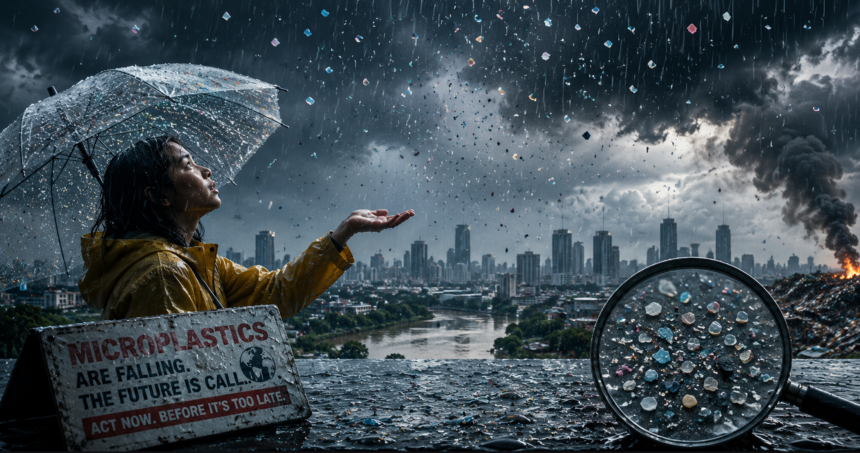
Scientists and environmental groups in Indonesia are raising alarm after new studies confirmed that microplastics are now falling with rain across parts of the country, particularly in the capital Jakarta. Researchers say the findings show that plastic pollution has entered the atmosphere and become part of the global water cycle, creating growing concerns for public health, climate resilience, and environmental safety.
Indonesia’s National Research and Innovation Agency (BRIN) and environmental organizations including ECOTON reported that rainwater samples collected in Jakarta contained dangerous microplastic particles formed from airborne plastic waste. The particles were found in every rainwater sample studied since 2022, according to Indonesian researchers. Scientists identified fibers and fragments made from polyester, nylon, polyethylene, polypropylene, and rubber-like particles generated from vehicle tires and degraded plastics.
Microplastics are plastic particles smaller than five millimeters and are increasingly being detected in oceans, rivers, soil, food, air, and even human bloodstreams. Scientists say the latest findings in Indonesia are especially worrying because they confirm that plastics are no longer limited to landfills or waterways but are circulating through the air and returning to the earth through rainfall.

Researchers in Jakarta estimated that around 15 microplastic particles per square meter per day were detected in coastal rainwater samples. Environmental experts believe the contamination comes from multiple urban sources including synthetic clothing fibers, burning plastic waste, industrial pollution, vehicle emissions, and tire dust released into the air. Once airborne, these particles are carried by wind currents and eventually trapped in rain clouds before falling back to the ground.

Environmental scientists warn that Indonesia’s plastic waste crisis is intensifying the problem. The country is one of the world’s largest contributors to marine plastic pollution, while rapid urbanization, population growth, open waste burning, and weak recycling systems continue to increase airborne contamination. ECOTON researchers noted that more than half of airborne microplastic pollution in Indonesia may be linked to the burning of unmanaged plastic waste.
Health experts fear the long-term impact could become a serious public emergency. Because microplastics are tiny enough to be inhaled or ingested through food and drinking water, scientists worry they may accumulate inside the human body over time. Some studies suggest microplastics can carry toxic chemicals, heavy metals, and bacteria that may contribute to respiratory disease, hormonal disruption, inflammation, cardiovascular issues, and potential reproductive problems. Indonesian environmental groups recently warned that microplastics have already been detected in human blood, increasing fears about invisible exposure in daily life.
The issue also has major environmental and climate implications. Experts say atmospheric microplastics can affect ecosystems, contaminate agricultural land, pollute rivers and oceans, and threaten marine life. Indonesia’s waterways, including rivers flowing into Jakarta Bay, have already shown severe contamination levels linked to heavy rainfall and urban runoff. Researchers observed that rainfall often increases the movement of microplastics from cities into coastal ecosystems.

Climate scientists say worsening weather patterns may spread the contamination further. Strong winds, tropical storms, and changing rainfall systems linked to climate change can transport airborne plastics over long distances, meaning even remote areas may eventually face contamination. Global studies now show that microplastics are being found in clouds, forests, mountains, and polar regions, indicating the pollution crisis has become planetary in scale.
Environmental organizations in Indonesia are now urging the government to declare stronger action against plastic pollution, improve waste management systems, reduce single-use plastics, and tighten controls on open burning. Public awareness campaigns are also calling for safer disposal practices, better recycling infrastructure, cleaner transportation policies, and stronger environmental monitoring in major cities like Jakarta and Surabaya.
Experts say ordinary citizens can reduce exposure by avoiding burning waste, limiting single-use plastics, improving indoor ventilation, filtering drinking water, and supporting sustainable packaging alternatives. However, researchers stress that personal actions alone are not enough and that systemic policy reforms are urgently needed to stop plastic pollution from entering the atmosphere in the first place.
![Infographic about microplastics raining in Indonesia; outlines research findings and environmental/health impacts in bullet points.] ,](https://thewashingtoneye.com/wp-content/uploads/2026/06/Its-raining-microplastics-in-Indonesia-Info-Graphics-copy-819x1024.png)
Scientists describe the findings as a warning sign for the future of global environmental health. What was once considered a marine pollution problem has now evolved into an atmospheric crisis, with plastic particles effectively “raining” back onto human populations. As Indonesia battles flooding, air pollution, and climate pressures, researchers say the discovery of microplastics in rainwater highlights how deeply plastic contamination has penetrated the planet’s natural systems.