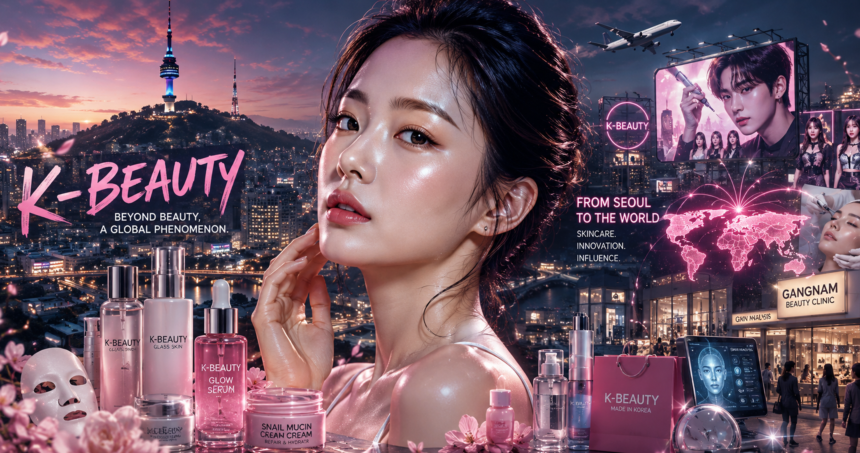
The global obsession with South Korean beauty culture, widely known as “K-beauty”, is reshaping the international cosmetics industry, influencing skincare routines, beauty standards, and even medical tourism as South Korea strengthens its position as one of the world’s leading beauty capitals. From Seoul’s glowing “glass skin” trend to advanced cosmetic procedures and billion-dollar skincare exports, K-beauty has evolved from a regional phenomenon into a global economic and cultural powerhouse.
South Korea’s beauty industry gained momentum through the global spread of Korean pop culture, commonly called the “Korean Wave” or Hallyu. K-pop stars, actors, and influencers helped popularize flawless skin, youthful appearances, and detailed skincare routines among millions of fans worldwide. Over the last decade, Korean skincare products such as sheet masks, serums, sunscreens, snail mucin creams, and hydrating toners have become staples in beauty markets across Asia, Europe, the Middle East, and North America.
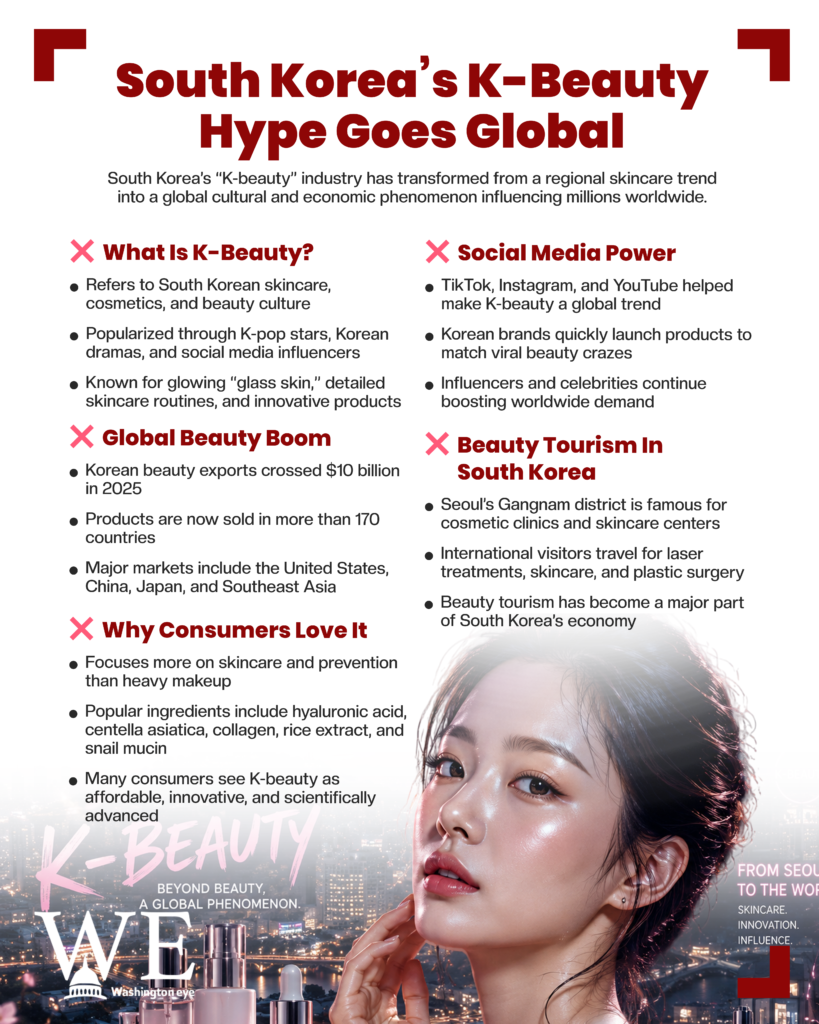
Industry reports show that South Korea’s cosmetics exports have surged dramatically in recent years. Korean beauty exports crossed the $10 billion mark in 2025, with products shipped to more than 170 countries. The United States, China, Japan, and Southeast Asian markets remain among the biggest consumers of Korean cosmetics. Analysts estimate the global K-beauty market is now worth more than $15 billion and continues to grow rapidly due to strong online demand and social media influence.

Beauty experts say K-beauty’s popularity is rooted in its focus on skincare rather than heavy makeup. Korean skincare routines traditionally emphasize prevention, hydration, sun protection, and long-term skin health. Products are often marketed with innovative ingredients such as centella asiatica, hyaluronic acid, rice extract, peptides, collagen, and fermented compounds. The famous “glass skin” trend, referring to smooth, radiant, almost translucent skin, became a defining symbol of modern Korean beauty culture.

Unlike traditional Western beauty markets that focused heavily on cosmetics and anti-aging solutions, K-beauty brands gained attention for affordable yet high-performing skincare formulas. Consumers worldwide increasingly view Korean beauty products as innovative, scientifically advanced, and accessible. Experts note that Korean companies release products faster than many global competitors, allowing trends to spread quickly through platforms such as TikTok, Instagram, and YouTube.
South Korea has also become a major destination for cosmetic treatments and medical beauty tourism. Seoul’s districts, particularly Gangnam, are internationally known for dermatology clinics, skin treatments, laser procedures, and plastic surgery centers. International visitors travel to South Korea seeking advanced skincare procedures, facial contouring, rhinoplasty, skin whitening, and anti-aging treatments often promoted through celebrity culture and social media. Beauty tourism has become a significant contributor to the country’s economy, with authorities expanding “K-beauty experience zones” and tourism centers for foreign visitors.
However, the rise of K-beauty has also sparked debates about unrealistic beauty standards and social pressure. Critics argue that the emphasis on flawless skin, slim appearances, and cosmetic perfection contributes to mental health concerns, particularly among young people. Dermatologists and social commentators have warned that some consumers, including teenagers, are becoming obsessed with extensive skincare routines and cosmetic enhancements fueled by influencer culture.

At the same time, the business side of K-beauty continues expanding beyond skincare into haircare, wellness, and beauty technology. Korean companies are investing in AI-powered skin analysis, sustainable packaging, biotech ingredients, and personalized skincare devices. Haircare and scalp treatments influenced by Korean beauty philosophies are also becoming increasingly popular in Western markets.
Luxury beauty giants are now adapting their strategies to compete with Korean brands. International companies have started launching products inspired by K-beauty concepts, including lightweight skincare, “slow aging” philosophies, and ingredient-focused routines. Analysts say K-beauty’s influence has fundamentally changed global consumer expectations about skincare effectiveness, texture, and affordability.
Experts believe the K-beauty boom reflects more than cosmetics alone. It represents the growing global cultural influence of South Korea, which has successfully combined entertainment, technology, fashion, and beauty into a powerful international brand identity. As demand continues to rise, South Korea’s beauty industry is expected to remain one of the country’s strongest soft-power and export sectors in the coming years.