
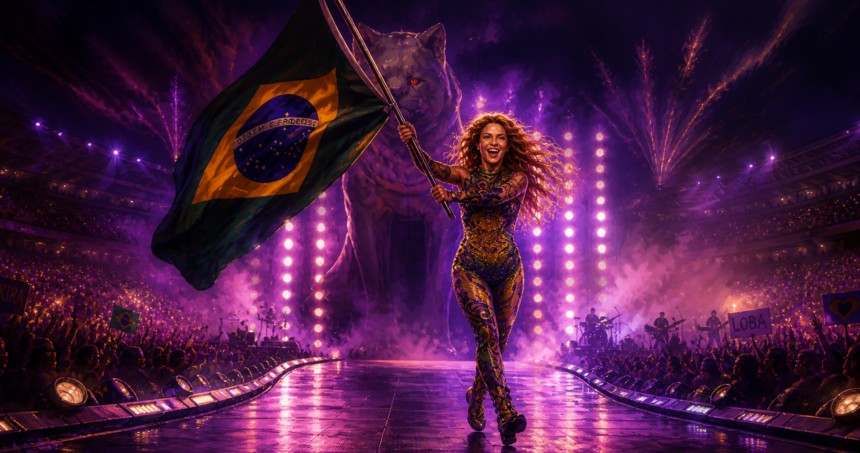
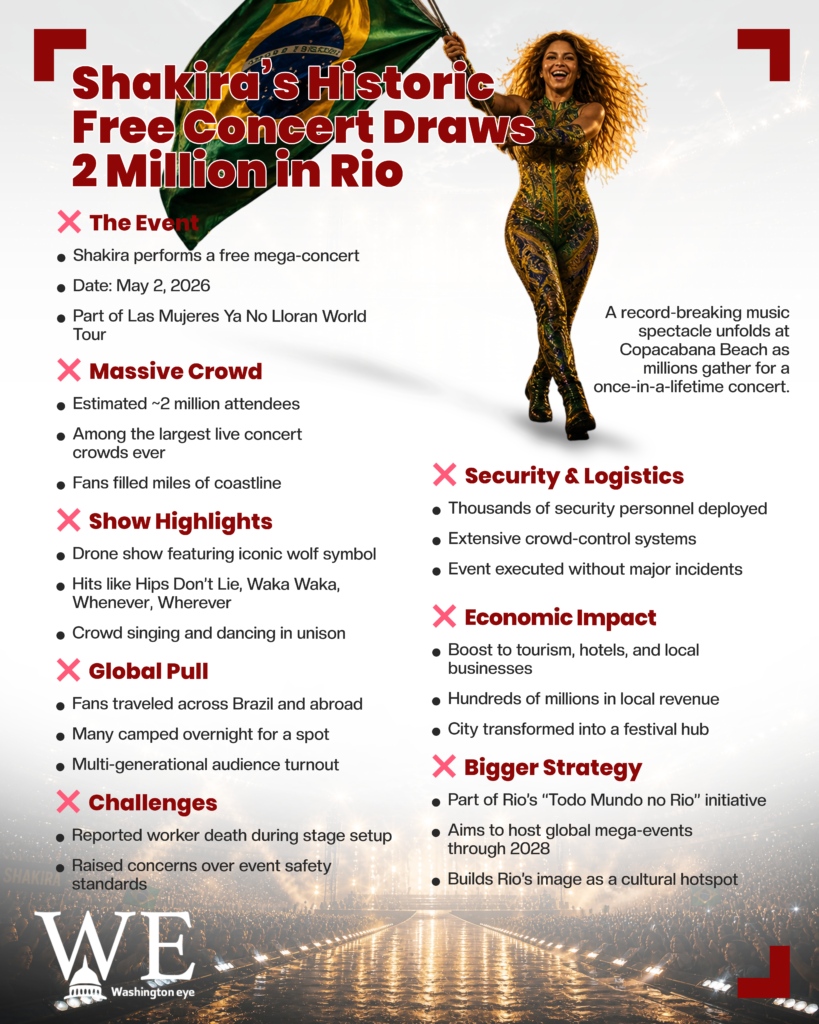
A historic wave of music fans flooded the iconic Copacabana Beach in Rio de Janeiro on May 2, 2026, as Colombian pop superstar Shakira delivered a free mega-concert that drew an estimated two million people, one of the largest crowds ever recorded for a live music event. The show, held under the city’s “Todo Mundo no Rio” initiative, turned the beachfront into a sea of lights, sound, and celebration, underscoring both the artist’s global appeal and the Brazilian city’s growing reputation for hosting record-breaking concerts.
The concert began late in the evening, with Shakira taking the stage shortly after 11 p.m. local time. A spectacular drone display lit up the sky, forming a glowing wolf, an iconic symbol associated with the singer’s persona, while messages in Portuguese expressed affection for Brazilian fans. The atmosphere quickly escalated into a euphoric celebration as the crowd, stretching across miles of shoreline, sang and danced along to her biggest hits.
Performing as part of her ongoing Las Mujeres Ya No Lloran World Tour, Shakira delivered a setlist packed with global chart-toppers such as “Hips Don’t Lie,” “Waka Waka,” and “Whenever, Wherever.” The performance blended Latin pop rhythms with powerful visuals and choreography, reflecting themes of resilience and empowerment drawn from her recent music. The singer also expressed a deep emotional connection to Brazil, recalling her early career ties to the country and calling the experience “magical.”

The sheer scale of attendance highlighted Shakira’s enduring popularity across generations. Fans began gathering early in the day, with many traveling from across Brazil and even internationally to secure a place on the beach. Some reportedly camped overnight, while others arrived hours before the performance to witness what city officials had already anticipated as the largest concert of her career.

Authorities in Rio organized extensive security and logistical arrangements to manage the enormous turnout. Thousands of security personnel, surveillance systems, and crowd-control measures were deployed to ensure safety along the coastline. The event followed in the footsteps of similar large-scale concerts held in recent years at Copacabana, including performances by global icons like Madonna and Lady Gaga, further establishing the location as a hub for mass cultural gatherings.
Beyond entertainment, the concert carried significant economic and cultural implications. Officials estimated that the event generated hundreds of millions of reais for the local economy, benefiting tourism, hospitality, retail, and transportation sectors. Hotels, restaurants, and street vendors reported a surge in business as the influx of visitors transformed Rio into a vibrant festival city.
The free concert was part of a broader municipal strategy to promote Rio de Janeiro as a global cultural destination. The “Todo Mundo no Rio” project aims to host annual mega-events featuring international artists through at least 2028, positioning the city as a premier stage for global music and tourism.

However, the lead-up to the event was not without challenges. Earlier reports indicated that a worker tragically died during stage construction, casting a shadow over preparations and prompting discussions about safety standards at large-scale events. Despite this, the concert itself proceeded successfully, with no major incidents reported during the performance.
In the end, Shakira’s Rio performance was more than just a concert, it was a cultural spectacle that demonstrated the unifying power of music. With millions of voices singing in unison under the night sky, the event reinforced her status as one of the world’s most influential performers and showcased Rio de Janeiro’s ability to host unforgettable global experiences.