
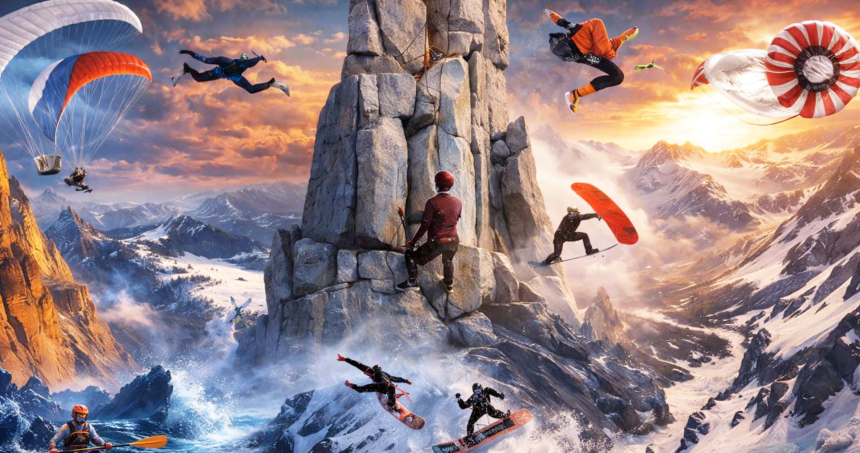
Extreme sports are drawing millions of spectators and participants worldwide as athletes continue to push the boundaries of physical endurance, risk and spectacle. From high-altitude cliff diving in Europe to mixed martial arts cages in the United States and the controversial rise of Power Slap competitions, extreme sports have transformed from underground subcultures into global entertainment industries. While fans celebrate the thrill and athleticism, critics warn about safety concerns, rising injuries and the normalization of violence.
In recent years, extreme sports have gained unprecedented visibility due to social media, streaming platforms and international tournaments. Events such as the X Games in the United States, Red Bull-sponsored cliff diving championships across Europe and Asia, and the Dakar Rally spanning Saudi Arabia’s deserts have drawn global audiences. These competitions typically involve high-speed, high-risk activities including freestyle motocross, base jumping, snowboarding, skateboarding, parkour and wingsuit flying. Athletes often train for years to master techniques that allow them to perform dangerous stunts under strict safety protocols.
One of the most controversial additions to the extreme sports landscape is the “Power Slap” competition, which originated in the United States and gained viral attention in the early 2020s. The sport involves two competitors standing face-to-face, taking turns delivering open-handed slaps to the opponent’s face until one is unable to continue. Promoters argue that the competition is regulated with medical supervision and rules, but critics describe it as inherently violent and dangerous. Videos circulating online frequently show competitors collapsing after heavy blows, raising concerns among medical professionals about concussions and long-term brain injuries.

Despite controversy, Power Slap events have expanded internationally, with tournaments held in parts of North America and interest reported in Europe and the Middle East. The sport reflects a broader trend: audiences increasingly seek high-adrenaline, raw competition. Organizers say viewership numbers are strong, particularly among younger demographics accustomed to fast-paced digital content.

Beyond combat-style events, nature-based extreme sports remain among the most visually dramatic. In Norway and Switzerland, athletes participate in cliff diving competitions, leaping from heights exceeding 20 meters into narrow fjords or lakes below. In Hawaii and Australia, big-wave surfers ride walls of water towering over 20 feet high, risking serious injury from powerful currents and coral reefs. Meanwhile, wingsuit flyers in France and Italy glide along mountain ranges at speeds exceeding 200 kilometers per hour, navigating tight spaces between cliffs.
In Asia, mountaineering in the Himalayas continues to attract climbers seeking to summit peaks such as Mount Everest and K2. Although climbing is often categorized as an adventure sport rather than a spectacle, it remains one of the most dangerous pursuits. Overcrowding, avalanches and unpredictable weather have led to fatalities in recent years. Governments in Nepal and Pakistan have tightened regulations, requiring permits, insurance and experienced guides.
Motor-based extreme sports also command large audiences. The Dakar Rally, now hosted in Saudi Arabia, tests drivers and riders across thousands of kilometers of desert terrain. In the United Kingdom and Australia, motocross and rallycross events draw both amateur and professional racers. Meanwhile, urban sports like BMX freestyle and skateboarding have entered mainstream competitions, even becoming Olympic events, signaling the growing legitimacy of previously fringe activities.

The appeal of extreme sports lies in their intensity. Participants often describe a psychological “flow state”, a heightened awareness and focus triggered by high-risk environments. Sports psychologists suggest that controlled exposure to danger can build resilience and discipline. However, medical experts caution that the physical toll can be severe. Common injuries include fractures, spinal damage, traumatic brain injuries and internal bleeding. Organizers increasingly require helmets, protective gear and on-site medical teams, but accidents remain part of the risk.
Economically, extreme sports have become lucrative. Sponsorships from global brands, broadcasting deals and tourism revenue contribute billions of dollars annually. Countries hosting events often benefit from international exposure. For example, winter sports in Canada and Switzerland boost local economies, while desert rallies in the Middle East attract motorsport tourism. Social media influencers specializing in extreme stunts have also built careers around daring performances, sometimes blurring the line between sport and spectacle.
Yet the rise of extreme competitions has sparked ethical debates. Critics argue that viral culture encourages increasingly dangerous acts for online attention. Regulatory bodies in Europe and North America are examining safety standards, particularly in combat-style sports like slap fighting. Health professionals emphasize the need for long-term neurological monitoring for participants.

As 2026 unfolds, extreme sports continue to evolve, blending athletic skill, entertainment and controversy. Whether on icy mountain peaks, desert dunes or brightly lit arenas, athletes worldwide are redefining the limits of human endurance, and challenging societies to decide how far is too far.