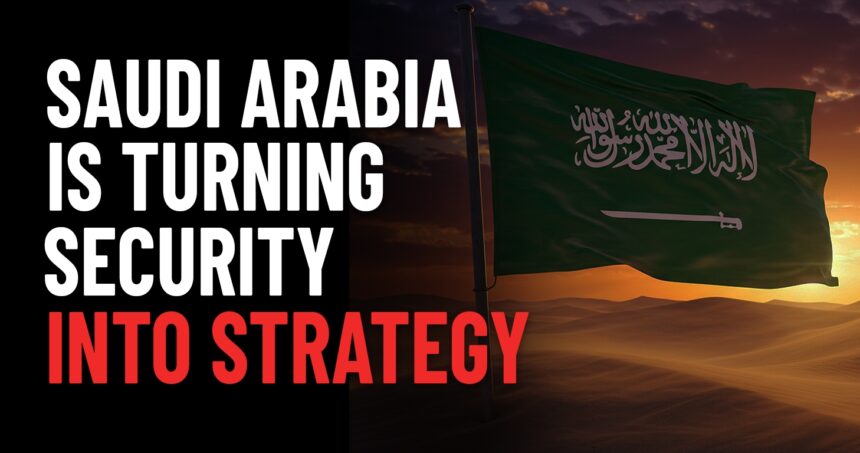
Saudi Arabia is making one of its most significant security moves in decades, strengthening military partnerships with Pakistan and Türkiye while simultaneously maintaining strategic ties with the United States. The emerging approach signals Riyadh’s determination to diversify its security relationships and reduce its dependence on any single foreign power as wars, missile attacks and tensions over Iran reshape the Middle East.
At the centre of this security push is the Makkah Joint Defence Agreement, signed by Saudi Arabia, Pakistan and Türkiye in Makkah on August 7. The pact commits the three countries to regard an armed attack against one member as an attack against all, drawing comparisons with NATO’s Article 5 collective-defence principle. However, the precise military obligations of each country have not been publicly detailed.
The agreement has now moved from symbolism towards implementation. Senior Saudi, Pakistani and Turkish officials are meeting in Istanbul on August 31 for the inaugural meeting of the Strategic Political and Defence Committee established under the pact. Foreign and defence ministers and senior military commanders are expected to discuss military interoperability, defence capabilities, technology and defence production.
Why Saudi Arabia is changing its security strategy
Riyadh’s power play comes against an increasingly unstable regional backdrop. The continuing confrontation involving Iran, Israel and the United States has exposed the vulnerability of Gulf states to missiles, drones and disruptions to energy infrastructure and shipping. The Strait of Hormuz crisis and Iranian attacks against Gulf countries have also raised difficult questions about whether traditional American security guarantees remain sufficient.
For decades, Saudi Arabia relied heavily on its partnership with Washington for advanced weapons, intelligence and strategic protection. That relationship remains important, but Riyadh is increasingly building additional layers of security.
Pakistan offers Saudi Arabia decades of military cooperation, experienced armed forces and, significantly, nuclear capability. Türkiye contributes a large and technologically advanced military, a rapidly expanding domestic defence industry and NATO experience. Saudi Arabia, meanwhile, provides enormous financial resources and geopolitical influence.
Together, the three countries create an unusual strategic combination: Saudi money, Turkish defence technology and Pakistani military capability. Pakistan already has a substantial military presence in Saudi Arabia. Reuters reported around 8,000 Pakistani troops are stationed in the kingdom, reflecting a defence relationship that predates the latest agreement.

The unanswered question is whether Pakistan’s nuclear deterrent has any role in the arrangement. Pakistani officials previously gave conflicting signals over whether nuclear capabilities could theoretically support Saudi security. The new trilateral agreement does not publicly clarify this issue, and analysts caution against describing it as a formal Saudi nuclear umbrella.
Cost, defence industry and the wider impact
Saudi Arabia can afford to pursue an ambitious security strategy. According to the Stockholm International Peace Research Institute, Saudi military expenditure reached an estimated $83.2 billion in 2025, up 1.4 percent from 2024. That made the kingdom the world’s eighth-largest military spender, with military expenditure equivalent to about 6.5 percent of GDP.
Yet Riyadh increasingly wants that spending to create capabilities at home rather than merely finance imported weapons. Cooperation with Türkiye and Pakistan could therefore include drones, missiles, electronic warfare, ammunition, aircraft technologies and other defence-industrial projects. Such cooperation would complement Saudi Arabia’s wider Vision 2030 objective of developing domestic industries and technical expertise.
The Saudi strategy does not mean abandoning Washington. In another major development, the Trump administration recently submitted a proposed 30-year US-Saudi civilian nuclear cooperation agreement to Congress. President Donald Trump has linked its implementation to Saudi normalization with Israel, while Riyadh continues to demand progress towards Palestinian statehood before establishing formal relations with Israel.
This combination illustrates Saudi Arabia’s broader strategy: work with Washington where interests converge, strengthen independent regional alliances where necessary, and avoid placing the kingdom’s security entirely in one basket. The Makkah pact could eventually become even more influential if additional Muslim-majority states join. Bangladesh is already considering participation, while Egypt has been involved in a separate consultative mechanism with the three countries.
Critical View: Powerful Signal, Uncertain Test
The new security architecture nevertheless faces major obstacles. Saudi Arabia, Türkiye and Pakistan do not have identical strategic priorities. Riyadh remains deeply concerned about Iran, while Ankara’s calculations regarding Iran and Israel are different. Pakistan must also balance relations with China, the United States, Iran, India and Gulf states.
History provides another warning. Previous Arab and Gulf collective-defence arrangements have often looked stronger on paper than during actual crises. Even analysts examining the Makkah agreement question whether members would genuinely enter a major war on behalf of another member.
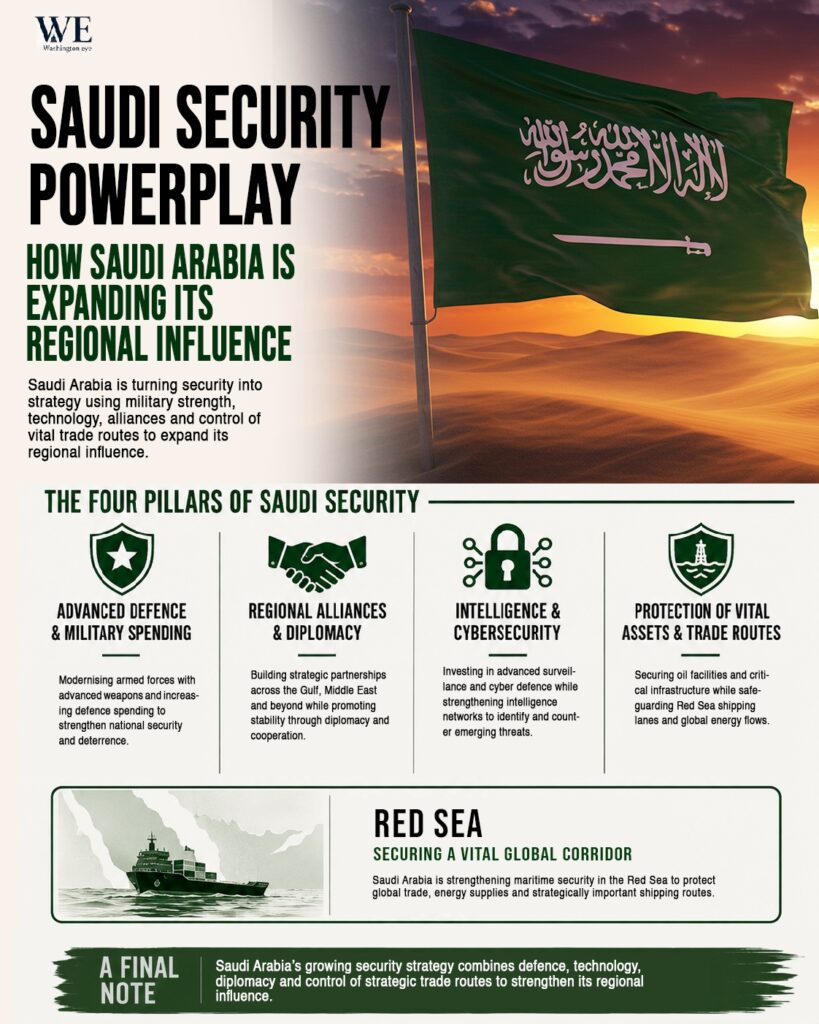
Saudi Arabia’s security power play is therefore less about creating an immediate “Muslim NATO” than about strategic diversification. Riyadh is using its wealth, diplomatic influence and partnerships to build several layers of protection around itself. If the pact produces joint weapons programmes, coordinated military planning and credible collective deterrence, it could reshape the Middle East’s security architecture. If political differences overwhelm common interests, it may become another ambitious regional agreement whose promises exceed its practical power.
For now, however, the message from Riyadh is unmistakable: Saudi Arabia no longer wants simply to purchase security from powerful allies; it wants a central role in designing the regional security order itself.