
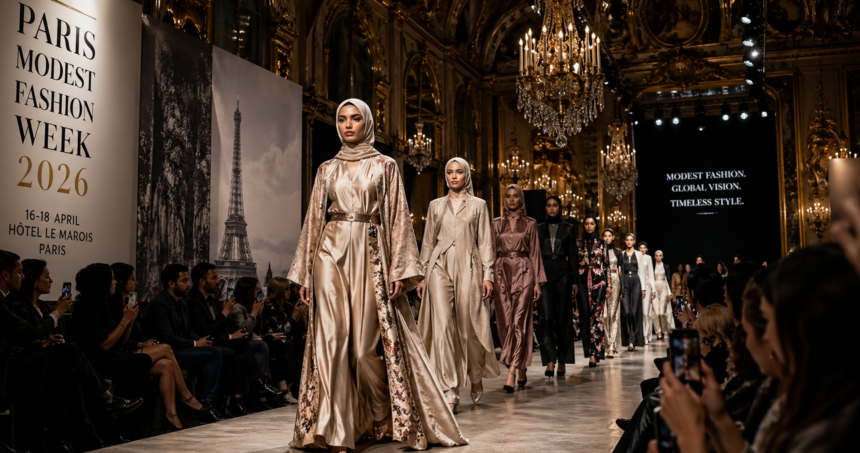
In a landmark moment for the global fashion industry, the Paris Modest Fashion Week 2026 made its debut in the French capital, signaling a major shift toward inclusivity and cultural diversity in one of the world’s most influential style hubs. Held from April 16 to 18 at the historic Hôtel Le Marois near the Champs-Élysées, the event brought together nearly 30 international designers and industry stakeholders, marking the first time the globally traveling Modest Fashion Week platform has been staged in Paris.
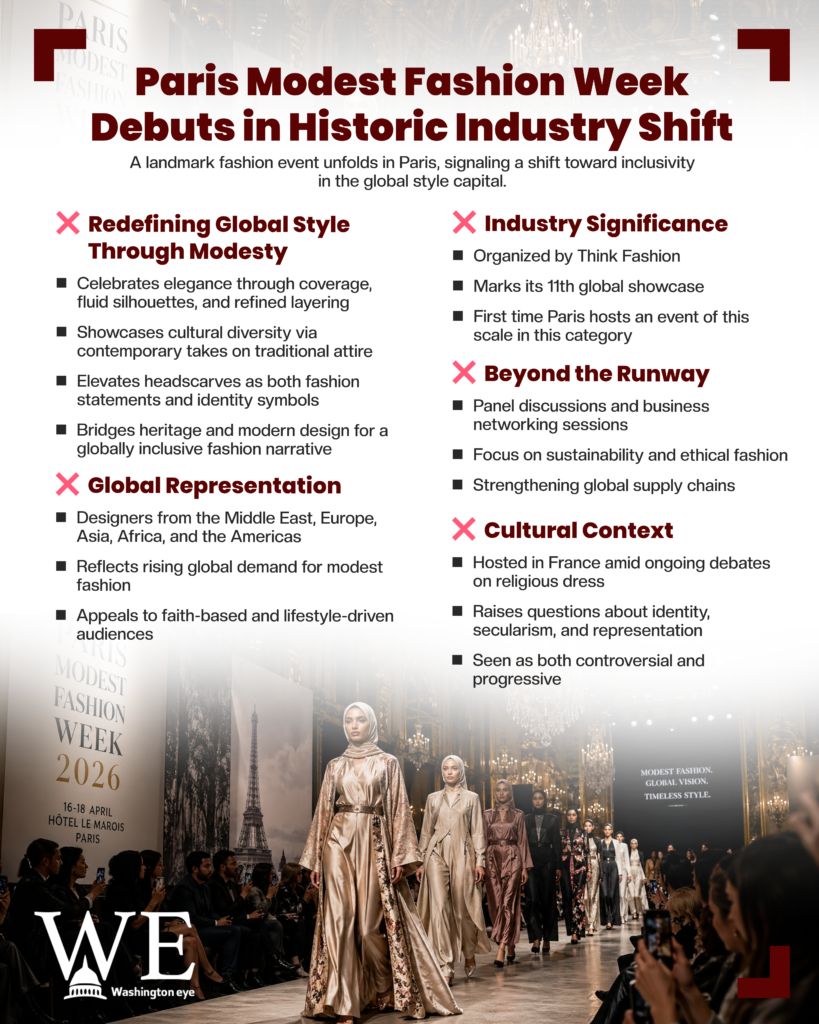
The three-day showcase featured around 30 runway presentations, with collections centered on modest aesthetics, flowing silhouettes, extended hemlines, layered garments, and diverse interpretations of headscarves. Designers from across the Middle East, Europe, Asia, Africa, and the Americas participated, reflecting the growing global demand for fashion that aligns with faith-based, cultural, or personal preferences for less revealing clothing.
Organized by Think Fashion, a platform known for hosting modest fashion events in cities such as Istanbul, Dubai, London, and Jakarta, the Paris edition represented its 11th global showcase. However, this particular edition carried special symbolic significance. Paris, long regarded as the epicenter of haute couture, had never before hosted a modest fashion week of this scale. Industry observers described the move as an effort to position modest fashion within the mainstream global fashion calendar rather than as a niche or alternative segment.

The event also included panel discussions, business-to-business showrooms, and networking sessions aimed at strengthening the modest fashion supply chain and encouraging collaboration between designers and global retailers. Organizers emphasized themes such as sustainability, inclusivity, and cultural storytelling, aligning with broader shifts in the fashion industry toward ethical and conscious consumption.

Despite its celebratory tone, the event unfolded within a complex social and political backdrop. France has long been at the center of debates surrounding religious dress, particularly the wearing of the hijab in public spaces. Hosting a modest fashion week in Paris therefore carried deeper implications beyond style, touching on issues of identity, secularism, and representation. Some critics viewed the event as controversial, arguing that it intersects with ongoing tensions over religious expression in France. Others, however, welcomed it as a progressive step toward recognizing diversity and personal choice in fashion.
On the runway, designers challenged stereotypes associated with modest dressing. Collections blended traditional elements with modern aesthetics, featuring floral prints, soft pastel palettes, structured streetwear, and even modest swimwear innovations such as burkinis. The diversity of styles demonstrated that modest fashion is not monolithic but rather a dynamic and evolving segment of the global market.
Reactions from attendees and fashion observers were largely positive. Industry insiders praised the event for broadening the narrative of fashion beyond conventional Western norms and for giving visibility to designers who cater to underserved markets. Social media influencers and digital creators also played a key role, amplifying the event’s reach and engaging younger audiences interested in culturally inclusive fashion trends.

The emergence of modest fashion as a significant economic and cultural force is backed by rising consumer demand worldwide. With millions of consumers seeking clothing that reflects their values without compromising on style, events like Paris Modest Fashion Week are increasingly seen as both commercially viable and culturally relevant.
Ultimately, the Paris debut of Modest Fashion Week highlights a broader transformation within the fashion industry, one that embraces diversity, challenges stereotypes, and redefines what it means to be fashionable in a globalized world. Whether viewed as a bold cultural statement or a natural evolution of market trends, the event has undeniably placed modest fashion firmly on the Paris runway, opening the door for future editions and continued dialogue.